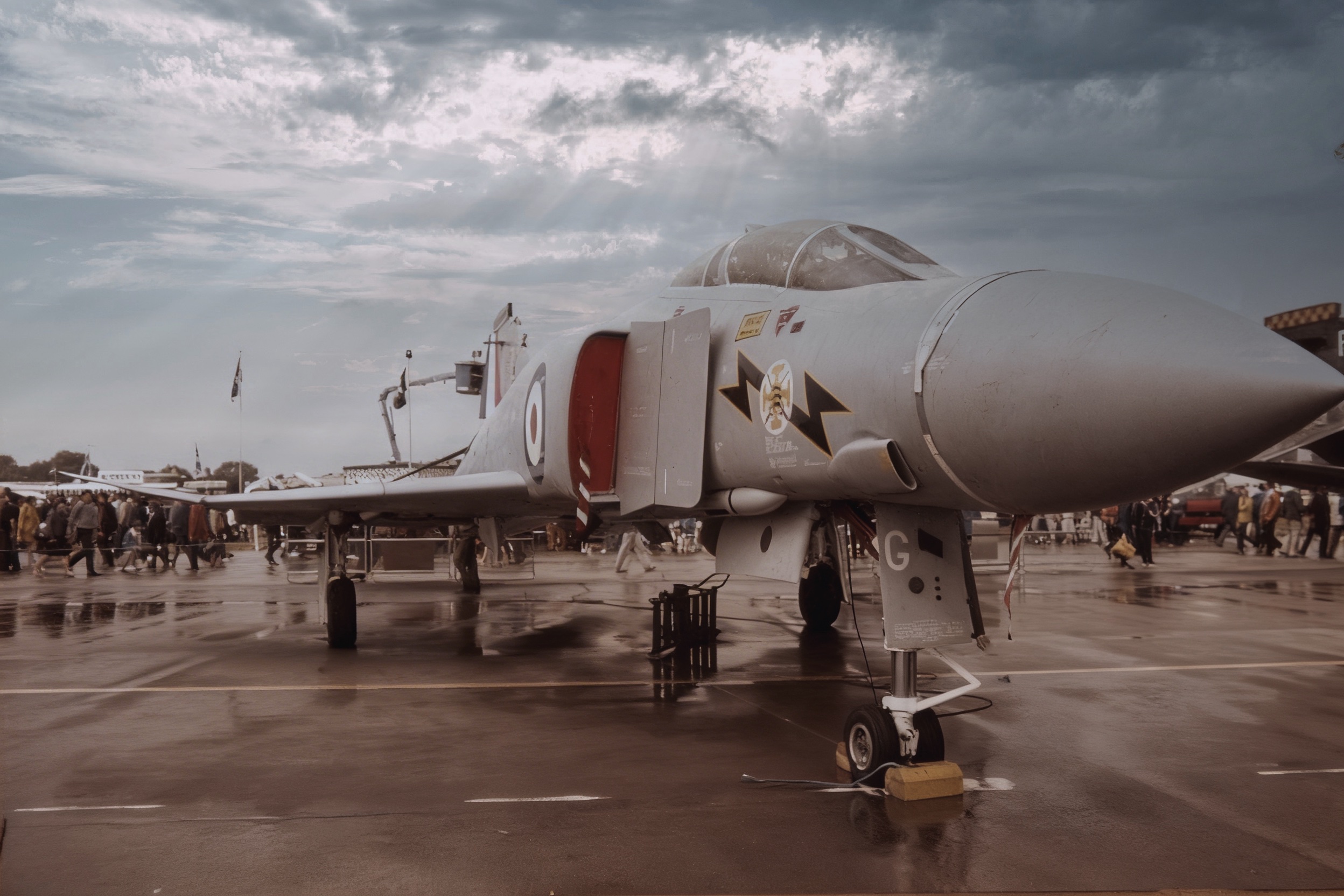
As you’ve probably noticed, there’s a big link on the front page to my new website. I wanted to move away from just my name and try something that’s me but not me, if you see what I mean.
I’m still using WordPress, because it’s easy to create on, and the plugin, theme etc infrastructure is extensive. So I’ve also opted to buy a theme with more bells and whistles in that I can grow into (i.e work out how to use!).
I’ve migrated a lot of the pages I’ve already created on here across, simply to have content from day one, but they’ve been edited in parts and I’ve trimmed a few off, along with all the posts prior to 2026.
Consequently, there will be fewer updates on here for a while, as all my efforts go into the new site. It’s eminently possible I might redirect what this site displays in terms of content, so keep checking back to see what happens.
So if you want to keep up with my photography and whatever, www.photravaero.com
But give it a month or so and pop back here to see if things have changed. Naturally, it will get a mention on the “other” site.
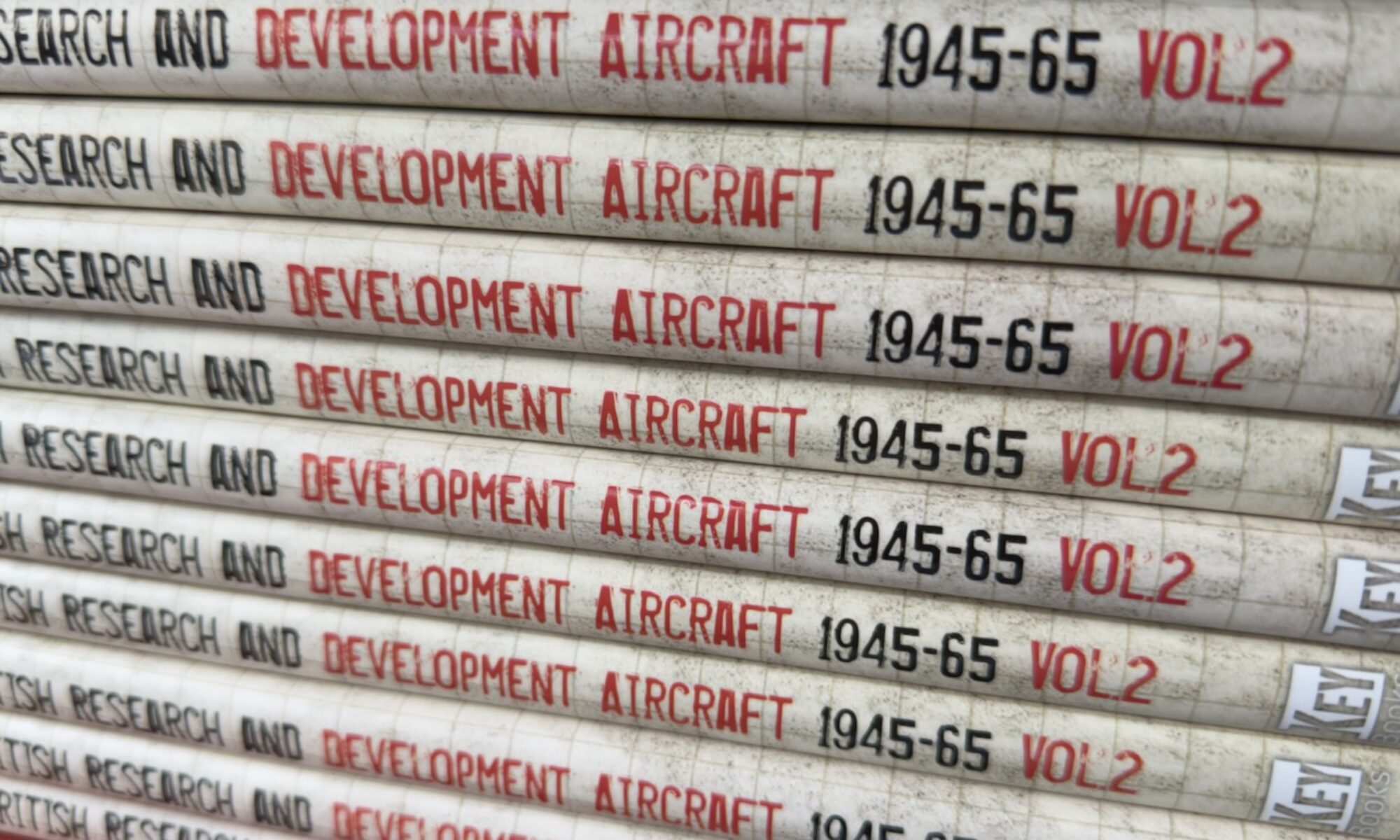
Vol.2 Is done! The text and my photos, along with those scanned from Key Publishing’s extensive archive will wing their way to India this week, and I suspect at some point in the middle of August, there will be a very loud thump on my doorstep, as a box with my author’s copies arrives.
If you can be happy, proud and sad all at the same time, that’s me. Happy and proud, obviously because it’s finally going to print and having seen the layout, it looks better than Vol.1. The text is somehow more polished as well I think, it “reads” better if that makes sense, though after vastly more edits before the copy editor got hold of it than its predecessor, I suppose it should. The cover looks drastically different to Vol.1 though. Im not sure if this is Key’s “new look” or what, but let’s say it’s a little less formal….you’ll soon see!
Sad, because that’s it, there is no Vol.3 to start on or complete. I set the end year for the book(s) as 1965 because basically after that point, the oft called “Golden Age” was over and the number of aircraft built solely for research dwindled to virtually zero. I suppose until 1986 when the BAe EAP technology demonstrator appeared which lead to the Typhoon. All being well, the next one will again be a technology demonstrator, this time for GCAP / Tempest in a couple of years time, providing HMG keeps throwing money at it. IMHO, they would be stupid not to , especially now the Germans, or rather Airbus have told Dassault and the French they can stuff the similar beast they were working on after Dassault spat the dummy as usual. Both the Italians and the Japanese who partner the UK/BAe on Tempest would not be best pleased either.
As I’ve previously mentioned, I had started something else, but the research would be too hard/expensive, there’s little to nothing to take photos of, so it would end up being to be a bit wordy as well. Plus, although the subject fascinates me, I already have an anorak, or two.
Photography wise, the scans from the roll of Kodak Ultramax 400 that was provided as part of the Analog Wonderland Photowalk last month, have arrived back. All are in focus, which seeing as the Yashica FX-D I used is manual focus is very good news, but I think the metering is a tad out, they were all marginally dark, maybe 1/2 a stop, so I’ll put another roll through, set the exposure compensation accordingly and see what comes out. Electronics get old as well you see,
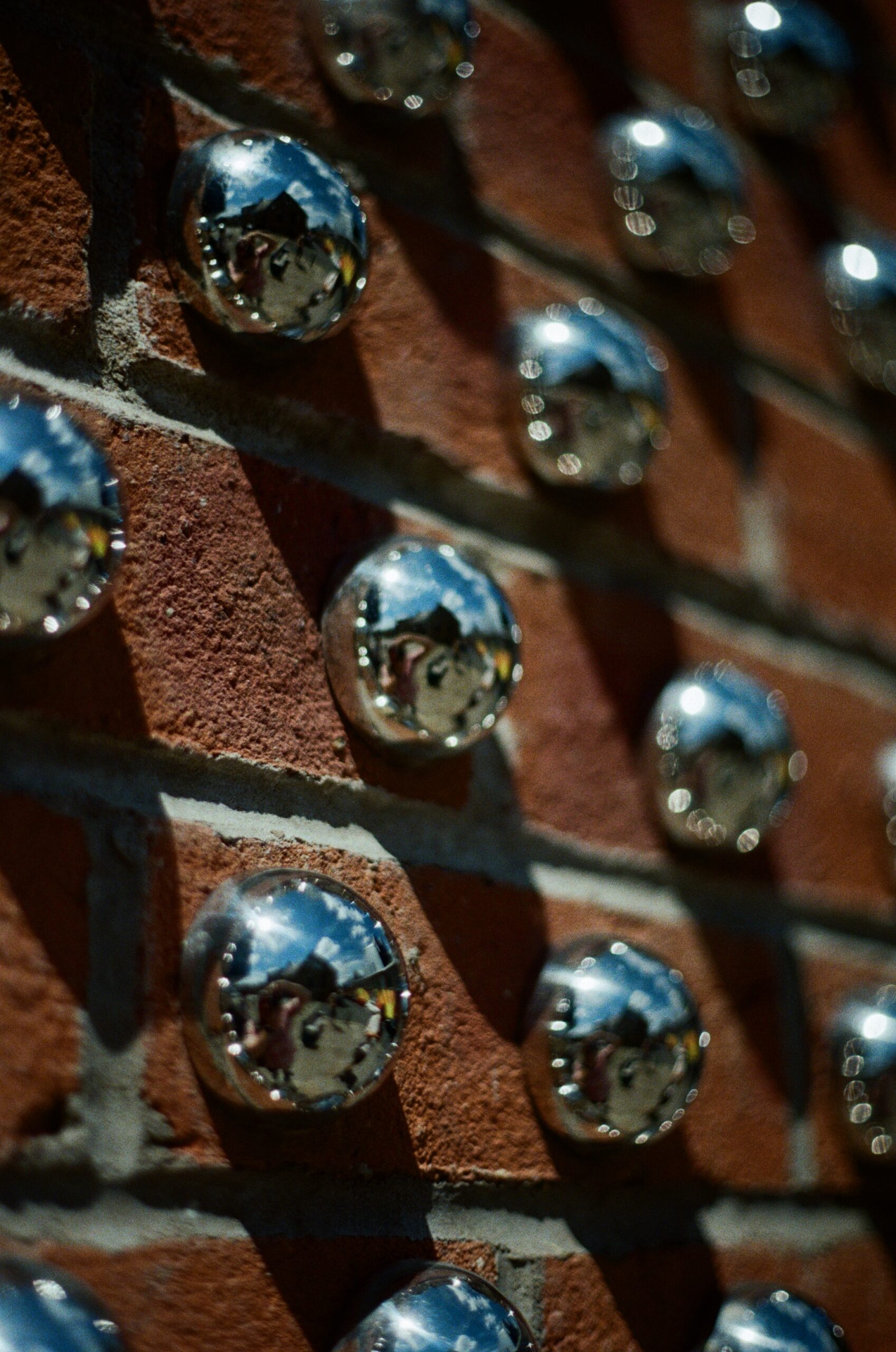
I think everyone who did the photowalk stood and took a shot or two of this wall!
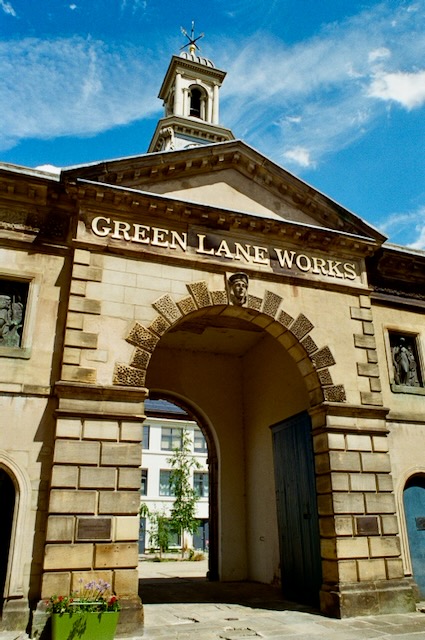
The last time I took photos around here, it definitely wasn’t the hip and trendy place to live its become.
If anyone has used Vinted, there’s a lot more on there than just clothes etc, and they’re a bit easier to deal with when you’re selling than eBay these days as well. Trouble is, whoever writes their SQL code for searching for things, needs to go take a look at the results that come back, and ask themselves why for instance, a Fujica camera appears when someone is searching for Yashica? I very much doubt the select query has *ca in, but someone got a sale out of it anyway.
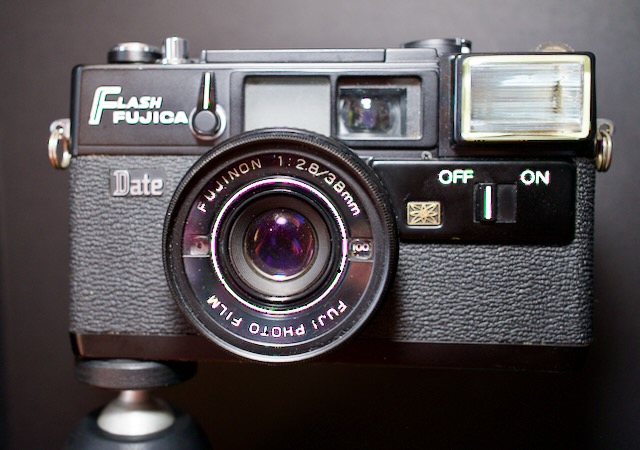
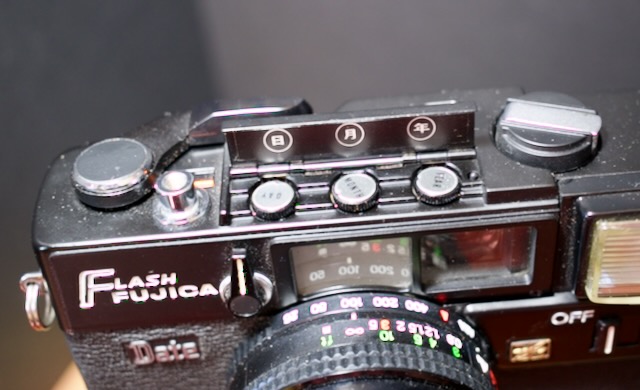
Who remembers cameras with the ability to “stamp” the date on the film when you took a photograph? A few manufacturers released versions of popular cameras with this on, Olympus did an OM10 QD, for Quartz Date, while most of the big players like Canon and Nikon made dedicated film doors (aka backs) you could fit on some of their SLRs in place of the standard version, and the option existed on some 35mm compacts as well. Needless to say, I am now the owner of a Flash Fujica Date, a 35mm compact which dates (sorry) from about 1975. However, there’s a couple of caveats; firstly the flash doesn’t actually flash, which is no big deal, but the switches for it definitely work as their on/off state can prevent you taking a shot and secondly, I don’t think the date stamping bit works either. Certainly you don’t get anything date wise appearing in the viewfinder, which is supposed to happen when you try setting the little control dials. But judging by one page I’ve seen on the net, many of these camera’s won’t go beyond a certain year, oddly, stopping at 2009 is popular for some reason.
Other than that, the lens is clear, the shutter fires and the speed seems to change according to light and what the four position zone focus lens is set to. There’s no obscure out of production batteries to try and work around, a simple pair of AA’s is all it needs and the light seals are all on the film door, so were easy to replace. I did have to superglue a strip of plastic card to the battery door catch though, or it wouldn’t have taken much to see the AA’s perform an unrequested command eject at some point. Next step, run a film through it and see if it does actually work.
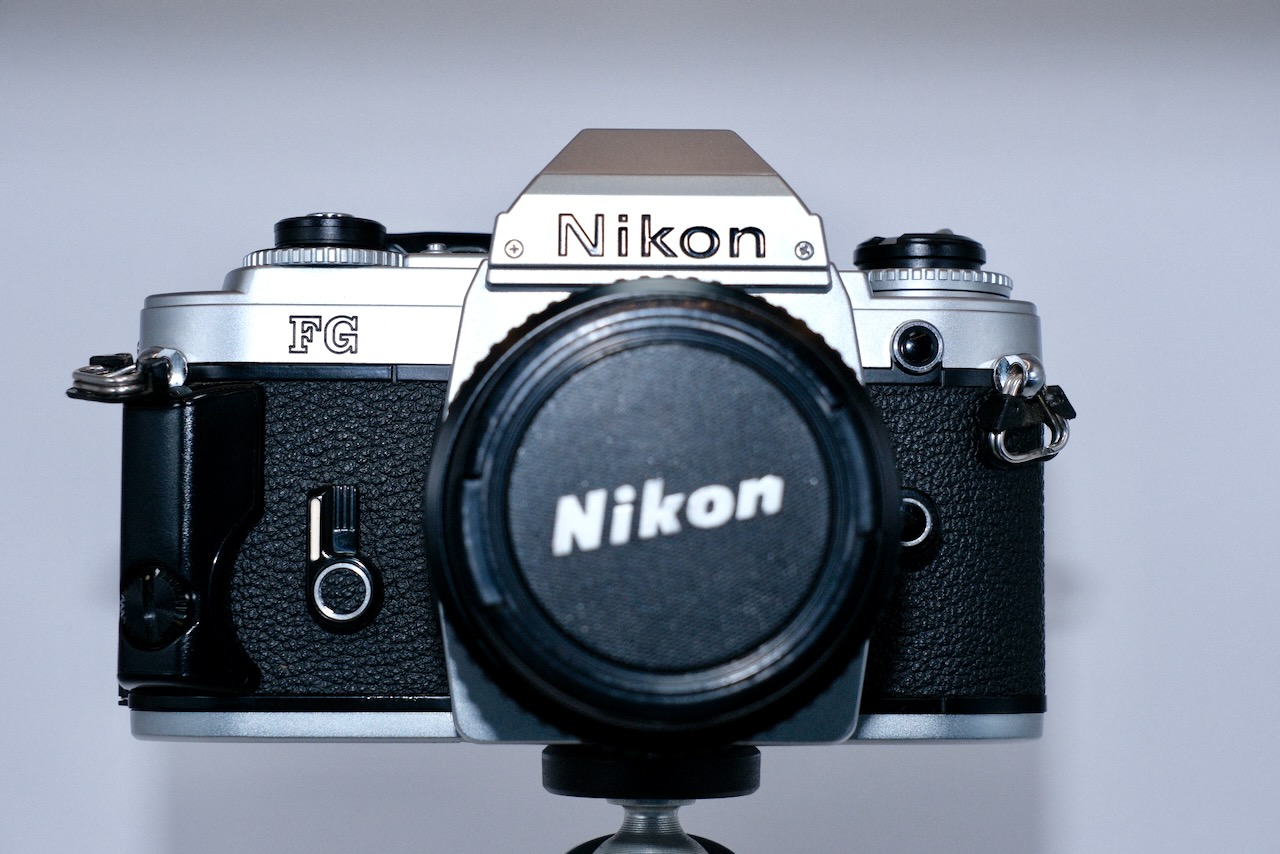
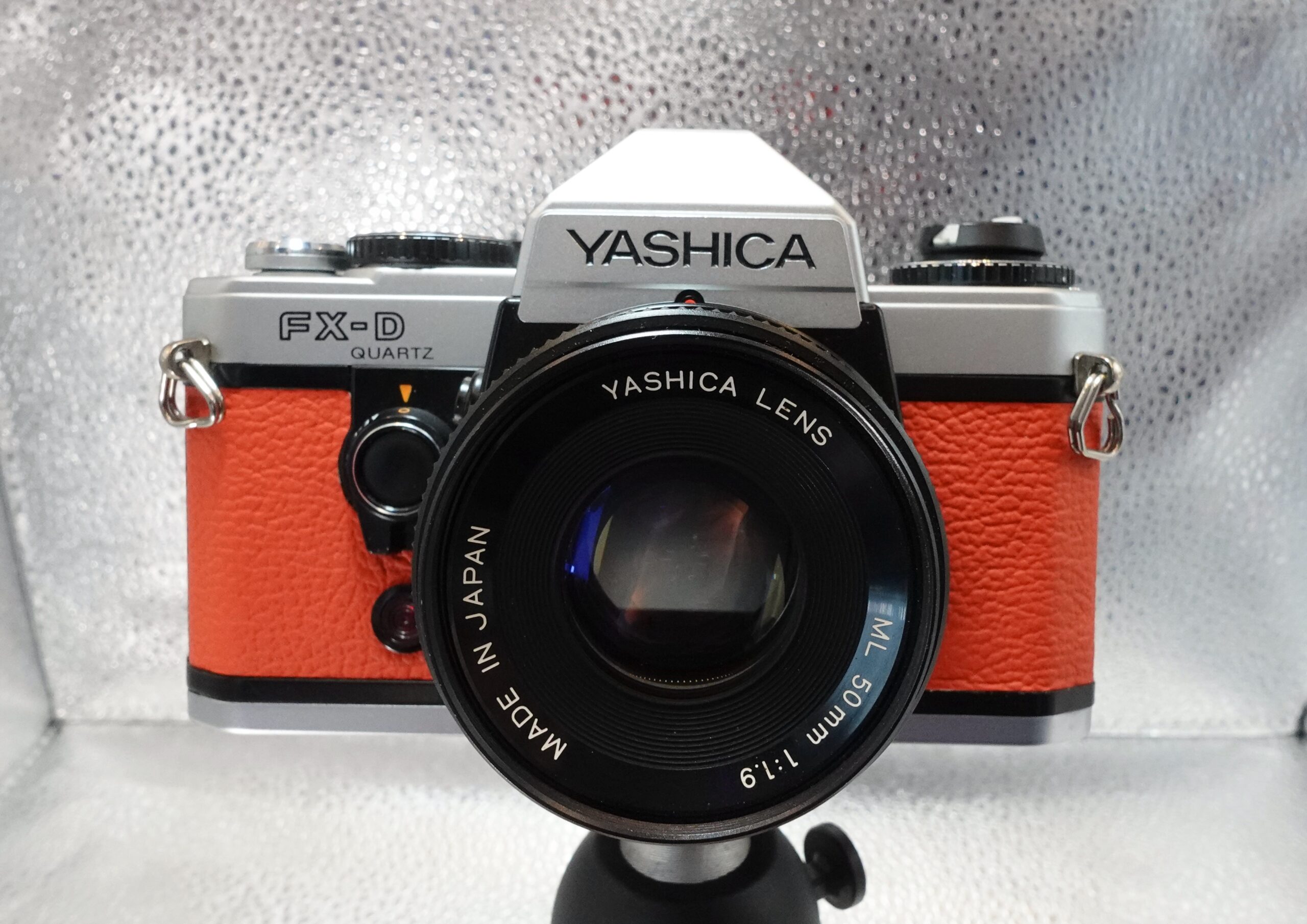
With the unexpected demise of my Nikon FG, the lenses for it were redundant and have already sold on eBay. The camera body itself will likely go for recycling, just not worth the effort to fix I’m afraid. In consolation (ha), I’ve another FX-D coming, with the motor drive unit this time, though whether that stays around depends upon how loud it is; the last one wasn’t…hmm, subtle. Maybe a bit of a gear mechanism clean and a spot of light lubrication this time. Assuming the FX-D body works, I still have a set of seals and the skin will be replaced in the now customary fashion, but that one will go, I like the orange one I’ve just restored
Your typical 70s/80s 35mm compact camera. Zone focus control around the lens, simple viewfinder, manual film advance.The inoperative, but neatly covered date setting dials. I don’t care so long as the light meter works and it takes photos.
I’ve had the first layout copy of Volume 2 back to go through and it’s looking well. Added to which, I was sorting through some books I’d bought as research material for what would have been the next book, and one unexpectedly provided some additional info for Vol.2 that I managed to condense into a graph/info chart, which has been inserted as a near full page image and looks great. “Dead chuffed” as we say in Yorkshire.
I’ve had another visit to Key Publishing and re-raided the archives for suitable images to accompany my more recent shots. I increasingly had a suspicion this would need to be done, but it’s paid off as aside from having the material I pulled out three years ago rescanned, I found some more that I’m sure weren’t there last time and I like better. So I’m now awaiting the scanned images appearing to sort through, decide the final selections, and re-edit my captions where needed.
We’re getting there!
Now, the title to this blog entry has been caused by a car, a camera and a calculation error, which I’ll explain in reverse order.
If you recall from a few months ago, I exposed my BAS problem; “bag acquisition syndrome”, too many camera gadget bags basically. I’ve been a good boy and started to address the problem, two bags sold online, one new one ordered, another going, possibly two. Here, frustration number one was calculation error , which was the new bag! You look at dimensions on websites (sadly not many UK outlets for this brand, so no pre-purchase browse) look at the photos and think you can get what you want to carry into a bag, especially as the next size up looks massive. WRONG! That extra 3Lt of volume and just 5cm in length, equates to space for your camera body with lens fitted and room for 2 more lenses, which is what you wanted, as opposed to just one extra lens and a chunk of waste space. So that bag is off back to the Netherlands and the larger replacement is coming. Pictures to follow, because I’ve gone a little brighter than normal 🙂
Frustration two is a bit of a mystery and to be honest, I’m a mite gutted. Around this time last year, I’d repaired a Nikon FG-20 and did a quick flip to get an FG instead, which accompanied me on the Analog Wonderland photo walk around Sheffield.
It’s budget end Nikon, but its small, light and takes the same expensive Nikkor glass as the big boys. It’s also not as irritating to use as the EM.
This year’s event is next weekend, and after a bit of a delay, then looking like it had sold out, my photographer mate who wandered around the photography show with me back in March (who, after considerable debate, is now the proud owner of a Nikon Z8) and myself are joining in this year’s walk. Hence, with a week to go, I pulled the Nikon FG out of the relevant gadget bag, fitted new batteries and…..nada. Dead as the proverbial dodo. Checked batteries, work fine in another camera, checked in the FG battery compartment; Oh!
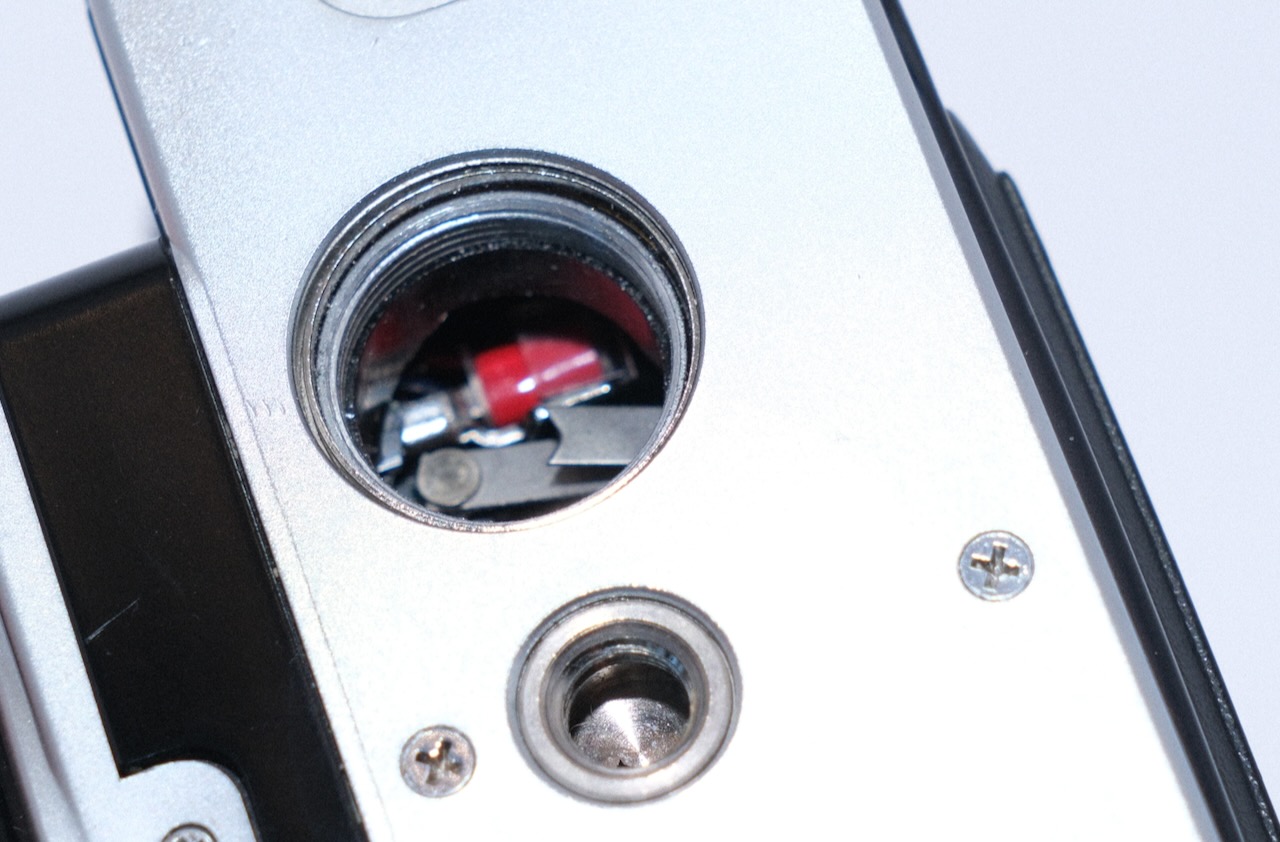
Where you can see something red, should be the black plastic bottom of the battery compartment.
Mysteriously, the bottom of the battery compartment has disintegrated, most of it dropped on the floor when I tipped the camera up. With nothing to secure it, the battery contact doesn’t apply pressure to the battery pack and hence, one inoperative camera. After popping the bottom off the FG, it’s not the simple fix it might be either, the screws for the battery compartment as a whole unit, are accessed only after lengthy dismantling of the rest of the internals. So despite being able to get the requisite part for $10 (used) from eBay in the US, it’s now on eBay in the UK as spares or repair. Consequently, this year’s photo walk will be done using either an Olympus OM40, or the latest Yashica FX-D I’ve renovated, providing I get the scans back of the first roll of film I’ve run through it before the event.
This one might be a keeper. “Burnt Orange” skin this time, usual new seals and a pretty flawless 50mm lens.
Final frustration, the very nice and slightly expensive car I bought last year. I have what may be called an “engineer’s ear”, one that can hear rattles, knocking, mains hum and other mechanical or electrical sounds. The very quiet and occasional rattle I picked up on the car, I put down to probably one of the heat shields for the exhaust corroding on the attachment points, as they do, due to road salt. However, the car went for a service last week and they called back once to say the service in general was fine, with a couple of advisories, that I elected to have done. Then a while later, and sounding rather sheepish, they said they’d had a fault code pop up, and I needed a new turbo! My rattle was actually the turbo waste gate, as the actuator is duff. So four figures for the unit itself and the same again to rip a large number of parts off the car to actually fit it, and return said parts from whence they came. I am now awaiting the verdict of the warranty company and their independent assessor.
Back to normality, sadly. I say sadly, because Sheffield definitely lacks the sparkle of San Francisco. It also lacks clean streets (which if the signs are accurate, are cleaned at a set time EVERY week!), pedestrian minded drivers and in too many cases, the level of friendliness and service in shops you get everywhere I’ve visited in North America, both above and below the 49th parallel.
Strangely, I’ve yet to receive any editing requests from the publishers, so that’s definitely a conversation to be had. I know I’ve rewritten most of Vol.2 “several” times, some chapters more than others, but it’s bound to have plenty of things they don’t like or still don’t make sense.
Photography wise, it’s been great using the Fuji X-E5, the two Sigma lenses I bought are really impressive as well, while the Sony ZV-1 that was a late addition to the packing, has a few quirks shall we say. Whereas the GoPro is as reliable as ever, but now being able to compare on a large screen, the output off with similar from the Sony, has for me been fascinating. A new entry in Compact Diaries will appear in due course, but having used both to shot video from one of SF’s famous cable cars, and from a vintage fire truck, it’s fairly obvious that the stabilisation on the GoPro is insanely good!
A large box arrived whilst I was away, courtesy eBay and I’ll shortly be renovating what will be my third Yashica FX-D Quartz 35mm camera; I might even keep this one! As ever with old cameras though, if the seller doesn’t know to look for it, and this was from a charity so that’s doubtful, both lenses that it came with have nasty doses of fungus, which isn’t something you can easily get rid of, short of dismantling the lens. PCs, cars, things with wires/electronics in, been there, done that; lenses, no. Too many very small screws, equally small springs, which I’ll guarantee will shoot across the room, never to be seen again as soon as I try moving something and no manual on how to do it. Seeing as a replacement lens that has clean optics is only £30-50, and one has already been ordered, it’s also not really worth the effort (but I might try anyway). I’m tempted to video the renovation process this time as well, all part of a desire to learn how to get more out of either the ZV-1 or the GoPro.
A week or so before our holiday, I again started investigating my options when it comes to continuing paying for Adobe Lightroom. Much as it’s a good bit of software, what basically amounts to forking out £120 a year grates on the Yorkshireman in me. My problem is, it’s good at what it does, I’m used to using it to the level I need and some of the recent updates have been impressive, especially tweaks to AI object removals. Going all-in on Fujifilm hasn’t helped though, as most commentators say Adobe’s support for Fuji’s .RAF raw file format isn’t as good as that for Nikon’s .NFF or Canon’s .CRW. However, the best support is supposed to be Capture One, but £36 a month or £274 a year up front definitely goes against the grain, it might be OK for pro photographers, but I’m not one!
Hence, in addition to Luminar Neo which I’d previously bought and installed, I now have Photomator to see if that will handle the image management side of things in place of Lightroom and I’ve a month to see if Pixelmator Pro does sufficiently more than Photomator can do solo, before it costs me anything.
Apple bought the company which produced the original Pixelmator app a few years back, and that version hasn’t changed a deal since. The Pro version used to be a one-off purchase, but has now been included in Apple’s Creator Studio subscription, alongside Final Cut Pro (FCP), Logic Pro, Motion, Compressor, and MainStage, together with enhanced AI version’s (hmm) of Apple’s office apps, Pages, Numbers and Keynote, all for the princely sum of £12.99 a month. Yes, before you say anything, that’s £3 more than Lightroom, but compared to what Final Cut Pro and Logic Pro were on their own, plus Pixelmator Pro, it’s a huge saving.
Naturally, for me at least, there are limitations to the value of the full suite. Logic Pro I doubt I’ll ever use, much the same as I’ve never used GarageBand bar a few clicks and prods, a musician I’ll never be. Likewise, Final Cut Pro is something I’ve not had a need for, but if I get into using the GoPro ad ZV-1 for video, it would be handy to at least try it. If it’s iMovie on steroids, I stand a chance. Both Motion and Compressor were stand alone apps, at £49 each, the former linked into FCP to do animated titles and other similar workflow (hmm, maybe, maybe not), but after attempting to post a video on here the other month, Compressor may well get used to shrink the files! As for the rest, what used to be called iWork (I discovered my install DVD the other week for v9, dated 2009!) so Pages, Numbers and Keynote, were already my default office tools, MS Word has only returned on a temporary basis as I mentioned before, while Freeform is a brainstorming white board tool that looks really interesting.
Now despite what Apple are currently saying about the old/standard/non-AI versions of most of the above software, that these will remain available, but not get much (if anything probably) in the way of updates, it would seem the original versions for the office apps have already disappeared from the App Store, so you can rather guess what might be coming next; we shall see. But for now, I’ve a month to see if it’s all worth it, will any of it displace Lightroom and can if I get my head round any of it…..
…now if they’d introduce a decent database tool to go with Pages et al, better than Bento if anyone remembers that, but a easier than FileMaker Pro, so like MS Access but with a touch of Apple’s magic, it would definitely be worth it!
Holiday photos…..
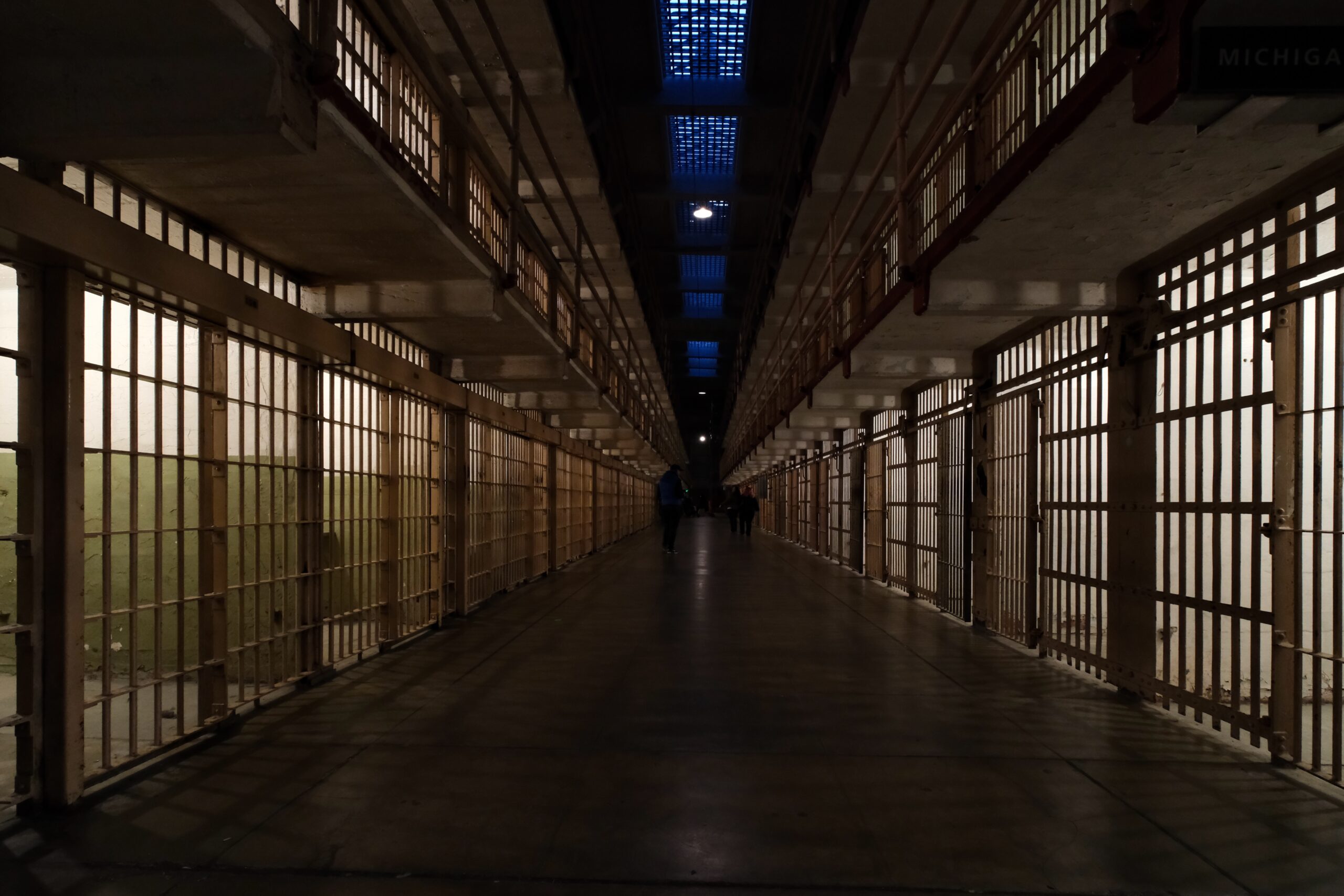
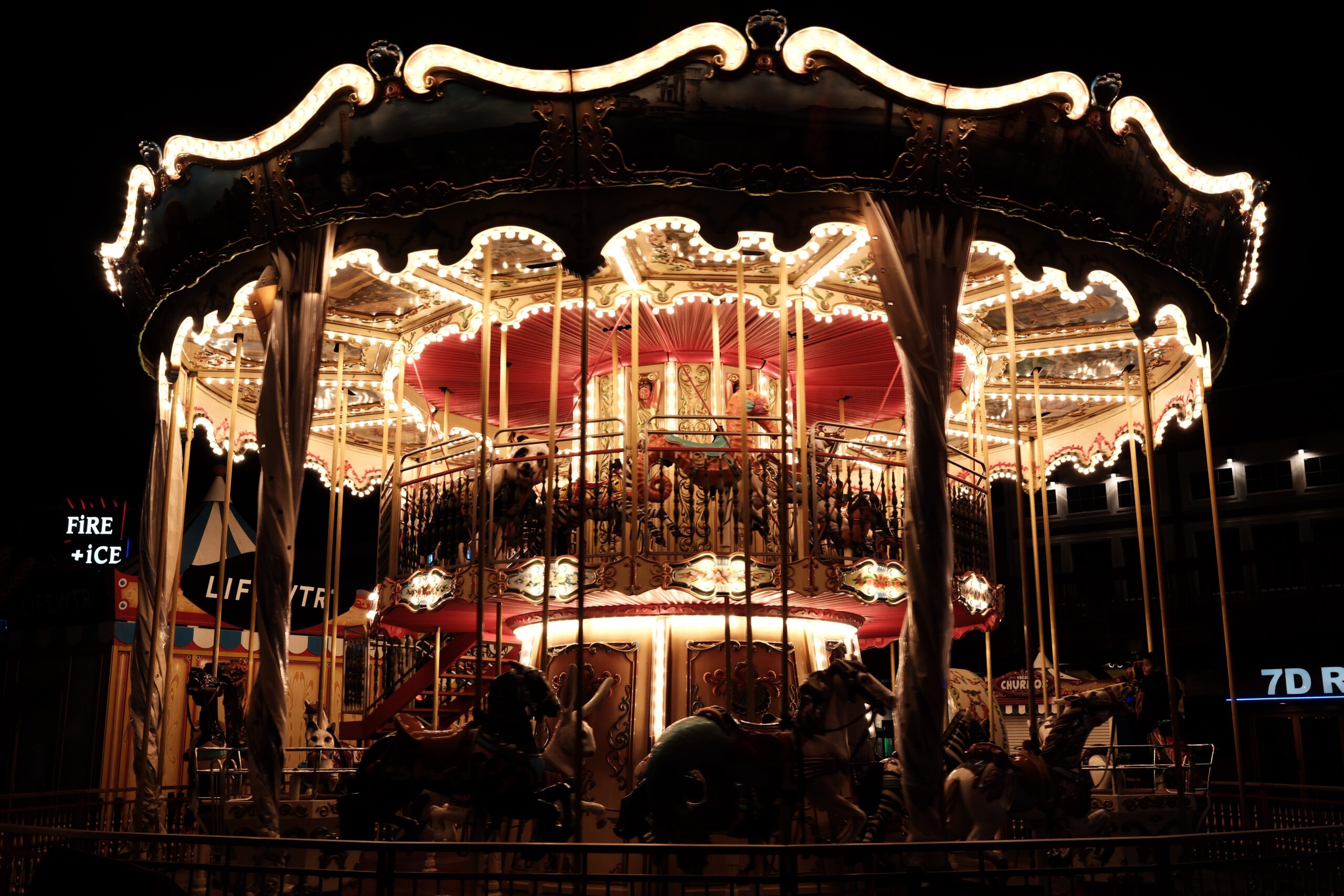
A very eerie place! Alcatraz cell block. Not bad for ISO2500. Sigma 10-18 at f7.1Fisherman’s Wharf. Fuji 23mm f2.8 pancake lens combines with the X-E5’s light weight and stabilised sensor. f4.5 at ISO800 and 1/85th sec.
My photos have finally been sent to the publishers, along with their captions and after yet another read through and, for now, a final edit, the text to Volume 2 has also been despatched….and breath. Next steps; email tennis with the copy editor and probably a couple of adjustments to the captions text once the archive images are sorted. If it’s to be a repeat of last time, the final copy plus all the images will be sent off to India and Vol 2 will get printed there, then return for publication in July, accompanied by a heft thud on my front doorstep as my 10 free authors copies arrive.
Yes, it has felt like a bit of a drawn out process, but it is what it is. Though after a close to two years of honing, even I think it reads a lot better than Vol 1.
Interestingly (to me at least), I took a look on Key Publishing’s website yesterday and it’s showing Volume 1 is out of stock! To say the odds of them selling about 500 copies in the last few months since I last looked are slim. So they’ve either pulped them, had a warehouse fire, or maybe, just maybe, they’re saving what’s left just in case there’s a demand for Vol 1, once Vol 2 arrives. The term “Scooby Doo ending” springs to mind.
In the meantime, if the copy editor wants me to do anything for the next week or so, tough. We’re off next week on a photography trip holiday to San Francisco and the MacBook isn’t invited.
As for taking photographs, first trip out the other week to test the X-T5 “in anger” and even the weather behaved. the Yorkshire Air Museum at Elvington looks much better with blue skies and sunshine than it did last time I visited, when it was grey, wet and miserable. Had a great chat with a couple of the people that manage the museum after depositing the 1930’s aero engineering books I’d been given with them. It was even better to learn that they’d seen a copy of the books at another museum and there’s a section in them that will help restore another exhibit they’re bringing up to Yorkshire: Result!
It’s safe to say I’m delighted with the output from the X-T5 and very much back in a happy place using it, much like the late lamented Olympus. It’s not quite as small and light as the E-M5, but drastically better than either Nikon full-frame I’ve had in between and from what I’ve seen, I’ve lost very little in the way of image quality. What I’ve also gained is easy access to “film recipes”. This is essentially a method of customising the output from the camera sensor to give your images a specific look, be that simply B&W with a coloured filter to tweak the impact reds or blues have, or give them contrasty and pure blacks, so it looks like you’ve used ISO 50 Ilford Pan-F.
There’s a whole cottage industry dedicated to creating Fuji recipes or their counterparts for other systems which support similar techniques. All of them include a few particular favourites from the heyday of 35mm film, especially emulation of Kodak’s slide emulsions, Kodachrome and Ektachrome, assortments of Kodak and Ilford’s monochrome negative films, like T-400 and the aforementioned Pan-F, as well as more non-specific themes to create moods associated with or for places. This includes adding grain for moody street photography, hazy effects for sunnier climes and a host of slightly more off-beat effects.
Naturally enough, Fuji have a head start over most camera manufacturers as their range of 35mm films were easily on a par with Kodak’s finest. Velvia 50 slide film was my particular favourite, producing lush vivid greens for landscape shots, while Neopan Arcos 100 was superb fine grain B&W . My
X-E5 which is already packed in my cabin luggage, has a dedicated wheel to select the built in film recipes, along with 3 empty custom setting you can program to suit. As the X-E5 and X-T5 share the same sensor and processor, the recipes I’ve acquired are good for both cameras, and after my day at Elvington, I can see much of San Francisco being shot using Kodachrome 64. As I always shoot with the camera set to save images as both JPG and RAW, I automatically get an “as is” image (RAW) and a JPG image that’s been subject to whatever recipe is set. Thing is, so good is the JPG output from the Fuji, if I get the exposure right in camera, there’s very little to do later in post on Lightroom or whatever if I don’t fancy editing the RAW files.
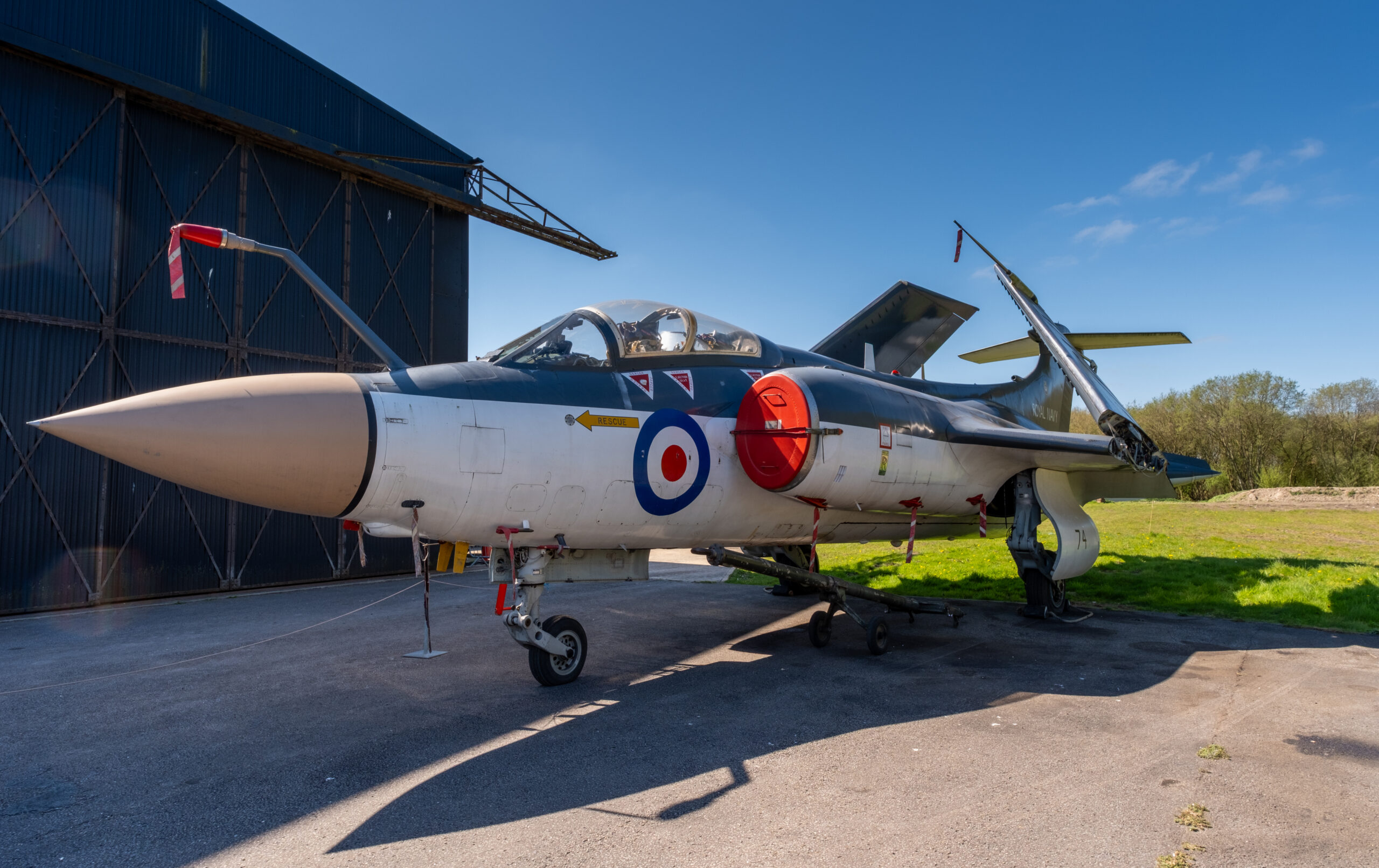
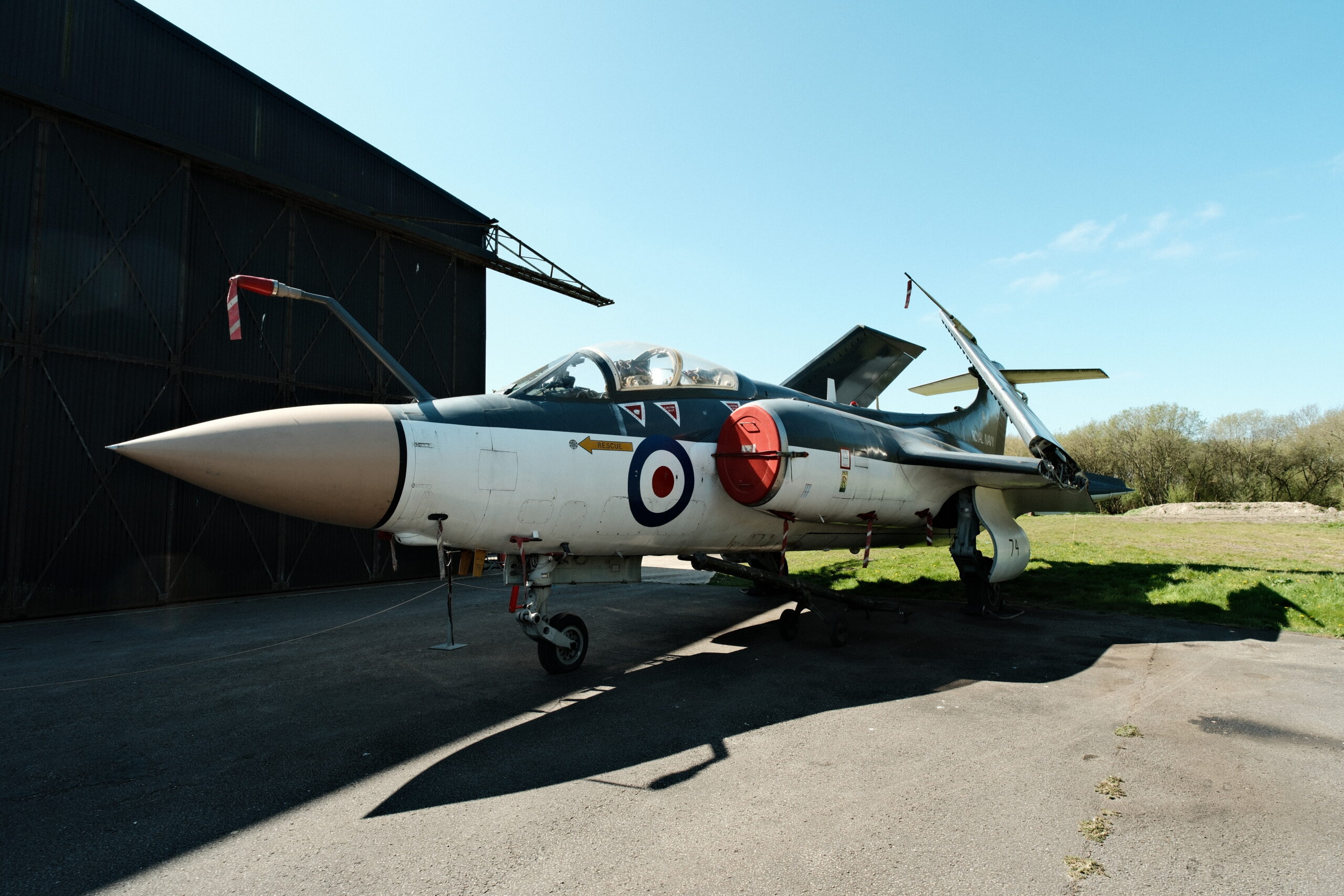
For the uninitiated, the aircraft below is a Blackburn Buccaneer S2, the second mark of Buccaneer built for the Royal Navy (once they’d finally put decent engines in it!) and eventually thrust onto the RAF, in S2B and S2D versions once they’d axed all the Navy’s proper carriers and after they’d cancelled TSR.2 ….Volume 2 is out in July for the whole sorry tale 🙂
The original shot edited to taste in Lightroom.
Spot the difference!
The same image, but with the Kodachrome 64 film simulation applied.
Those who remember Kodachrome 64 will understand, but I sat there staring at this for a good few minutes just thinking, WOW.
For those who don’t have a clue what I’m on about, lets just say I’m more than impressed that at the flick of a button in effect, I can make my camera produce images that look like I’ve taken the taken using 1970s slide film, without having to send it away in the pre-paid envelope (you didn’t drop this stuff into Boots, do your shopping and come back to collect your snaps!), wait a week or more for it to return, set my slide projector up and then discover there’s only half a dozen decent photos on the whole 36 shot roll.
Next time, probably lots of photos of coffee and croissants….(SF appears to be the croissant capital of America) as well as a certain bridge.
After a weekend spent looking at all sorts of reviews and trying to balance those against experience and knowledge, as well as a bit of soul searching I suppose, sometimes you just have to go with your gut; I am now Nikon-less.
I knew myself well enough to know that the Zf would end up sat in a bag (yes, one of many before you say it) and the little X-E5 would become my go to camera. Much of that is to do with its size and weight, as well as the fact you can actually stuff it in a jacket pocket; with the 23mm lens on at least. But it’s also because it’s fun to use! The output is excellent, even unaltered JPEGs, the film simulations are great, and I can afford more lenses for it (and have).
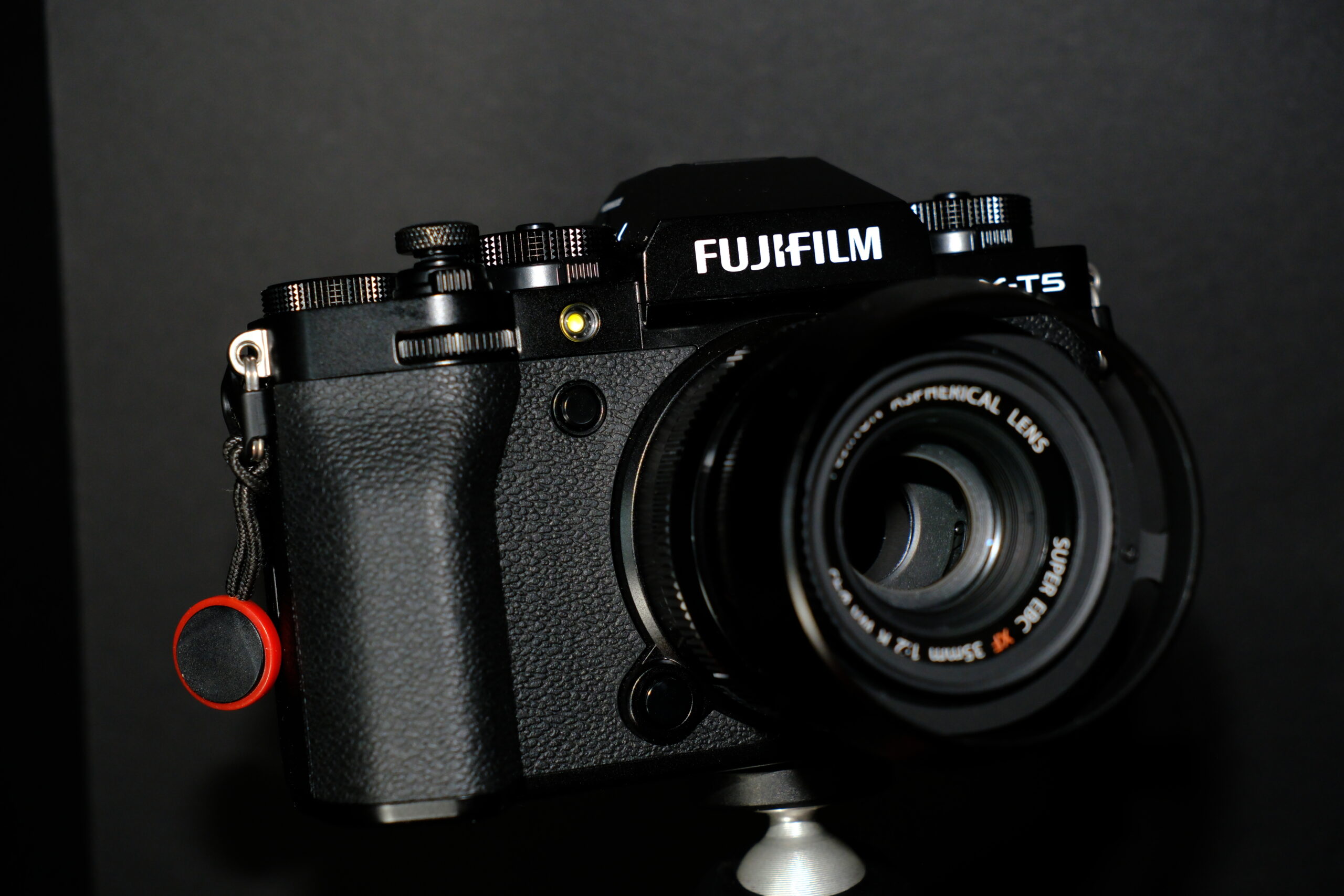
So welcome to my Fujifilm X-T5.
Full circle and forty plus years later, back to a Fuji main camera.
I was edging towards actually buying a used X-T5 and doing a proper head-to-head shoot out with the Zf, but after a brief skirmish with the X-E5 instead, it became readily apparent I’d be losing very little in terms of image quality, as it’s the same sensor in both Fuji bodies. I also knew what’s possible from an even smaller sized sensor than APS-C, the micro four thirds (MFT) sensor on the 12MP E-P2 and the E-M5, especially the 16MP version on the latter, produced excellent images and beautifully large prints, A2 in a couple of cases.
One video I watched really struck a cord with me as well, that if trying to afford a full-frame “habit” restricted the photographer travelling, then it was time to make a change. I don’t need any more photos for volume 2, I very much doubt there’ll be a third instalment, but travelling is definitely on the cards. Consequently, a visit to the usual place saw a straight swap take place, the Nikon kit. in its entirety, for the X-T5 body. Yes, I probably could have done a bit better on flea-bay, but with more hassle and I really couldn’t be bothered (it’s not the place it used to be as a private seller either).
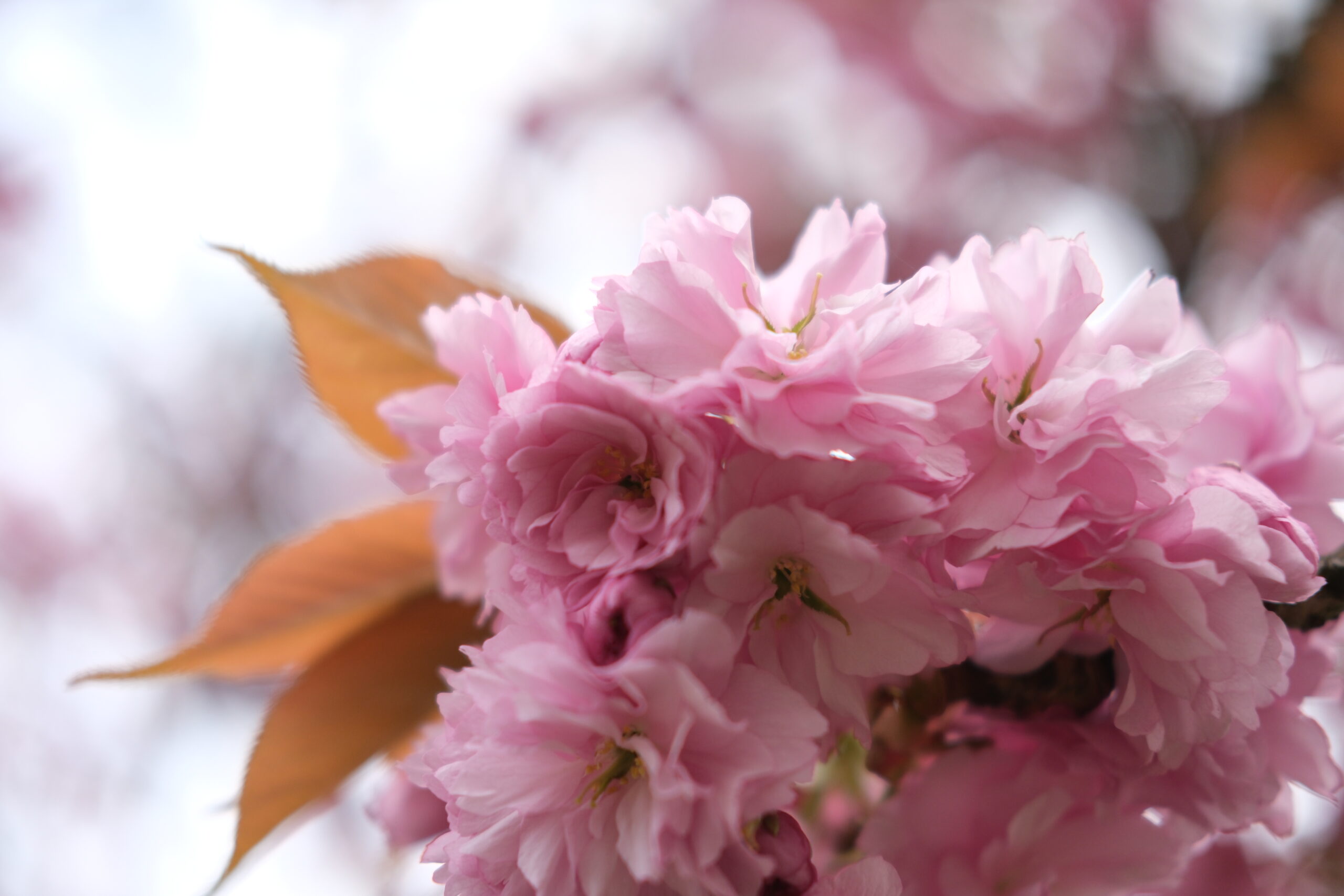
I’d taken the 35mm f2.8 lens along when I went to get the X-T5, which I’d acquired at the photography show last month, and took a walk in the park on the way back, with the default settings enabled.
Bearing in mind this is a camera held in one hand, whilst I’m having to stop four-paw drive pulling me elsewhere, it’s not bad! Single hand stable shooting with the Zf was a non-starter.
A day later and a few setting changed, especially saving as RAW plus JPEG, both memory slots filled, battery charged after hours trawling settings menus, (see below), I tried again, with my usual accomplice.
Lichen on a tree branch, cropped but unaltered output. RAW file via Lightroom..
A day out in the next week or so to the Yorkshire Air Museum at Elvington will prove a sterner test. Better still, at the same time I also get to donate of a pile of 1930’s aero engineering books someone gave me, and hopefully these will help them renovate an Armstrong Siddeley Cheetah piston engine they’re working on, which I’d assume is for an Avro Anson which they have.
One thing that is all too apparent when switching camera manufacturers, is the different ways in which they implement the settings menus on them. People used to moan at Olympus for their menu structure on the MFT range, and to be honest, at first there was a bit of a learning curve. But once set and with quick menu option enabled for the bits you actually did alter when shooting, I rarely needed to delve into them.
Prior to Olympus, Canon’s menus were easy enough, but there again that was 20 years ago and a conventional DSLR, not mirrorless and things have definitely become more complicated since. Those on the three Nikons I’ve had were probably the most logical and easiest to sort out of the mirrorless cameras, but the Fuji settings are another world.
This is I suppose in part because there’s so much you can configure to get the camera to operate exactly as you want it, but some of the wording doesn’t help. Where basically all the other cameras say “metering mode”or words to that effect (so centre weighted, average or spot etc), the Fuji says Photometry and not until I looked at what it did, did the penny drop. Then there’s “greyed out” options, which you were sure weren’t greyed out seconds before, and are only enabled dependant upon other settings, leaving you to search through the manual to find out what you have to change (or change back…). This is all made more complex when you have half a dozen or so custom modes, each allowing you to make multiple changes, usually allied to implementing a film recipe.
Still, if can’t sort them out, I can see a reset settings and starting from scratch looming and 10 1/2 hours sat on a 787 reading the manual.
Back in February, I mentioned a term called GAS: Gear Acquisition Syndrome and I’m desperately trying to avoid another bout of it, other than for the obvious reason that it works out rather expensive!
Some time ago, I think I said for one reason or another, I’d done complete camera system/manufacturer swaps three times over the years. The last one was to full frame and Nikon simply to get the photography finished for the book(s), certainly to an original image standard I was happy with. As it turned out, I probably didn’t need to bother, the size and quality of the printed images would have masked the problems with “noise” (grainy photos as opposed to smooth) in low-light situations that the Olympus E-M5 suffered, and I could see on screen. This only occurred when I needed push the ISO levels beyond where the 16MP sensor was happy (because indoor museum lighting is generally crap for photography!).
I have cursed myself for actually going through with the change numerous times since, primarily because the Olympus was lovely to use, I had a good set of lenses and the images it produced, certainly in adequate lighting, were brilliant. This switch over also roughly coincides with starting this website in 2022, hence if you trawl back far enough, you’ll see the merry-go-round with assorted cameras I’ve had since, and more recently with me moaning about camera/kit weights, poor ergonomics and add-on camera grips. Strangely though, two recent events have finally delivered the reasons behind my grumbling, much to my surprise.
A reviewer I was watching on a website complained about the Nikon Zf’s handling in much the same manner as I had, both with and without a grip, but he’d realised what the problem was: its purely the position of the shutter button, compared to the rest of the Nikon Z series (except the Z fc) and most other “modern” camera bodies. Just take a look at what was my Z5 in the header image, the shutter button is on top of the grip. On the Zf, it’s on the top plate, just like an old school 35mm camera. But as you need an add-on grip for the Zf with anything more than the pair of small prime lenses Nikon released, you end up twisting your hand/shutter finger maybe more than you’d like, and it just feels awkward.
I’ve used the Zf since I watched that review, and now it all makes sense, I’m happier, honest!….
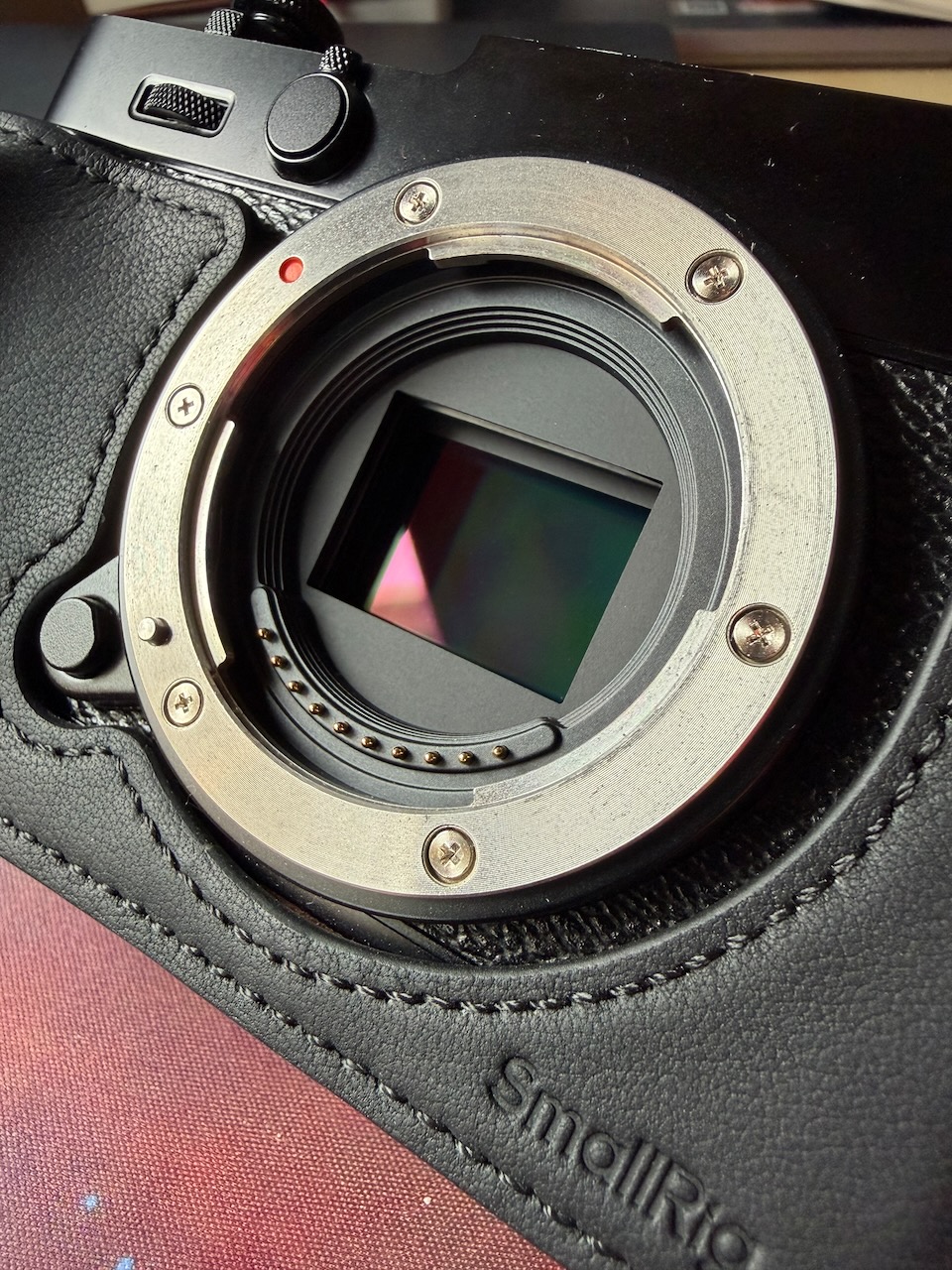
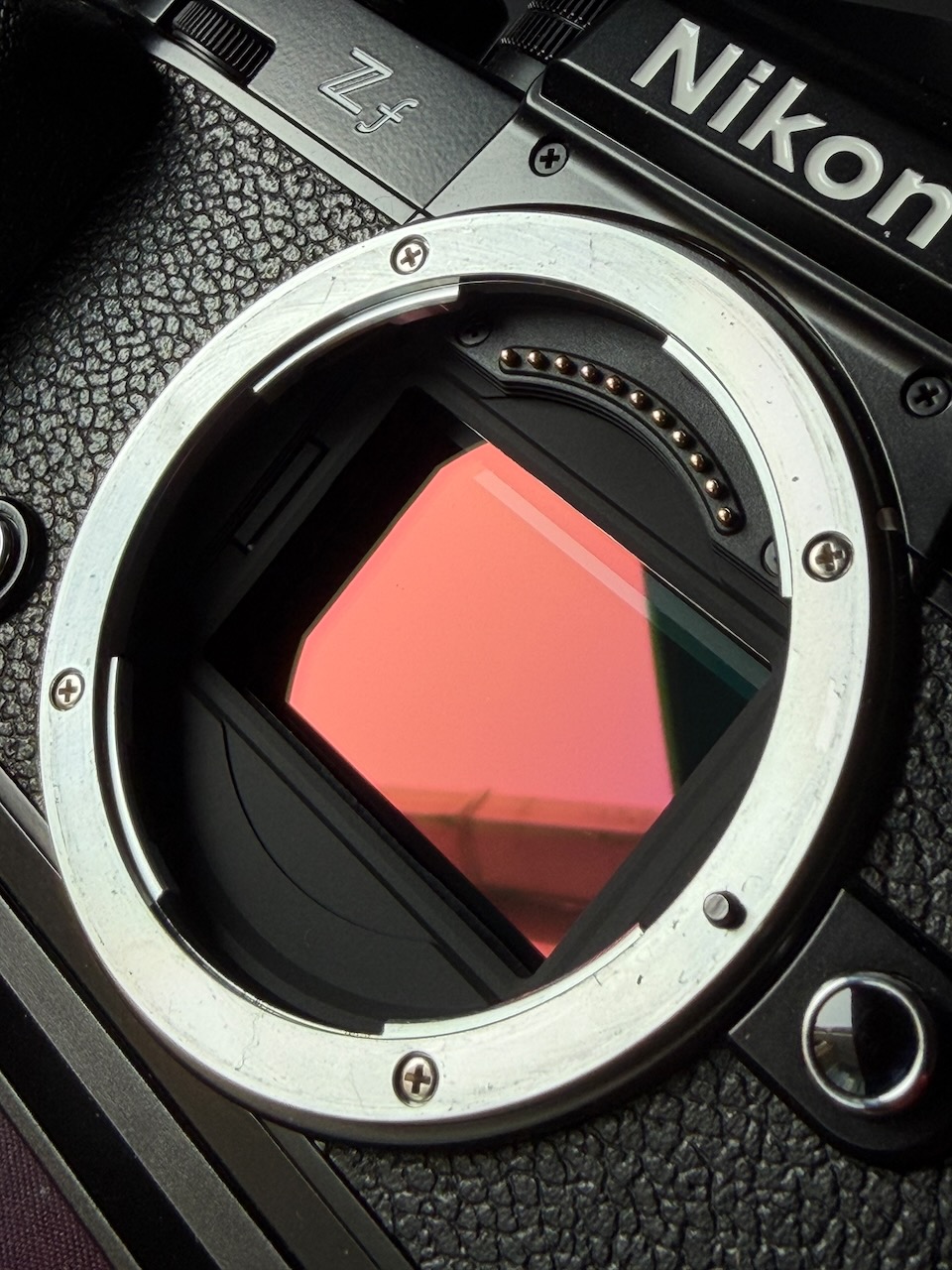
My other gripe about weight of both full frame cameras and lenses, regardless of manufacturer, I understood would happen from day one, it’s basic optical physics. In the photo below, on the left is the APS-C sensor housed in my Fuji X-E5, on the right, the full-frame sensor of the Nikon Zf. The diameter and number of glass elements needed to focus light onto the sensor, which is also dependant on what task the lens is designed to do, add the auto-focus electronics, plus the lens barrel to house them all, makes most full-frame lenses moderately heavy, telephoto zooms and fast primes especially. The APS-C sensor and its associated lenses fare better simply because the sensor is smaller. By smaller, the full-frame sensor is 2.6 times larger than the APS-C, against the micro four-thirds (m4/3) sensor in my old Olympus it’s 4 times the size!
Fuji’s 40MP APS-C sensor, also found in a couple of their other cameras.
Nikon’s 24MP Full-Frame sensor, widely used by Nikon.
It’s this sensor size that governs the ability of full-frame to gather more light in low light situations than the smaller sensors. It’s also why issues could arise with pixel density causing noise on APS-C and other even smaller sensor cameras for an equivalent number of megapixels compared to full-frame, but that’s largely been solved. Hence the 40 megapixel Fuji sensor is heading for double that found in most of its APS-C competitors, let alone an awful lot of full-frame models.
Of course, if you really want good low light photography, you move to medium format like Fuji’s GF series, but that’s a whole different cost/weight scenario and I’m not going anywhere near, this side of a serious Lotto win and 180Kg baggage allowance on a, from Southampton, around the world cruise!
What really brought home why the weight thing was bugging me, happened in my favourite camera store, Harrisons. The used Fuji wide-angle zoom I’d bought online a couple of months ago was traded in against a used, smaller and lighter (yes, definitely a theme going on here!) Sigma lens, which balances better with the small body of the X-E5. I happened to mention I used Olympus E-M5 for ten years and the assistant handed me an ex-demo OM Systems OM-5 with the current equivalent lens attached to the one I used to use. Oh, dear!
Now I finally understood, four years or so down the line, why everything feels heavy…. because compared to an OM-5 II and 12-45 f2.8 pro lens, it is! I had completely forgotten just how light and small the micro four-thirds cameras are, which is one reason they’re popular with those who disappear into the wilderness, coupled with brilliant weather sealing and class optics. This is also why the OM series are still regularly recommended in the photography glossies and webpages.
Where this leaves me in terms of keeping the Nikon for “big jobs” or at least ones where really good low light capability is needed, or where I’m not worried about my camera gear taking half the weight of my cabin luggage, I really don’t know. There’s no doubting the output is excellent, and knowing what I gave up to move to full-frame in the first place, I’m very reluctant to part with it. I’ve got ideas (as ever…), but in the meantime, we’ll wait to see how well the Fuji performs on its travels first.
Interesting day out this week with my friend to the Midland Air Museum (MAM) near Coventry to add a couple of extra options for my photographs for Volume 2. Quite spookily, the morning after an email from Key Publishing appeared asking how I was doing with the pictures! Hence, I spent the day going through the captions for said pictures; but as it turned out, much as happened last time, the issues were more to do with archive photographs.
About three years ago I spent a day at Key Publishing, sifting through a pile of their archive photos I’d asked them to drag out so I could choose a few for the aircraft in both volumes. In-between times, I’ve found a few I like more, either in either of Key’s magazine I usually buy, or their website. The trouble then is, establishing who owns the images, because they may belong to whoever wrote the articles and were used with permission. In most cases thankfully, I have multiple options to choose from if I can’t use the ones I’ve founf, but in a couple of instances, I’m really limited, because there’s not a lot of photos of the thing in the first place. So I’ll have to wait and see what the response is to my questions when I send my email in reply.
My trip down the M1 also gave me a chance to compare my Nikon Zf with my Fuji X-E5 “in anger”. This was especially significant indoors, as the light capturing ability of the Zf’s full frame sensor, is rather better than the APS-C sized sensor in the X-E5 and massively better than the Micro Four Thirds sensor in my late lamented Olympus I took most of the original batch of photos with that have ended up in print. As it turned out, for one I shouldn’t have been worried and for two, I really need to be a little lighter of touch with the Fuji’s controls and get to grips with which control is set to do what, let alone be more aware of what the display says regarding ISO settings if I’m a bit sausage fingered! Hence the indoor shots were all taken at ISO 1600, as opposed to ISO 400 the Nikon was happy with, yet until you start magnifying them, it’s hard to notice the difference. For me, that rather underlines why I like the physical dials on the Zf, or the more limited options of what you can program the front and rear control dials to do on my old Z5. Time to sit with the Fuji manual again I think and limit the command dial functionality a little…
Much like my previous visit to MAM, where a large proportion of the exhibits are outside, we were treated to a day of overcast grey “clag”, which generally leaves you having to use exposure compensation to stop you getting over bright sky and darkly shadowed aircraft, it also means a bit of editing. Fortunately, the rain held off until after we’d just reached the car to leave.
I’ve used Adobe Lightroom for years, certainly back to when it was something you bought outright, rather than drip feed Adobe every month for the privilege of continued use and updates. You may gather, I’m not a fan of subscription software, what worked well for me one year, most certainly would for 2-3 after, or until they added something worth shelling out again for. So there’s no surprise why Adobe and a host of others have all moved to encouraging you paying by a thousand cuts and you really do have to keep an eye on software subscriptions as they can soon mount up, especially if you add apps for phones and tablets into the mix which won’t share across devices. To make it worse, for me at least, I’ve also succumbed to resubscribing to Office 365, purely to use Word for the next few months and make life easier once I start playing editing tennis with the copywriters; it will again get the chop once we’re done. Apple Pages and LibreOffice work fine and do everything I need for free, whilst Copilot was immediately switched off, there’s no AI words in my books.
However, where AI is concerned, its ability to remove unwanted objects in photographs has improved massively since it was first introduced, which is really useful at times and saves a lot of work with clone tool for a start. Generally my thoughts on AI control of image editing is it’s OK-ish, but you see some images and wonder just how much of them are actually the original image, they look so false. It is undoubtedly a changing world, sometimes not always for the better.
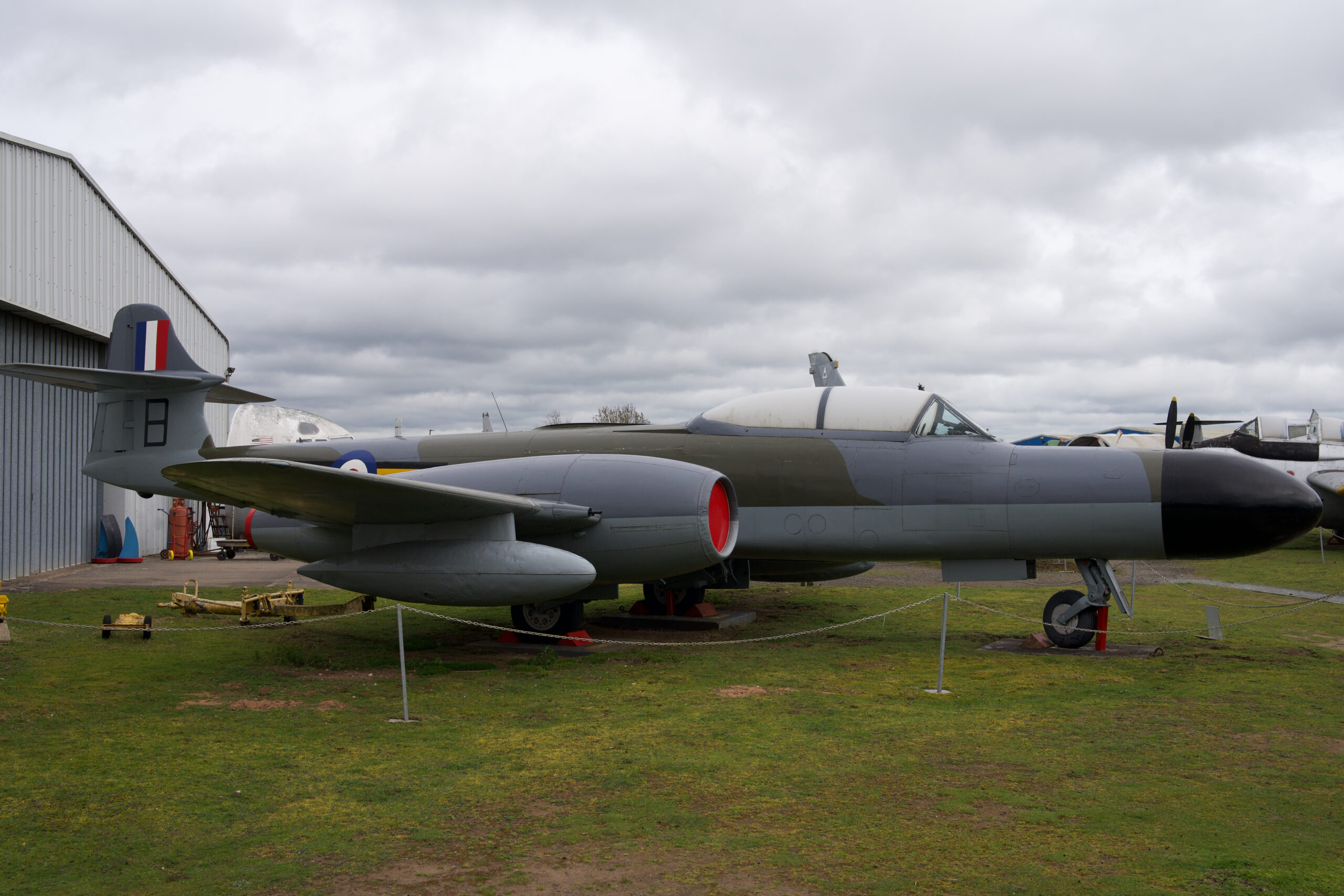
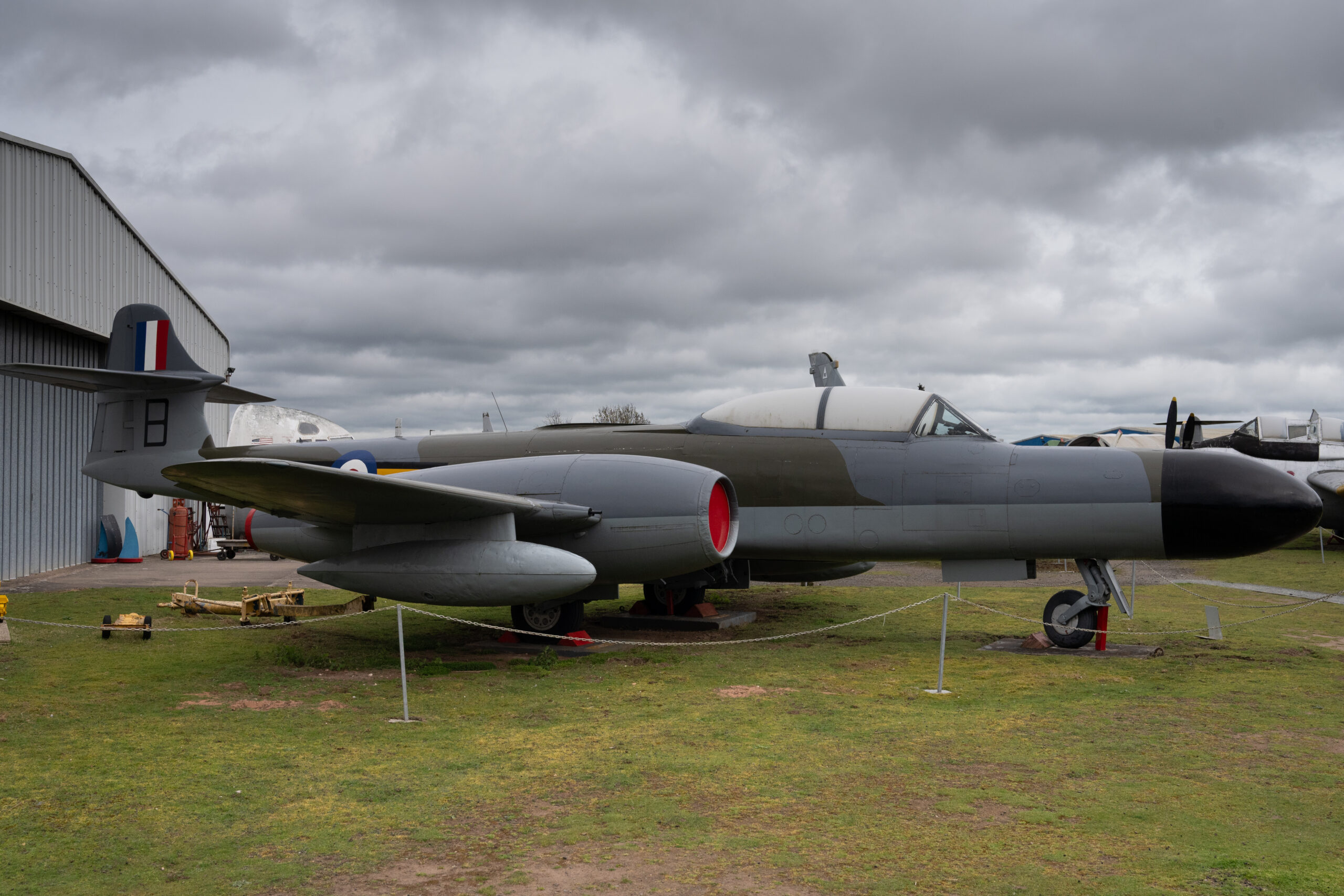
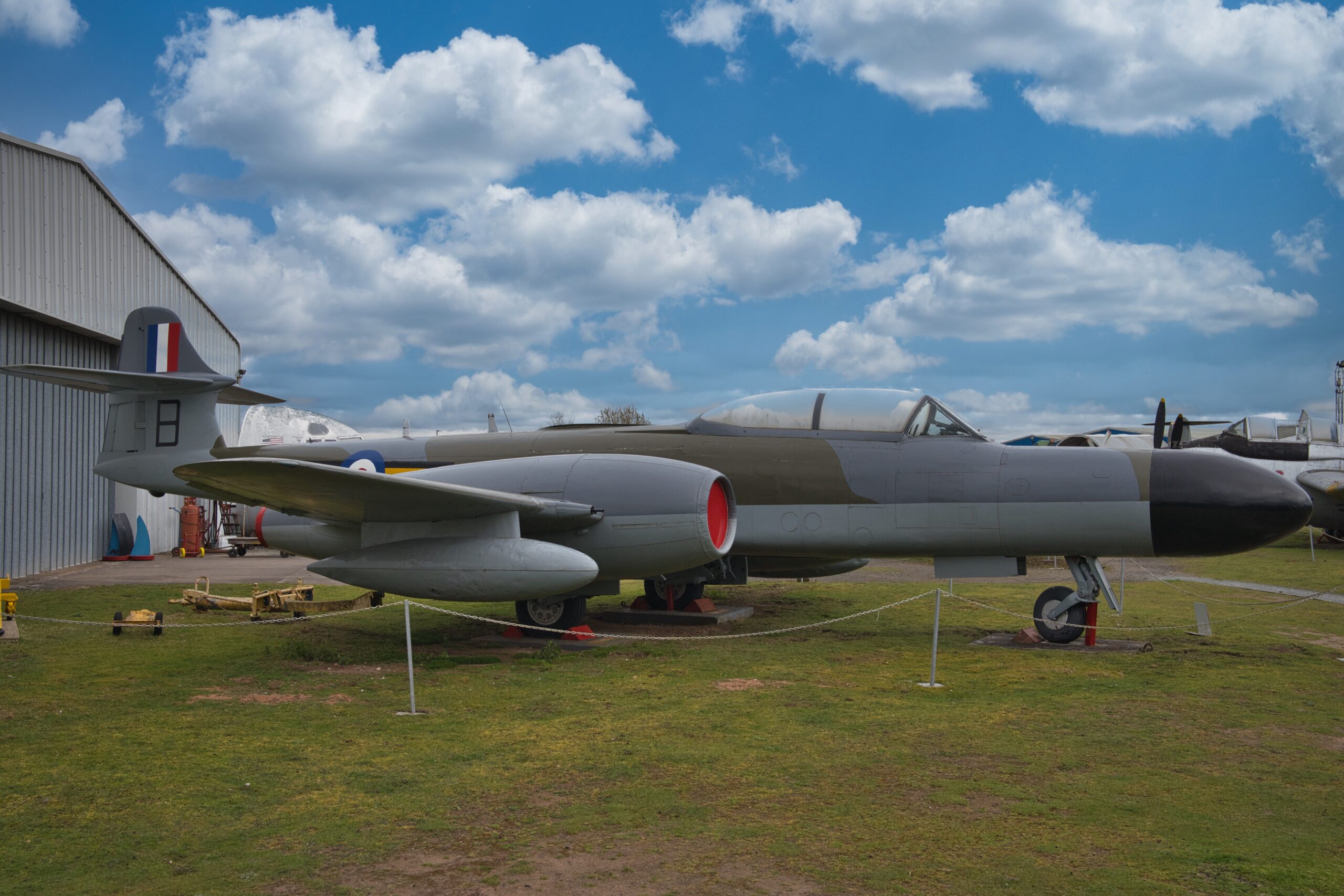
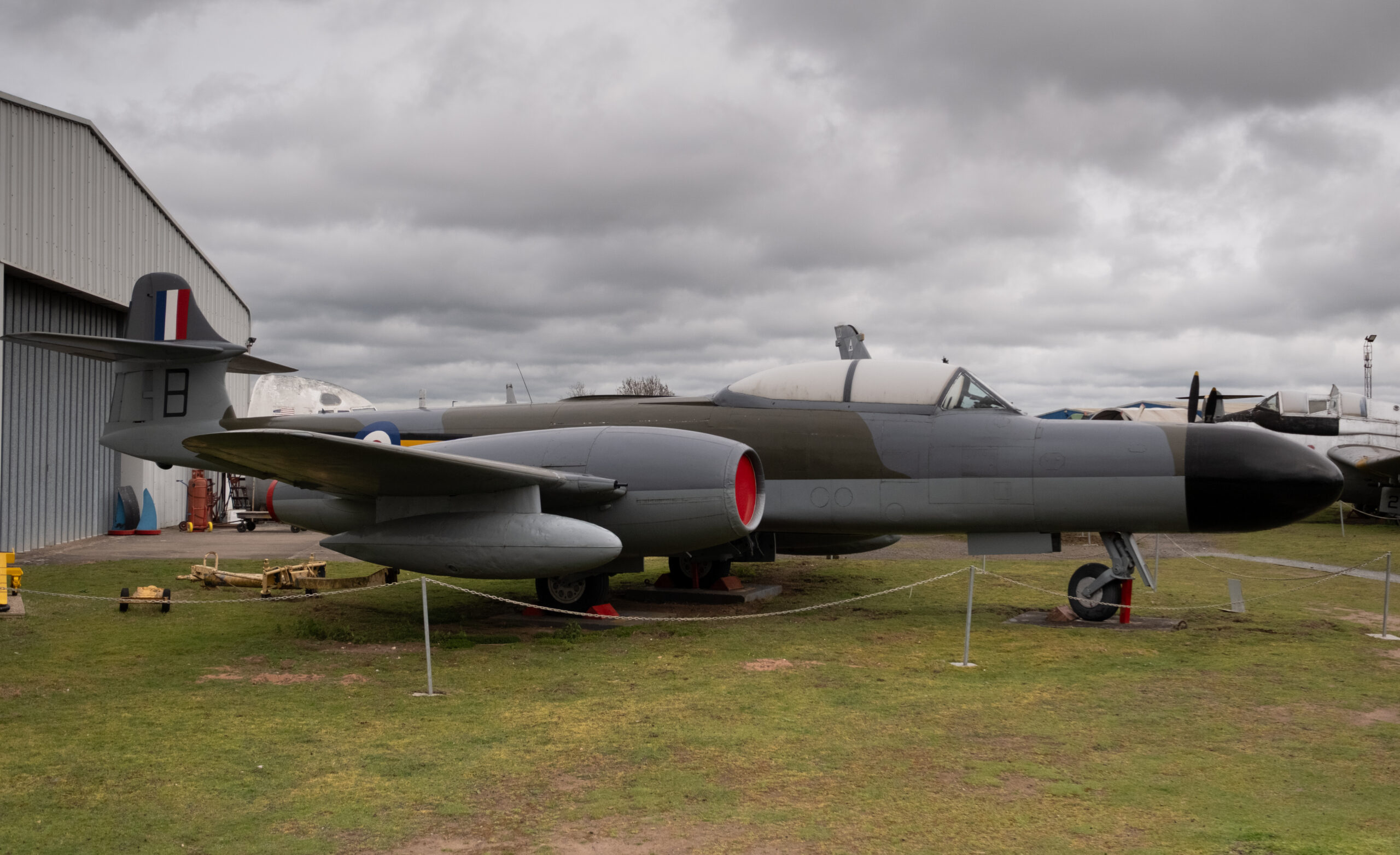
This leads nicely on to the series of photographs below, honest. Yes, they’re all the same aircraft, but bear with me. For the uninitiated, the subject is a Gloster Meteor NF.14. This was the last production version to see service and the rather out of proportion nose houses the best radar scanner we could squeeze in. It was 1953, so we’re talking a big moving radar dish and valves don’t forget, while the NF bit denotes this model as a night fighter. Note there’s no missiles either, just a pair of external fuel tanks so it could stooge around waiting for customers! No “I have a tone” here (you need to watch Top Gun again), the pilot had to creep up on his target and shoot the thing with a battery of four 20mm cannon. But it filled a gap for a couple of years until the missile armed Javelin arrived.
Now why four similar images you may ask? It’s all about what they were taken with and how they’ve been “developed”.
From the top, this photo we’ll use as the “reference image”. It’s the unmodified shot taken with the Nikon Zf, and simply dragged into Apple Photos and exported as a JPEG to reduce the file size and because WordPress hasn’t a clue what to do with a 31Mb .NEF Nikon RAW file. Still, the Fuji kicks out 87Mb RAW files and a couple of higher capacity SD memory cards were on my shopping list at the photography show the other week as a result!
Unmodified “Reference” image.
Next, same image, with a bit of mild adjustment in Lightroom to give the sky a little more depth and the white balance tweaked, so the grass isn’t quite so green (it wasn’t!)
Mildly edited in Lightroom, greyer sky and more natural grass.
Remember the bit about AI? Spot the difference! Edited in Lumiar Neo, I simply let the AI substitute blue sky for grey and a quick flick of the erase tool, so we’re also missing the top of the GR4 Tornado’s fin that’s sat behind the Meteor and looks like it’s stuck on the top of the Meteor’s canopy in the other two images..
Blue sky at the click of a button and removal of an odd bit of fin with another.
Now it gets more complicated.
What’s changed?
Correct, we’ve gone from a 24MP Full frame sensor to 40MP APS-C sensor, with a similar amount of adjustment in Lightroom to that in the second picture above, as well as a crop as the Fuji was using a 10-16 wide-angle lens. Dropping both images to similar size and quality JPG file reduces the usual advantages of the larger sensor.
Regardless of which you think looks the best, these images raise another question: Is the expense of full-frame worth it, especially the cost of the lenses to go with it, if you’re only going to convert the output to JPEG anyway to drop on the web, or in my case shrink to relatively small photos for printing and you’ve also software that can use AI to de-noise if needed?
As for what AI can do when importing scans taken from 40 odd year old slides that have been gathering dust in the loft for decades…. and before you ask, no, the sky wasn’t quite that benevolent, hence the puddles! But at least it looks like the rain might have stopped.
AI enhanced and de-spotted slide. 111 Squadron Phantom FGR.2 taken many moons ago.
The lineys are out kicking the tyres and checking the fuel, ground power is on standby and we’re readying the inputs for the NAVWAS. Volume 2 is scheduled for July. Hallelujah.
Consequently I’ve been through my ramblings again, especially the captions for each image as quite surprisingly there’s been more movement of aircraft exhibits recently than you might think, and it’s not all good news. Lots of talk about “making it relevant” and “non-core exhibits” basically means we’ve had funding to make it “educational” so all the aircraft beloved of those who know what they’re looking at is getting marginalised, placed in storage or offered to other museums. Worse still, when covered storage isn’t available, they’re being dragged outside, necessitating emergency waterproofing in a number of cases, which is simply asking for trouble. Definitely not good news when you’re one of only two surviving Avro York, the only one in civilian colours, a Berlin Airlift survivor to boot and have been under cover since renovation decades ago.
From a photography aspect, it also most likely means another hanger that looks like the Cold War exhibition at the RAF Museum in Cosford; interesting, but a nightmare to get site lines in because everything is crammed in on top of one another and to a large extent dark in terms of adequate light for non-flash photography, which when use of a flash is banned, makes life awkward. Hence the arrival of my full-frame Nikon to finish off what was needed last time around, simply so I could up the ISO without grainy images, whilst keeping the shutter speed high enough to stop the wobbles. Before anyone says, tripod, they’re banned too!
Now I’ve a fairly definite publishing date and been told the copyeditors will start the correction tennis game next month possibly, I’m off next week to grab my extra Folland Gnat photos from the Midland Air Museum at Coventry and hopefully their Fairey Ultralight is easier to access than last time I visited as well.
Meanwhile, first visit in a long time to the Photography Show at the Birmingham NEC last weekend with one of my fellow photographers. I admit, I did have a small shopping list, along with the usual prices, but I stuck to it! So I saved a few quid, changed my mind about getting a couple of items, so nice when you can actually have a good look at things and then ordered what was dearer on the day from elsewhere when I got home. Better still, for my wallet at least, I had a chance to have a look at the mark two version of the Nikon Z5, only to discover that the grip with the usual lens on is no better on that than my Zf, much to my surprise, so there will be no swapping. Mind you, the Fujifilm X-T5 is nice….
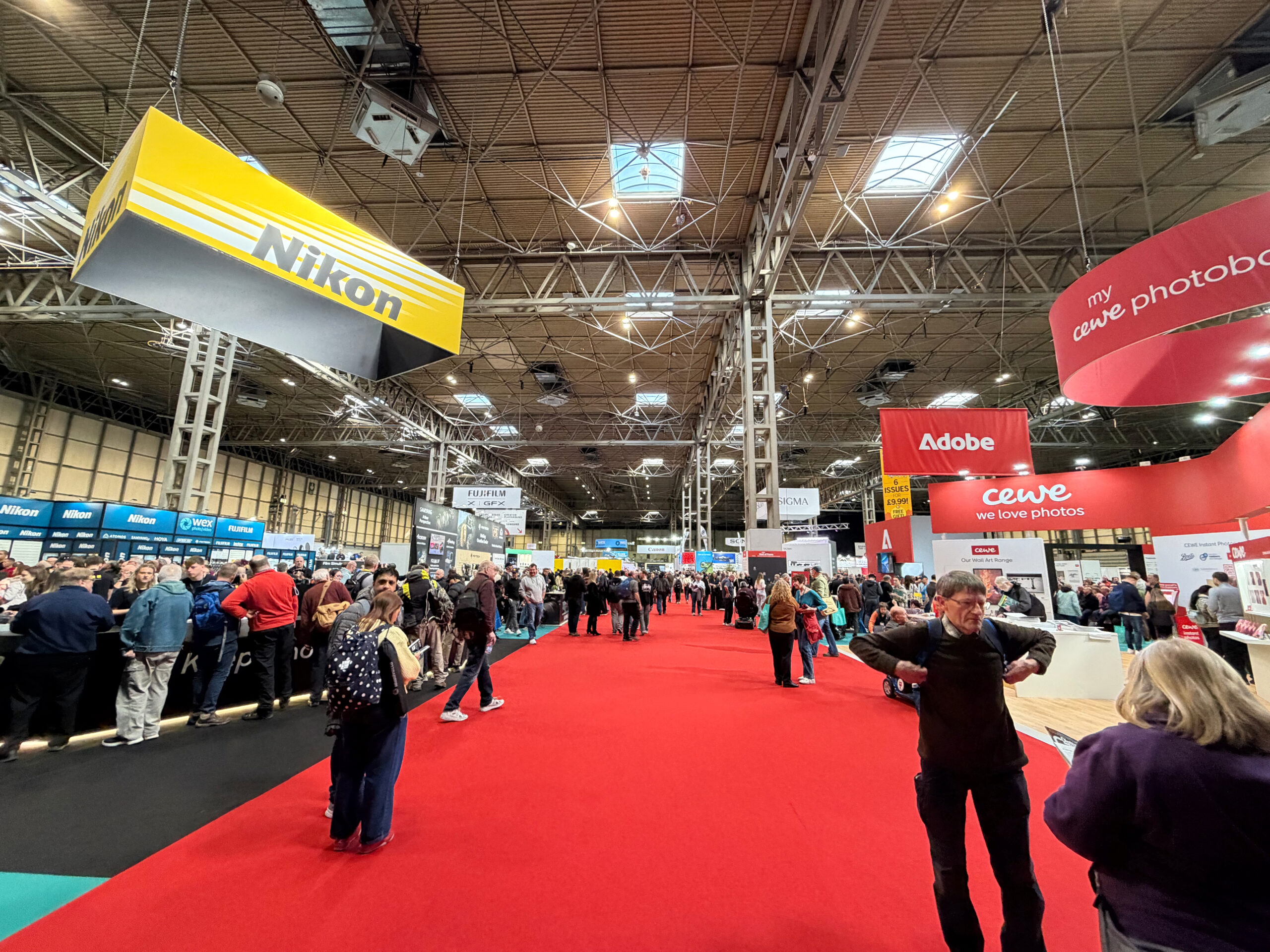
Hall 5 at the NEC, full of the latest camera kit and eager buyers.
As well as the big boys at the NEC, there’s always lots of smaller stands with interesting kit on; a rather tempting little drone, with the chaps from the ministry next door explaining where you can and can’t fly them, which made me chuckle, numerous sellers of tripods, printing services and other stuff that if you stopped long enough to work out what it did, you were liable to get accosted for a demonstration. The renewed love of all things analog saw a dedicated corner of Hall 5 allocated to those selling film, old cameras, new film cameras and related gadgetry. We managed a quick chat with the people from Analog Wonderland who ran the film photo shoot in Sheffield and elsewhere last year. They confirmed similar events will occur this year around the end of June, so that’s been pencilled in, but we might try to venture further afield this time for somewhere more photogenic than Sheffield city centre.
For a number of years, the show itself has alternated between the NEC and ExCel in London, but with a ticket and parking costing more than £30 for the NEC, the odds of forking out for a train ticket and return visit next year in London, are slim.
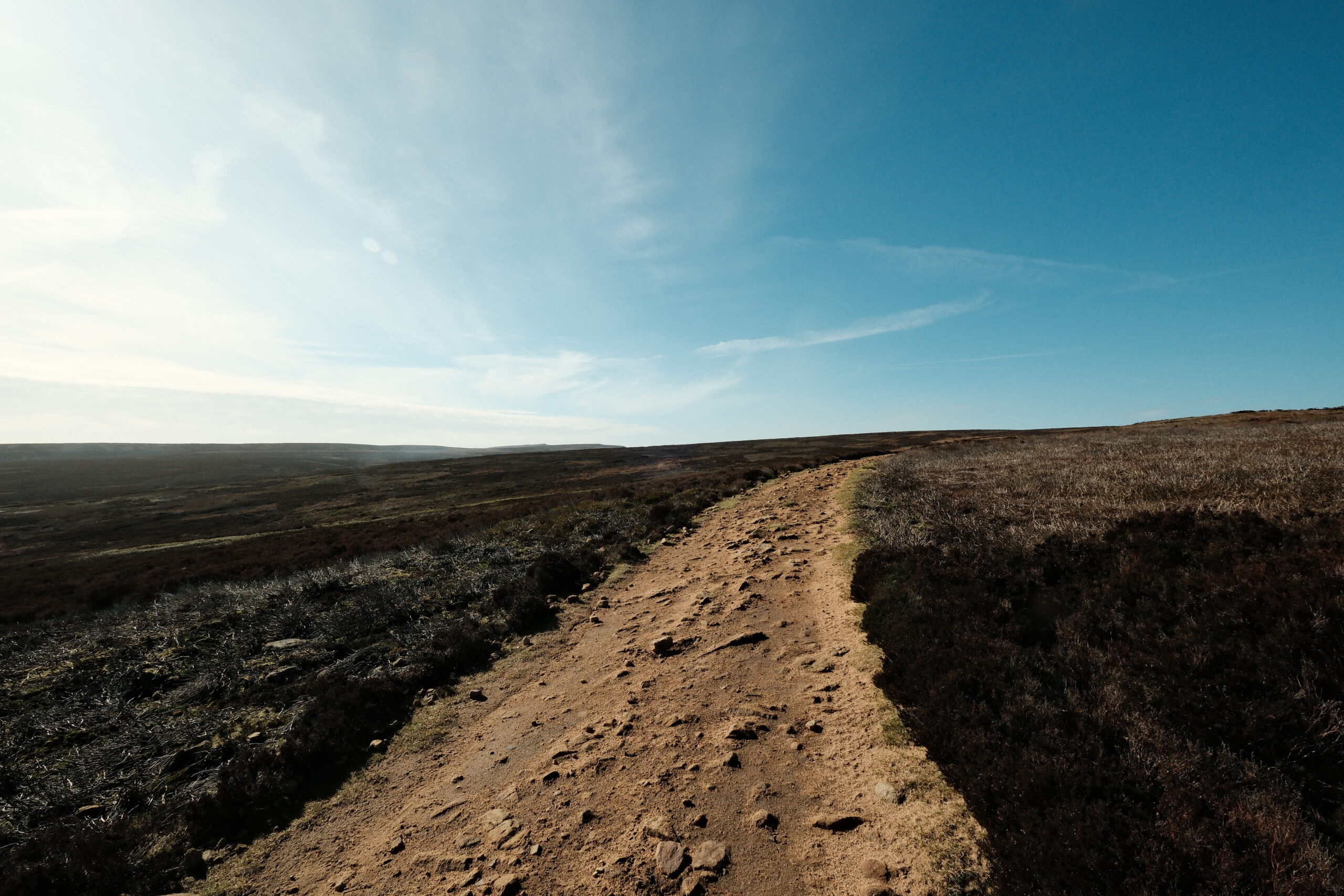
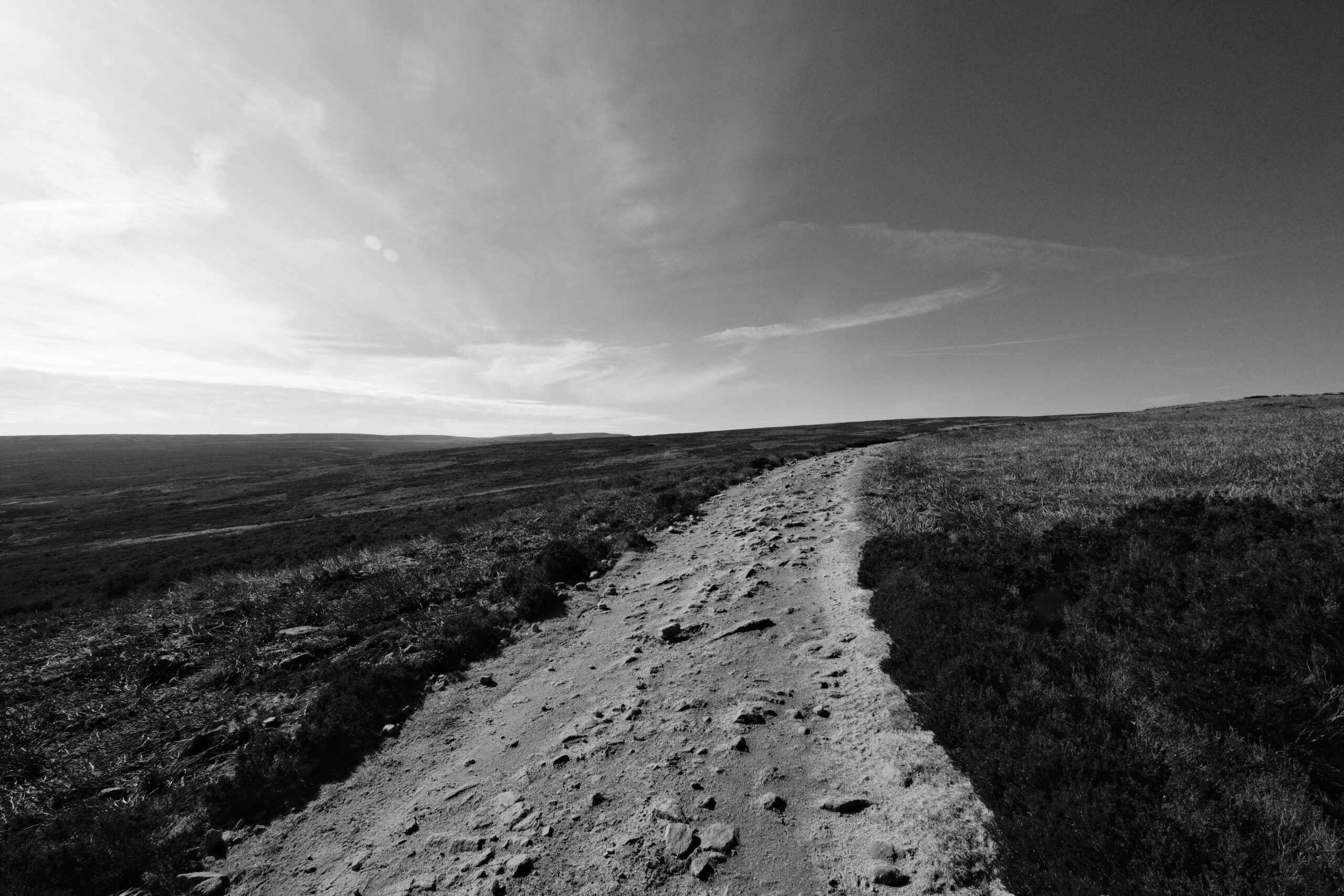
Our four-legged friend and myself made the most of some sun the other day and ventured out with a camera (or two). Things were OK until I released the bag I’d swapped my Fuji into didn’t have extra batteries in after all (as it turned out, none of my bags did, they’d been packed in a dedicated pouch ready for stowing in my cabin luggage…) so further digital photography was somewhat curtailed. But I’m loving using the film recipes on the E-X5, and much will be made of them when we’re off on our jollies in May.
Same shot, different results. This recipe emulates one of Kodak’s old slide films.Same shot, different results. This recipe is for Fuji Arcos B&W film, with the addition of a red filter.
Both the above taken with the Fuji X-E5 and a 10-16mm wide-angle zoom, hence the two lens flare spots despite having the lens hood attached, so something I’ll need to watch out for. The other cure for lens flare is holding one hand up to stop the light hitting the lens at the angle causing the flare, but that’s awkward when you’re attached to 30Kg of fur who’s just seen the nearby sheep!
I’m off on a bit of a tangent this time, mainly because there’s no news on all fronts, I’m yet to arrange a trip to Coventry to take extra photos for Volume 2 and I’ve not chased Key up about a publishing timescale either. I have however booked a holiday and as a result, the logistics of transporting cameras, lenses, filters and all the rest of the paraphernalia has loomed large in the thought process.
A common problem many photographers have is commonly known as GAS, no not that sort, but Gear Acquisition Syndrome, buying new (or used) kit because they think it will make life easier or help them take better photos; musicians are also know to suffer the same problem. Too a point I’m guilty of this at times, swapping the Z5 for the Zf a prime example, not because it was massively better, but because after loving using the lighter, classically styled Zfc, it seemed a reasonable thing to do. Selling the Z5 covered the cost (roughly) for a Zf which has the same 35mm styling as a 35mm Nikon F3, only to find the Z5’s ergonomics to be better than the Zf, mainly due to the weight of the Zf camera body and 35-70mm lens as a unit and a grip that doesn’t seem big enough. Let’s say that’s a situation yet to be resolved. On the other hand, I appear to have another problem, BAS, Bag Aquisition Syndrome!
Camera gadget bags are a bit of a personal thing with photographers, some like backpacks, others messenger type bags and more recently, sling bags have become popular. For years I used a set of pouches attached to a dedicated belt from a UK company called Camera Care Systems, CCS for short, but sadly for a number of reasons, they fell into administration in the late 1990s and as pouch systems also fell out of favour, I moved on. Then there’s what they’re made of. Billingham have made what I suppose could be called “old school” canvas bags for decades, they have a reputation for wearing well (they cost enough, so they should do!), and usually gain a nice patina in the process. Ballistic nylon, recycled plastics, aluminium cases, leather, the choice is huge.
Other than the obvious, securely carrying or storing your kit, as well as keeping the elements out, sometimes you want a specific style of bag for a specific task. For street or travel photography, having a bag that doesn’t shout “Expensive Camera” is generally advisable, whilst those heading out into the wilds usually need a backpack, preferably with space to store non-photographic essentials, like food or dry clothes. However, it’s possible I’ve adopted a scatter gun approach…
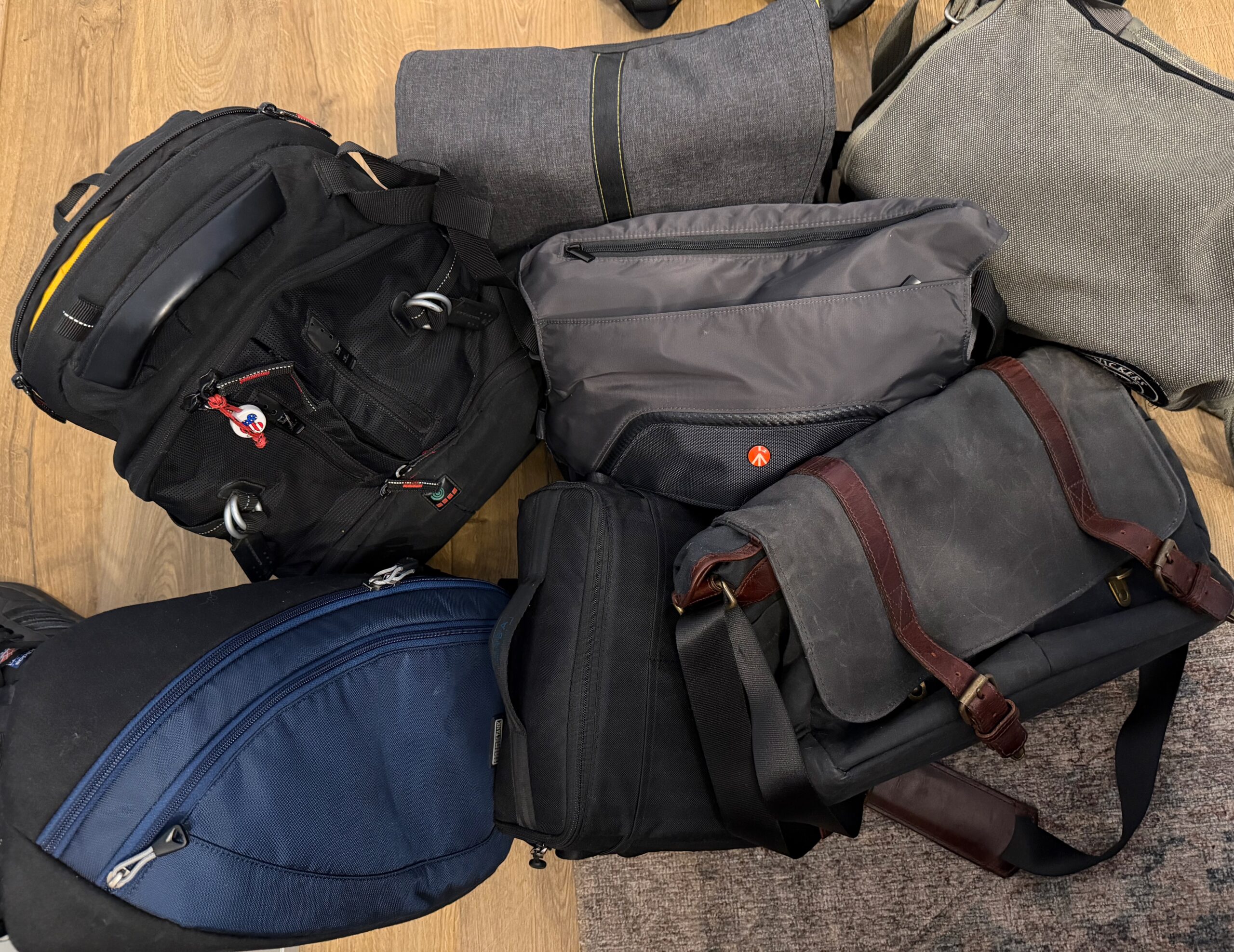
They’re not all full of cameras, honest!
So why so many? Having a full frame camera plus lenses, new APS-C travel camera and lenses, as well as a couple of old 35mm camera and a few lenses, doesn’t help. But storing them all safely is the top priority, with silica sachets in all the bags to help keep moisture out and reduce the chances of lens fungus amongst other things, is a must, as well as having the space for the other bits and pieces you collect. Everything in its place and its own bag means it’s all kept relatively tidy.
Going clockwise from the blue Think Tank sling bag in the bottom left, which houses my new Fujifilm kit, the black Kata backpack is empty and its the only backpack I have; swapping whatever kit I want to use into there on demand. The bottom section accepts any of my cameras and lenses, whilst the top half has enough space for nourishment, etc, plus side pouches take a water bottle and a trippod. Top middle, that’s a Nikon bag which is home to my 35mm Nikon FG and lenses, plus a couple of Tamron Adaptall lenses I can use on the Nikon or the Olympus OM40 (stored elsewhere). Top right, the nice and anonymous grey bag is my Think Tank Retrospective 5 which has the Nikon Zf and lenses in, ,it’s also got plenty of room for a laptop if needed and any other bits.
Bottom right, an Ona “The Bowrey”, which is a lovely bag, expensive when new (which it wasn’t) but its the least used and its the bag which might depart; its not as efficient(?) storage wise as the others, plus the strap has a habit of falling off my shoulder regardless of what I try. The small rectangular cube centre bottom, is a Tenba BYOB bag whose role in life it simply to keep your camera kit safe within another bag, usually within whatever my cabin luggage is, while the daily driver gadget bag is in the main luggage. Finally, in the centre, is a Manfrotto bag that’s usually used to store everything else, straps, inserts, filter adaptors, etc, etc, but it’s a really good bag to use as well, some nice features like a zip in the main flap for easy access.
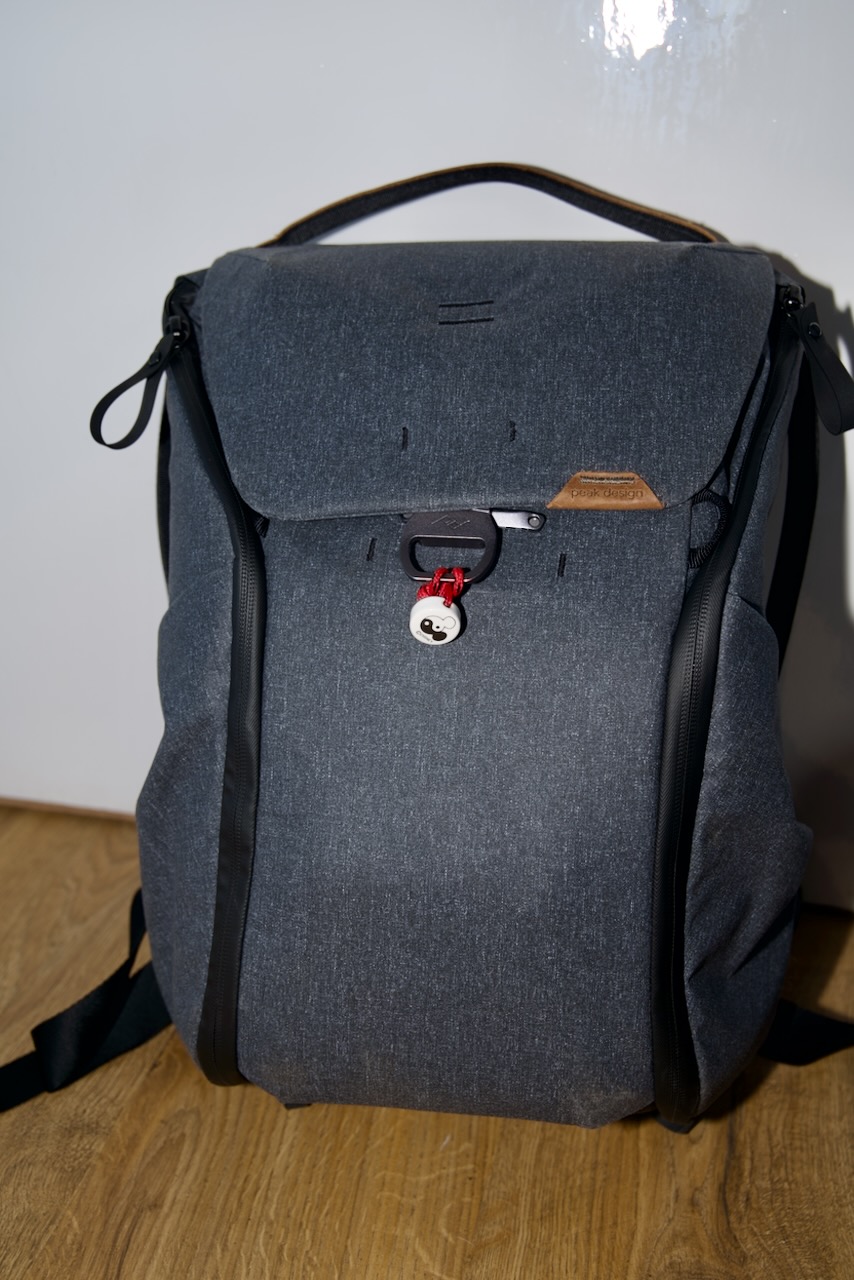
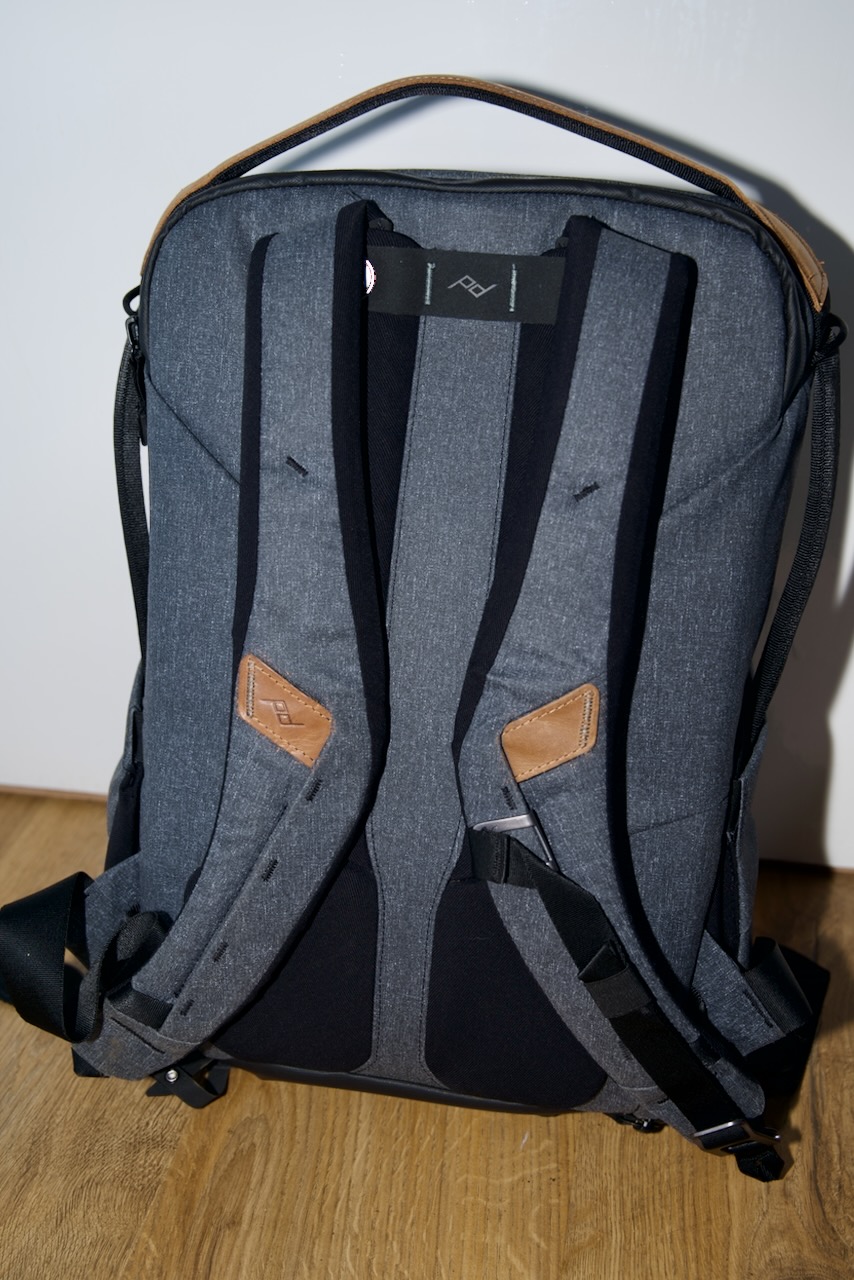
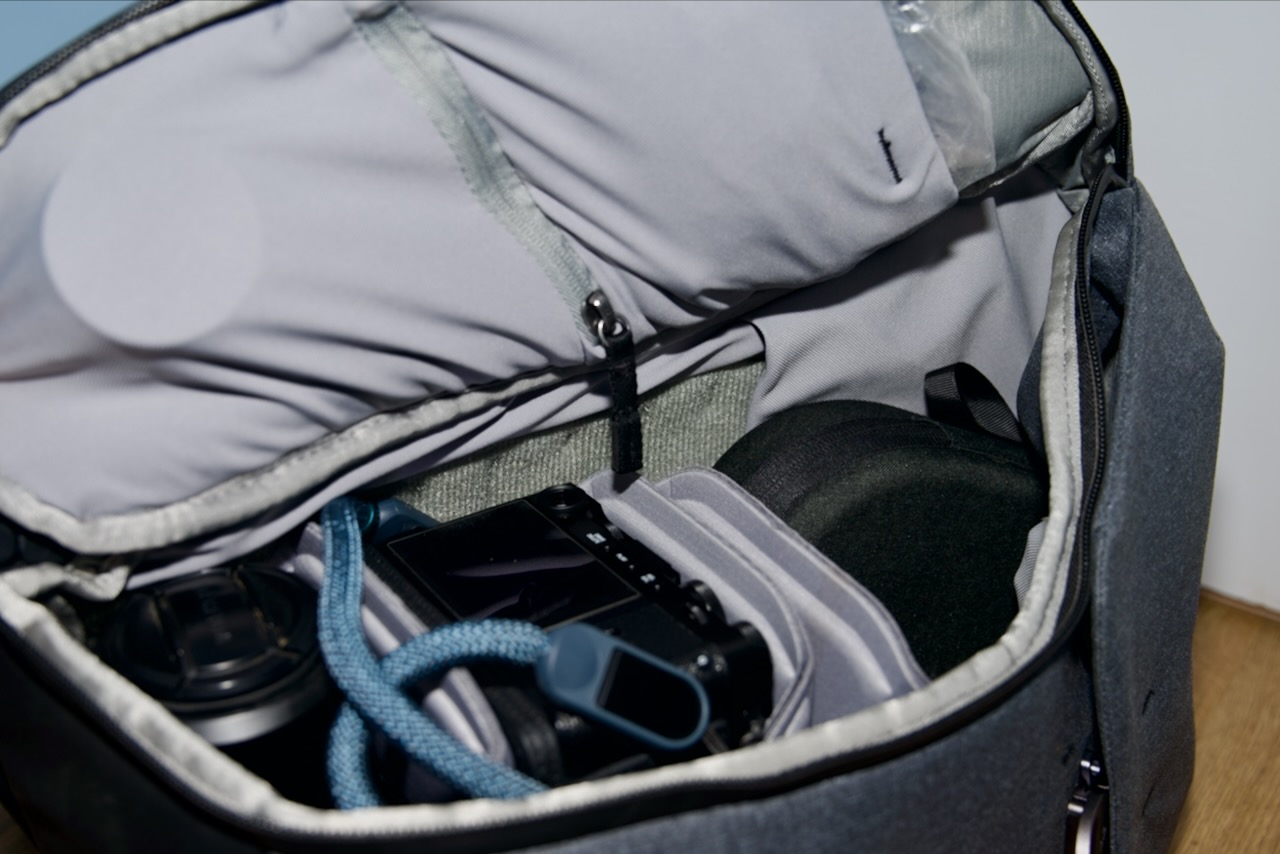
Can you guess which of these are going on holiday? Ok, fair cop, you’re right, none of them. I may finally have found a travel bag that’s big enough to take the new small Fuji X-E5 plus lenses, be sufficiently incognito around the streets of wherever once I get there, as well have space for cabin essentials like an iPad or MacBook, Kobo eReader (less fussy than a Kindle…), my noise cancelling Sennheiser headphones (which have a battery life vastly better than AirPods, about 70 hours!) and other odds and sods. Emptied of cabin essentials also means I’ve space for a jacket if needed on my travels, or purchases along the way, with the jacket relegated to being secured to straps on the outside. It’s waterproof, so no separate cover needed and so many other neat little tricks to it that it makes you smile. Better still, this was a nearly new bargain off eBay that saved me £150!
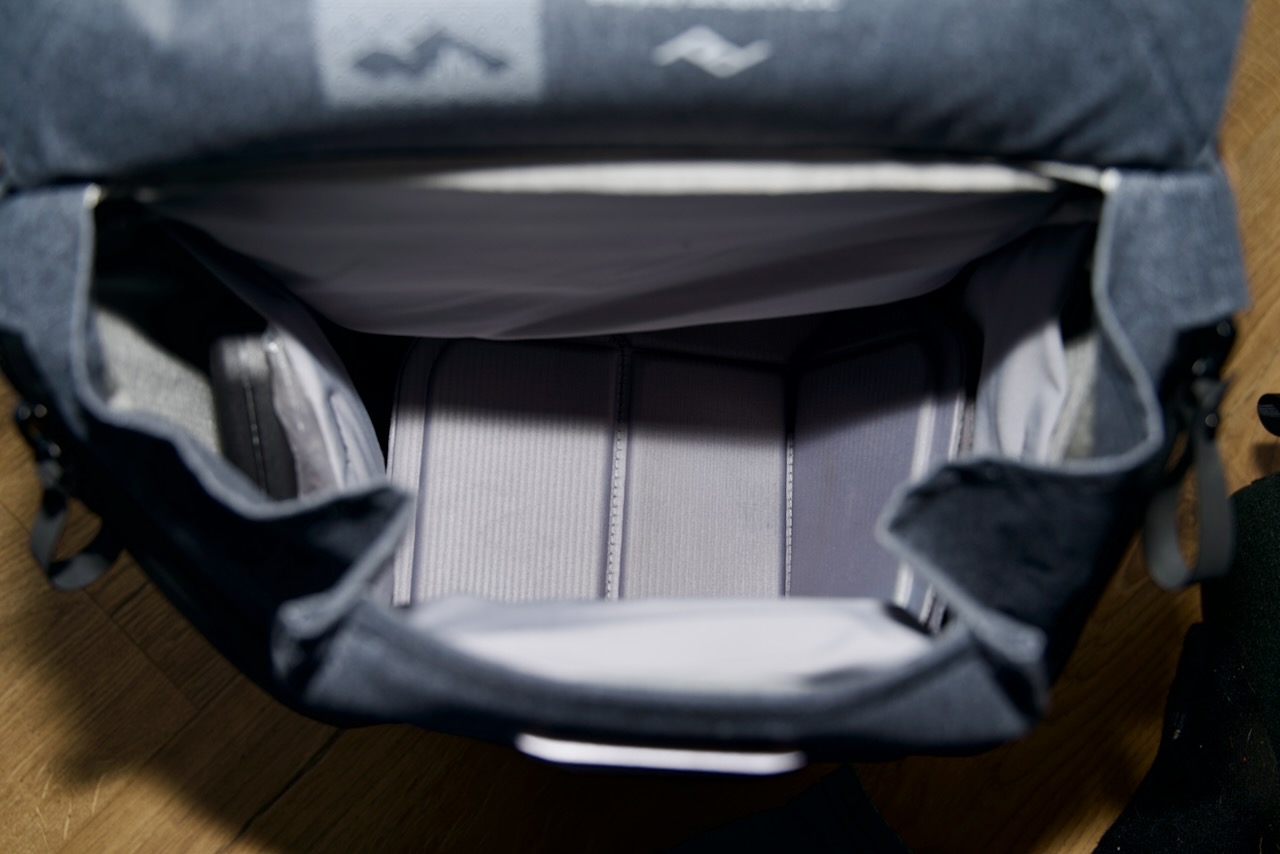
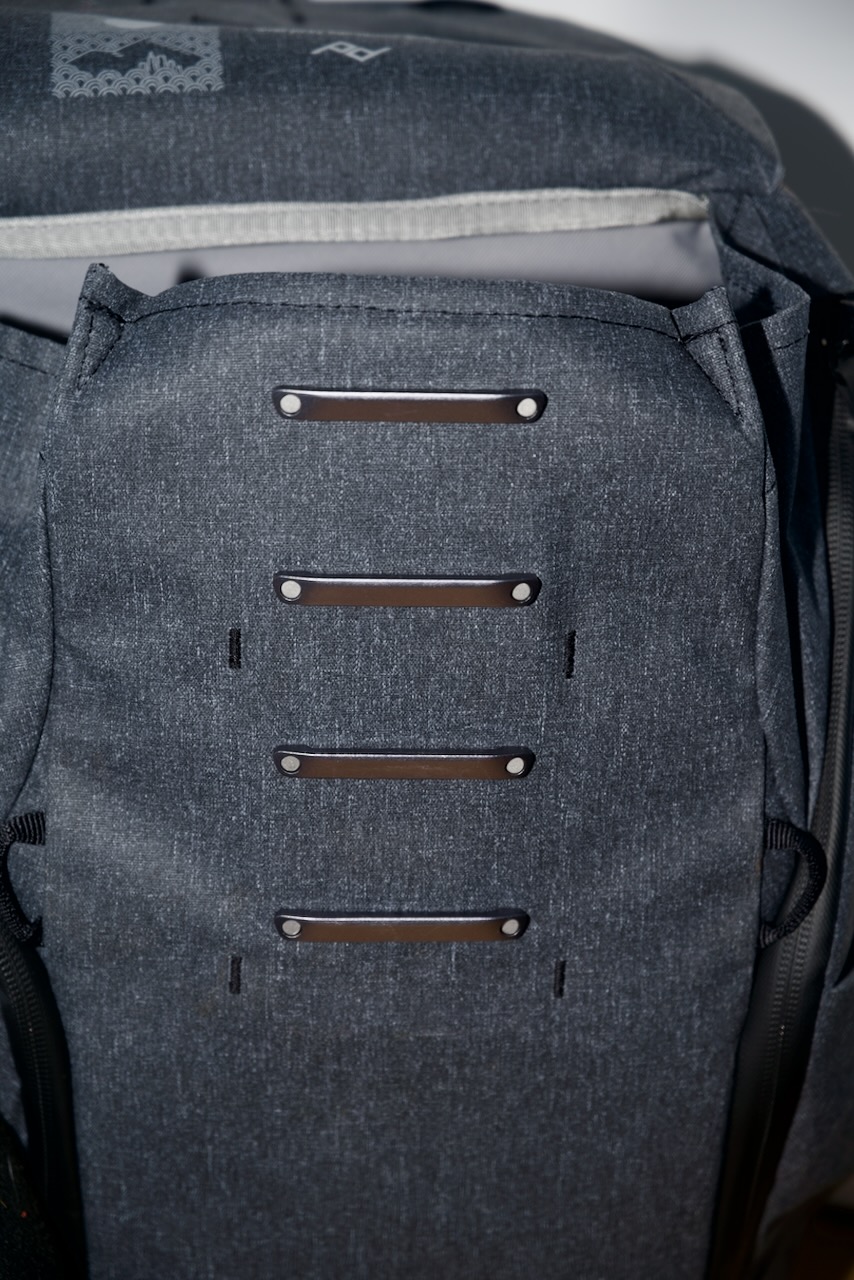
Peak Designs Everyday Backpack, in “Charcoal”When not in use, the straps magnetically clip to the back of the bag and keep out the way.Side access to the camera section. I’ll jiggle the partitions around on arrival so I can access the other lens from the same side.With one of the partitions in place, the top half of the bag has space aplenty.The mag-clip points, which allow you to cram a bit more in the top when needed, but still keep the flap on tightly.