Prompted by the arrival, finally, of an invoice to use my images from one of the major museums, before paying up I enquired if Volume 2 was going ahead, as it had all gone a bit quiet shall we say. But I’m happy to report it’s a goer and I can pay the bill, better still because they didn’t send it in time for Volume 1 and I didn’t use any images of their aircraft as a result, it’s saved £50!
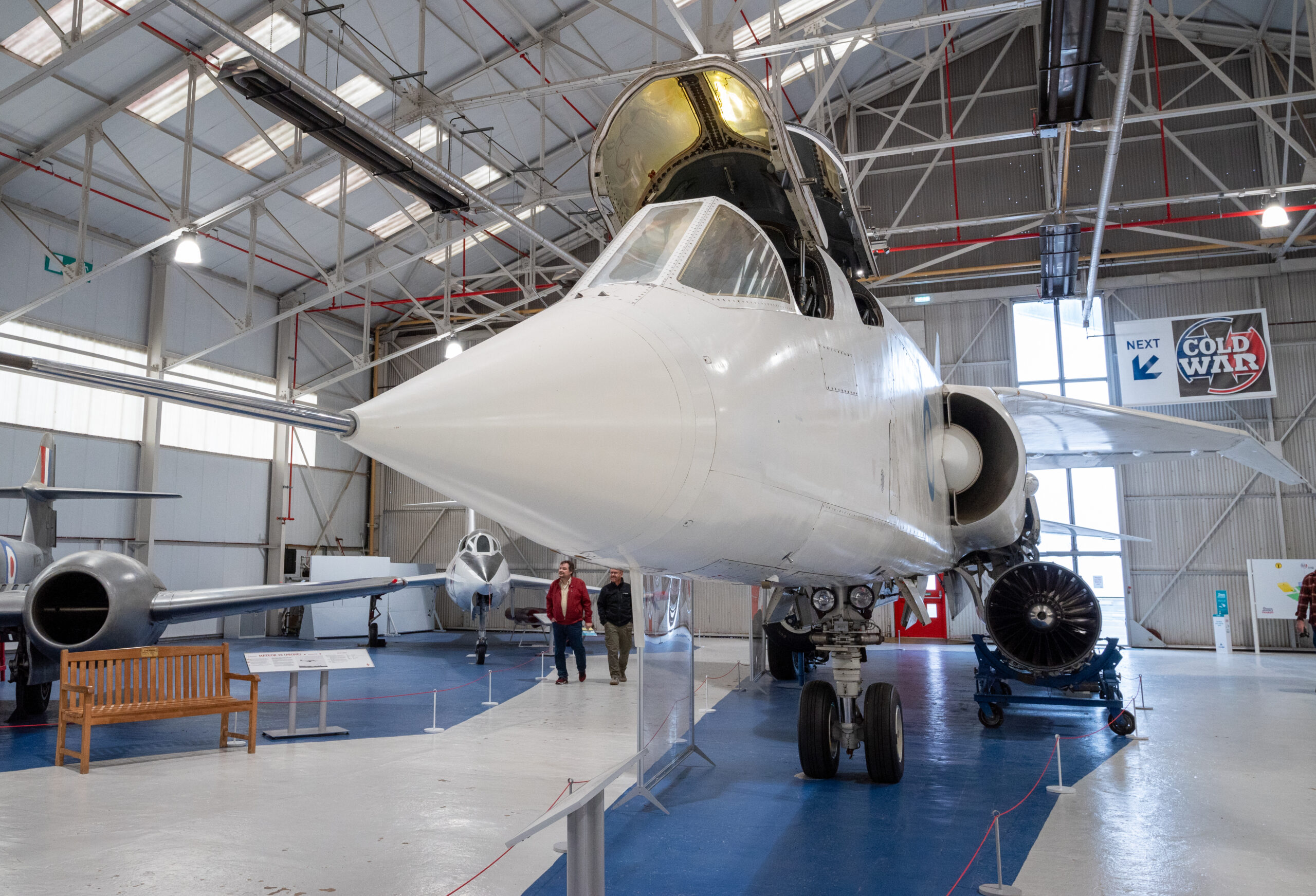
Seeing as sorting out the cover image last time took a bit more of an effort than I certainly anticipated, I’ve started the ball rolling for that, basically because if we get one certain aircraft on the front, people will buy the book simply because they think it’s something new, when in truth I doubt anything more could be said about this aircraft that’s not already been said; TSR2.
There’s probably been more words and hot air expended talking about this aircraft since its cancellation in 1965 than all the rest put together, and unlike some of the others mentioned in the books, at least this one flew! Why this is..you’ll need to buy the book! 🙂
Luckily for me, I’m already about two-thirds the way through a bit of a re-write to Volume 2, the source materials have been rechecked, so my dates are definitely right and I’ve made sure I’m writing something that makes sense to potential readers and not just me. This will hopefully save me a great deal of time once the proof reader gets hold of my ramblings, unlike last time… There’s no timeframe for a release yet, so could be this year, might be two years, not a clue, I’m just happy it’s going ahead, though it would have seemed a little odd publishing one volume without the other.
Thing is, once it’s all over, there’s definitely still something of an itch it would be nice to scratch: “what next”? I have toyed with a few ideas, though one would entail spending weeks digging through public records at Kew, because what I’m interested in hasn’t been digitised, so I can’t access it online. Much as I fancy doing it, especially as there’s no book on the subject available, I don’t think the bank balance could withstand London hotel prices for a month.
So near, yet so far! One of only two survivors. The only one to fly along with the one scheduled to fly on the day of cancellation, plus five others all scrapped one way and another.
As advertised, the author’s copies of my book have arrived! In a way it’s a bit disappointing, as it’s taken considerably longer than first thought or even suggested by the publishers (by about 3 years!) to get to this point and consequently, the person who would likely have been the proudest is no longer around to see it. But I could say that about a couple of other people as well, but that’s how life goes.
So now, I just need people to buy the darn thing! I might then recoup my costs paying for image rights for a start, but I’ve no idea as yet when it hits the shelves, nor where. You’d hope they supply the shops attached to most aircraft museums, being an ideal audience and all, but I certainly don’t recall seeing any by this publisher in the likes of Waterstones or W H Smiths for that matter, so most likely online orders only direct from Key Publishing or specialist aircraft bookshops.
It’s been a struggle at times, for more reasons than one, frustrating at others, especially the final 6 or so months sorting out the image rights, but it’s actually here and I still don’t quite believe I’ve done it. Volume 2 is basically done from my side, certainly my photos are, but it will doubtless need a trip or four through the proofreader process before I can say the text is done. Image rights for my photos are all done bar one and I’m expecting the invoice for that shortly, but doubtless it will be Key Publishing telling me a couple of their images I wanted to use, I actually can’t and then sorting out alternatives. Maybe, just maybe, it might be done and dusted by the end of the year.
Would I do it again….I wouldn’t be averse, trouble is I don’t have another stack of photos laying around to use as a starting point and you wouldn’t be surprised to hear that more famous authors (in the aircraft field at any rate) have already done an excellent job covering a similar topic for aircraft in France, Germany and Italy; so there goes my European tour! The other problem is most aircraft or military history topics, including one or two that I definitely have a thing about, have been done to death or at least well covered previously and a part timer like me isn’t likely to do a better job. We shall see.
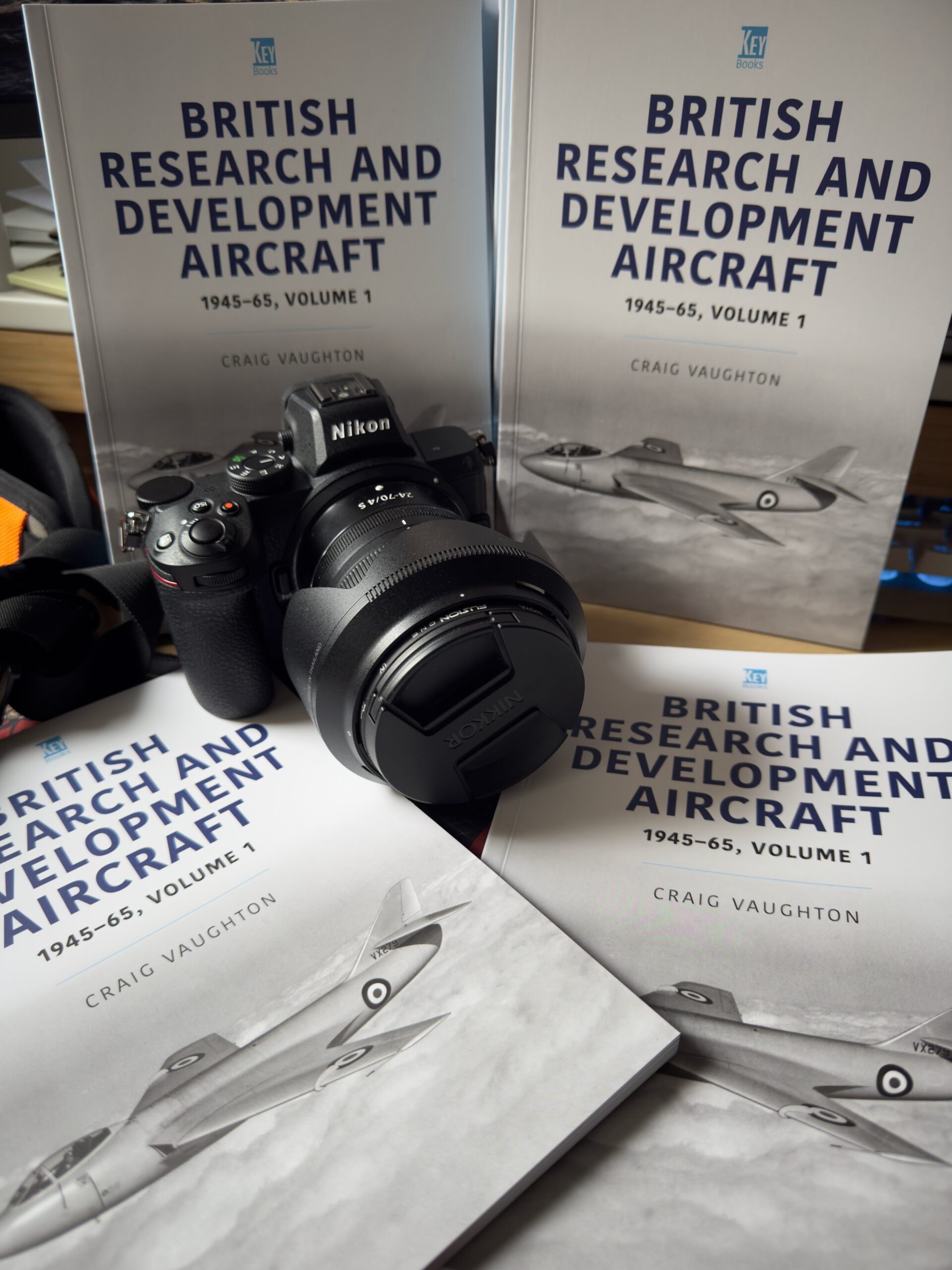
Finally here, Volume 1 in the flesh, well, paper at least.
After a quick re-jig with three images for the usual reason, even after Key Publishing contacted those concerned as I was getting nowhere. So we have some choice photos from a couple of image libraries just to get the job done and the thing put to bed. Sadly it’s going to lack a few un-submitted edits, and I did ask, now if there’s ever a reprint….Ha. I’m told the books will be back by the end of next month.
As to Vol 2, nothing’s been said yet, but the original contract was for two volumes so we’ll see. That I think it will sell more simply because TSR2 is in it, that some people will buy anything with this in is beside the point. Though it also means the people would wouldn’t get back to us so we could finish Vol 1 will have to be sorted, as they have one of only two surviving and it would be nice to include my photo of it. Might even call in and knock on a few doors in the meantime!
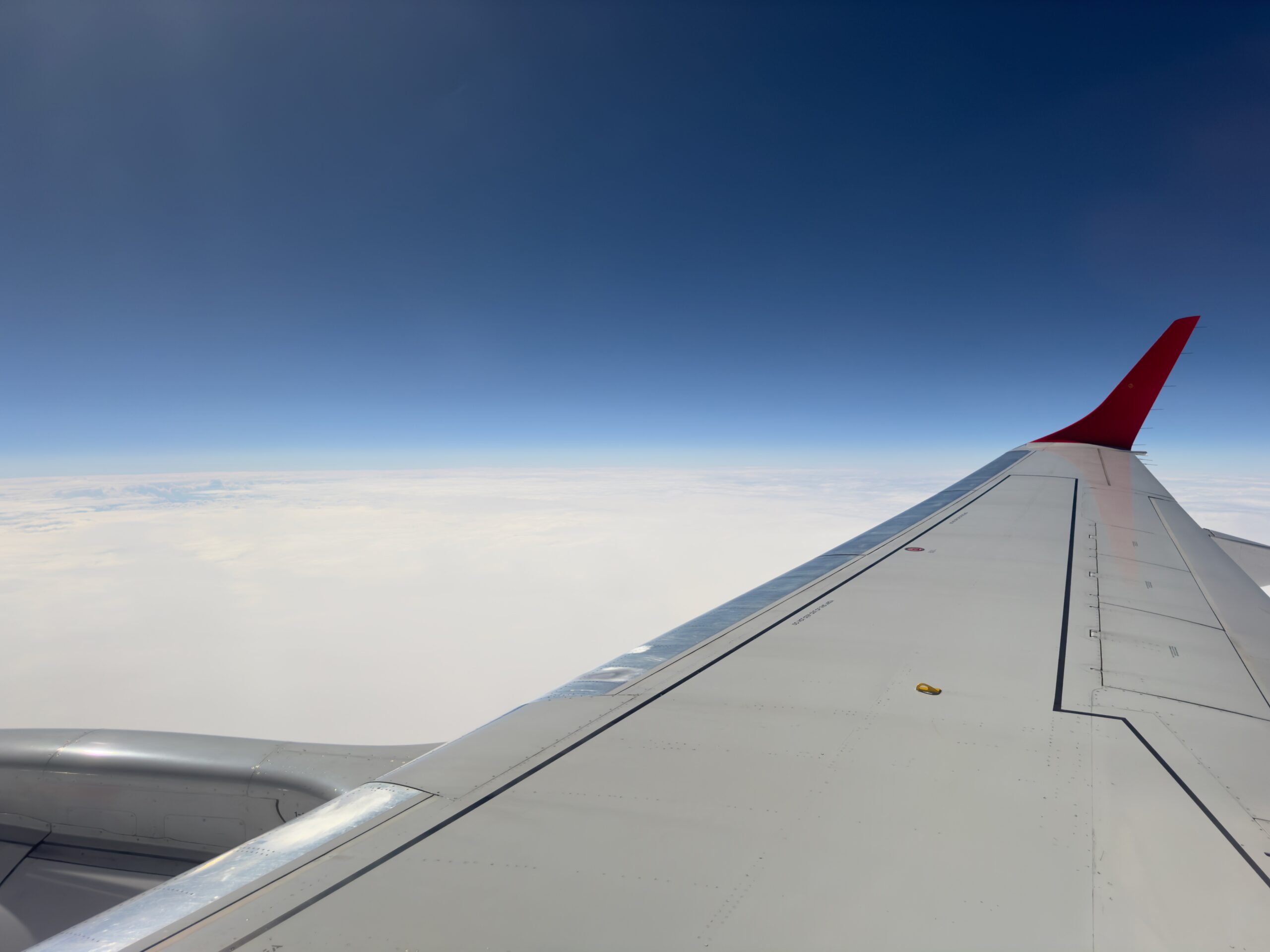
A trip to Stamford in a week’s time to meet up with a my fellow ex-RAF Harrier engineers will be a good start to what should be an exciting month, as the week after it’s off to LHR (That’s London Heathrow to the uninitiated) for a flight to MIA, a week in the Florida Keys, a week “doing Disney” (again…) and flight back from MCO (look them up!) by which time I might finally get to see my name and photos in book form. Unfortunately, work are dragging everyone on our team to Birmingham for a planning meeting the day I break up; brain checked out you’d think? No, probably more a case of making a point in no uncertain terms and still having a job to come back to!
Which means, unless something exciting, interesting or miraculous occurs in the next couple of weeks, the next update should see a photo of Volume 1 in physical form, being proudly held aloft by a me shaped lobster.
We’re still struggling to get the book over the line and it’s still image rights causing me grief.
The never actually built Hawker P.1154 has a number of artists impressions floating around the net, but the image I wanted was of the wooden mockup built at Dunsfold. That’s been around years, it’s even in the book that sewed the seed for this whole things, Derek Wood’s “Project Cancelled” from 1975. We’ve now found who actually owns the rights to the image and the publishers are in negotiations shall we say, it’s that or one of the artist’s impressions they’ve previously published in Aeroplane.
Of all things, the other aircraft causing trouble, is the original pointy nosed Sea Harrier FRS.1 that gained fame in the Falklands. I omitted taking any shots of the one at Yeovilton back on 2015, well before this project materialised in my head, and little did I realise that it’ s the only one in a museum! The simple reason for that is virtually all the rest were upgraded into the FA.2 spec which saw out Harrier service with the RN until 2010.
The photo I chose originally I think is Crown Copyright, I’m not sure the publisher knew that either. I was asked to look on Getty Images and yes, I found one I liked, but I don’t like what they charge for the privilege! As with the P.1154, it’s over to the publishers to sort.
Hopefully, I get the final proof back in time to get the thing published for June, but it might be tight….
There’s another instalment of Compact Diaries this week and another page starts a section on film photography. Good for your insomnia if nothing else.
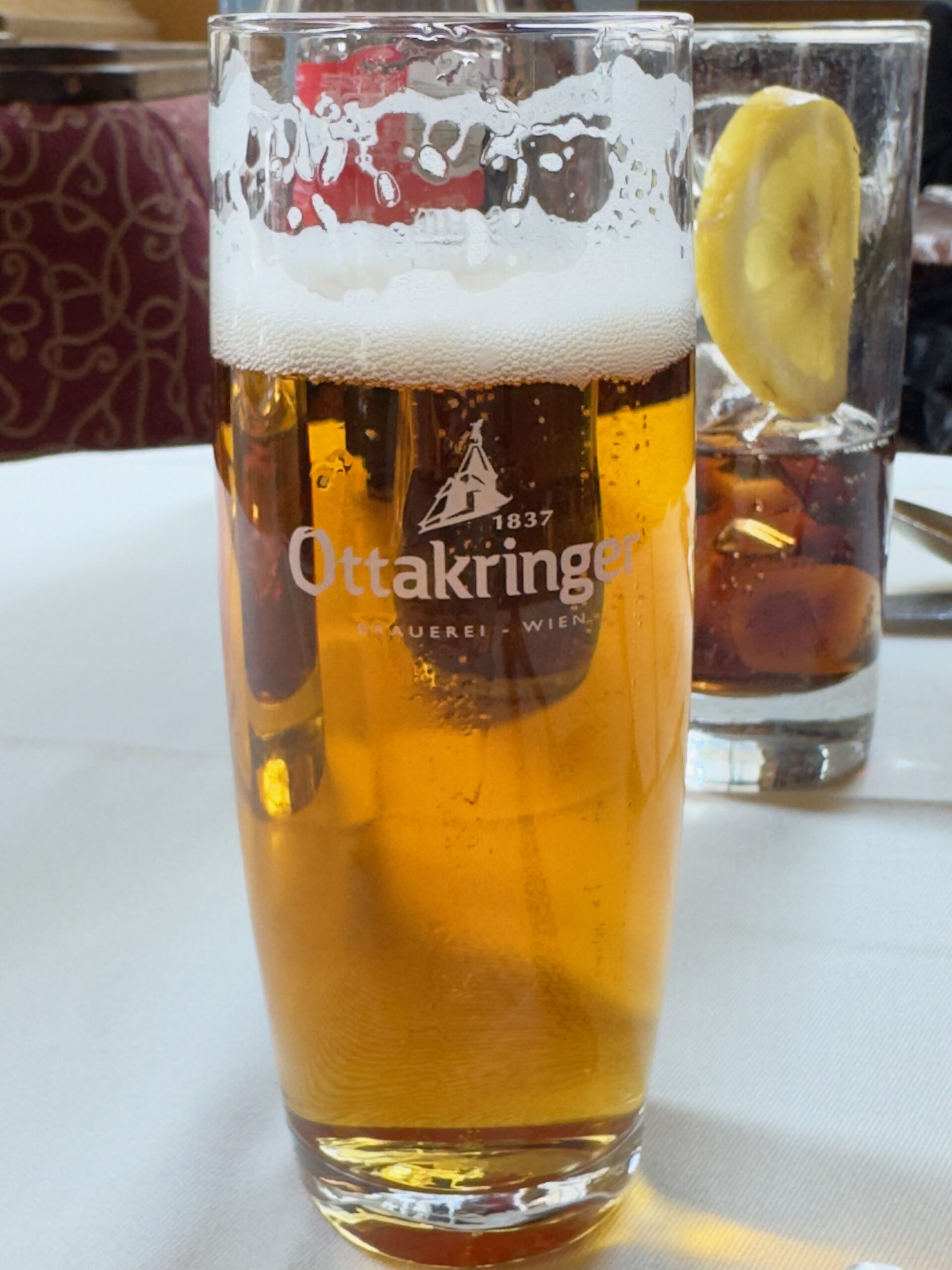
Meanwhile, here’s another photo from our trip to Vienna. Doesn’t matter how many times I do this, it’s still magical. I’ve certainly had worse Sunday mornings!
After seemingly make no progress for weeks if not months, we now have a flurry of activity! I’ve finally seen my text and photographs with captions combined with the archive photos I chose united into a whole, so it’s actually starting to look like a book at again. I say again as my original version created in Apple Pages had the photos added as I went along, and before enquiring if it was worth publishing “properly” its this version that would have been printed at somewhere like Blurb Books.
The front and back covers have been chosen, sadly because most of the photos I’ve taken of the development aircraft are indoors, they’re not suitable for the cover, as it makes it hard to merge the photo into the text for the name etc. Hmm. But I’m on the back cover at least and as Vol 2 has yet to go through the same process, I might be able to do something about it, but need some serious ducks to fall in line first, none of which I have control of.
The text has been proofread and gone back and forth to the publishers a couple of times as a result of changes needed for one reason or another, duplicate photos and mixed up captions for a start. But the one question I still don’t have an answer for is…when will it be finished and the hordes clamouring for signed copies can be sated. OK, that’s about four people , but it would be nice to know and ideally be ready in time to take a copy to show a group of special friends and say “look, I’ve finally done it!”
The Nikon Z fc has been on a little jaunt with me to Vienna and passed with flying colours, in terms of photo quality and usability, but with one caveat, it needs the sensor cleaning! Virtually invisible to the naked eye if you look at the sensor, but there on every photo was a dot or two in exactly the same place every time. Despite cleaning lenses, filters and deft use of my rocket blower on the sensor itself, it stubbornly remained, so the camera is now at Harrisons in Sheffield for specialist cleaning. I also discovered a tiny hair in the standard kit lens which only occasionally causes problems, but if it can’t be removed by deft use of a vacuum cleaner (I kid you not) the lens will have to go; I can do without having to use healing tool in Adobe Lightroom on every other shot.
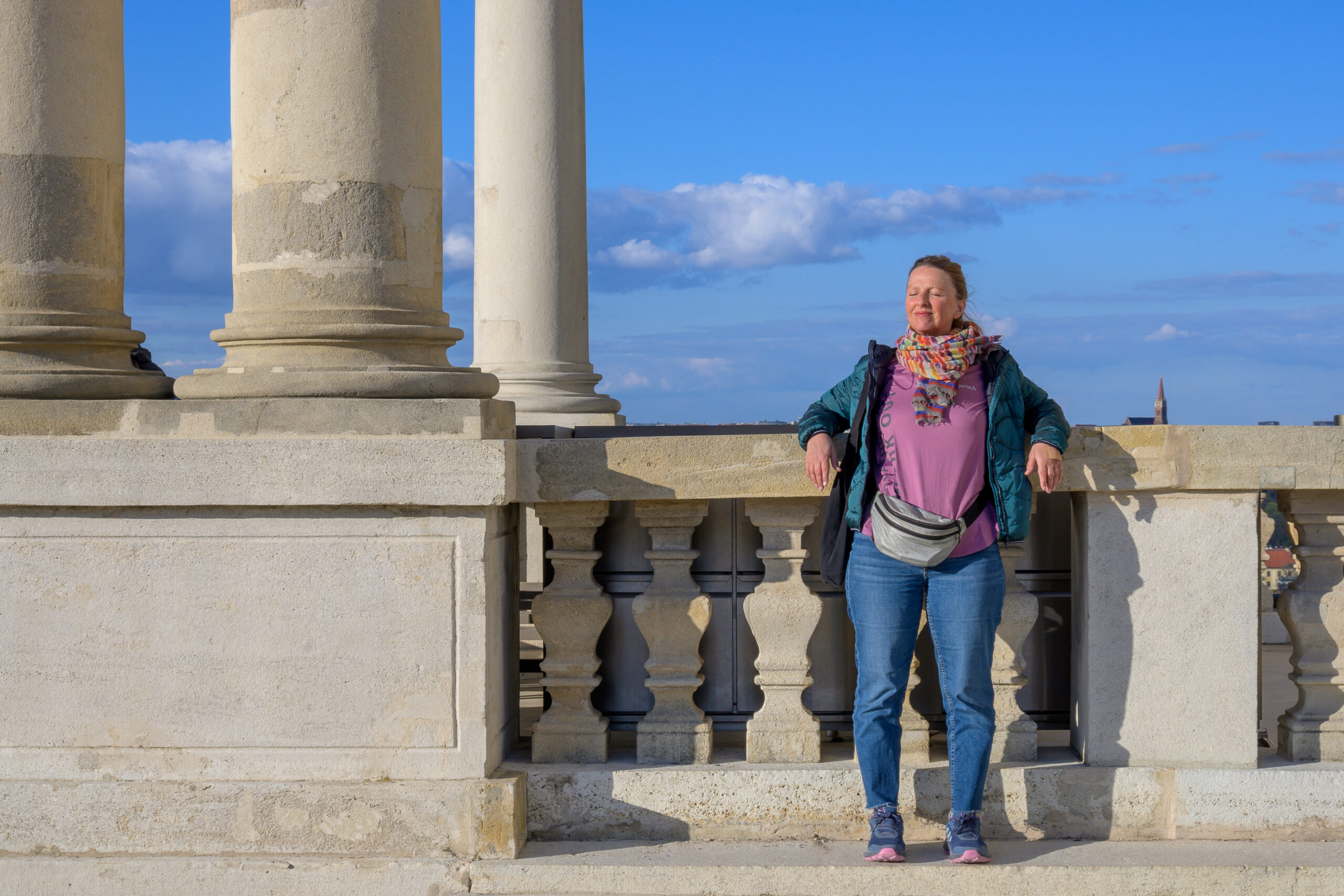
No idea who she was, but she stood next to the stonework of the Gloriette, part of Schonbrunn Palace and was catching the late afternoon sun.
There was going to be a whole new look and feel to the website today, brought on by changing the company who hosted the old pages for years, to a new one which will hopefully be a bit cheaper, but no less reliable. I say was, because after making the change last night, seemingly failing to import the old site via the provided links and starting again to rebuild it, even managing to import the blog text into a single archive page, in the midst of more editing this morning I came to a crashing halt.
The web page demanded I log on again, all last night’s work had vanished and then in the next breath, the old site reappeared! I don’t know whether to laugh or cry! So it’s as you were, but I’ll look at re-jigging things and add a bit more content anyway.
Book production is moving along, all my images have finally gone to the publishers, my captions have had an edit, some of the archive images I wanted to use I’ve had to replace as they weren’t actually copyright to the publishers, whilst a few more they’re trying to find. All this because my new editor wants the book into the design phase, which sounds good to me. I’ve said if possible, I’d like Volume 1 published in time for the next Harrier Engineers Reunion which is in June, so we shall see.
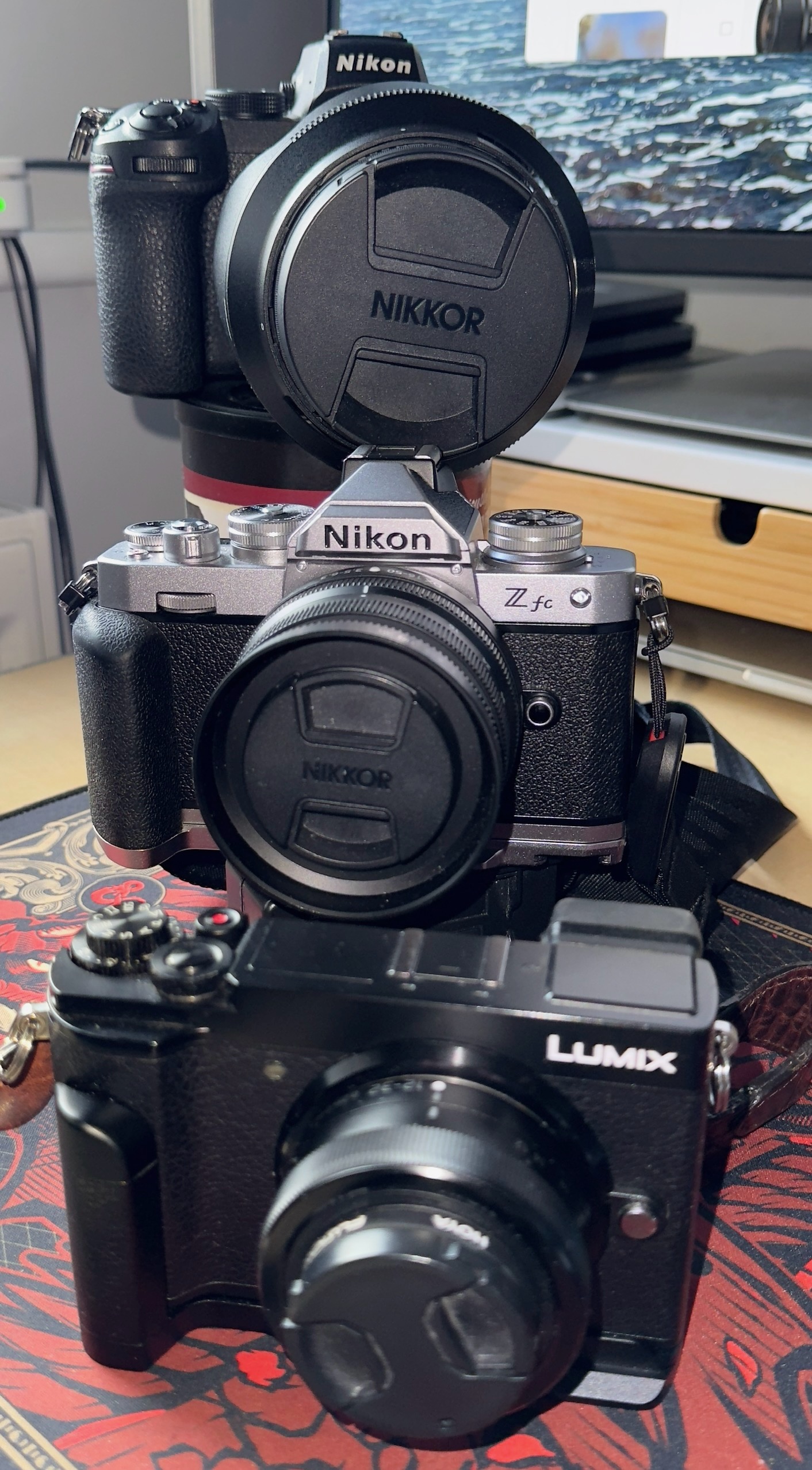
On the camera front and despite my ramblings about weight and lenses and whatever, all the Micro Four Thirds kit has departed once again and I’m all Nikon. The Z fc is so good to use it was always a keeper and the results are noticeably better than the GX9, that it made sense to keep that, have one lens mount to support and keep an eye out for more affordable third party lenses arriving. Should I have kept the GX9 and disposed of the Z5, I’d have laid good odds that I’d have regretted it seconds after I’d handed it over in the post office and been after a replacement.
The Z fc, looking suitably retro with its leather half-case.
Finally making headway again and Vol. 1 is back for another edit, along with my preferred photo for the cover. I still want to call the book “Survivors”, because that’s what I see the aircraft as, but I doubt it will be.
Back on the camera hardware front and despite my ramblings about lens availability and weight etc, booking a holiday led to another purchase, the Nikon Z fc and now I’m utterly torn! I’m still right on two counts, lack of lenses for Nikon’s Z series, especially affordable used models, but principally ones for their cameras with APS-C sized sensors (aka DX in Nikon speak) and on weight; both camera body and lens. Where weight is concerned, having a full frame sensor means lenses to make the most of it, hence the Z5 and it’s better than standard kit zoom lens come in at 1.26Kg, which gets a tad heavy if you’re lugging it around all day, especially in sunny climes. The APS-C body and its kit lens which admittedly isn’t a patch on the Z5’s, weighs in at a rather more svelte 715g and the Lumix and even more pocket friendly 615g.
Where lenses are concerned, there’s maths involved to work out what the “real” size is , as opposed to what it says on the box or the lens barrel for that matter. For the uninitiated, digital camera sensor sizes relate back to the days of analog film. What’s now referred to as “Full-Frame” relates to a single frame of 35mm film, which is 36mm x 24mm in size and this is the same size as the digital sensor. For APS-C sensors this harks back to the final throw of the analog dice, the cartridge based APS format, which allowed you to do panoramic and high definition shots at the touch of a button, but was smaller than 35mm. Trouble is, it gets more complicated than maybe it should and we get into the realms of crop factors.
On a lens for a full frame sensor, what you see is what you get, so a 50mm lens is just that. With APS-C, for Nikon and most other manufacturers, that same 50mm becomes the equivalent of 1.5x what it says, so in terms of field of view, its the equivalent of a 75mm lens on a full frame camera (its 1.6x for Canon). The micro 4/3 sensor in the Lumix and my old Olympus E-M5 use a 2x crop factor, so the 50mm becomes 100mm. Relating everything back to full frame is used to give everything a common reference point, but when you’re looking for a wide angle lens to do landscapes say, the 7-14mm lens for my Lumix actually shoots like a 14-28mm for the Z5 (there’s a 14-30 and it’s £1300 new! It’s also 485g, as opposed to £400 used and 365g, but that’s a lot of glass for m4/3))
Digital sensor crop factor
Excuse my diagram, but as you can see, if the lens was set to focus on a full frame sensor, the smaller sensors only get part the image, hence the crop factor.
So why am I torn over which camera? Where image sensors are concerned, size really is everything. The larger the sensor, the more photo receptors you can fit and the larger these receptors can be, which increases how much light they can collect, photography is all about collecting light. I know full well that the Z5 will produce fabulous images, but it’s B heavy after a while, it’s also bulky and it goes in hand luggage, not checked baggage, along with all the other “toys” like an iPad and a charger, whatever extra lens I’ve brought, a Kindle, headphones, maybe a magazine from Smiths in the departure lounge, etc, etc. The clever, mainly plastic, collapsing kit lenses on both the Z fc and the Lumix make both much lighter than the one on the Z5. even if I take another lens with either of these, it will still be less weight then the Z5 and a single lens.
The Z fc is also gorgeous, its a retro 35mm style body and to someone who’s used to old school 35mm, its a joy to use, whilst its APS-C sensor should be more capable than the m4/3 of the Lumix. But we’re back to the lens issue, or rather lack of them. Nikon were late to the mirrorless party and they’ve also been increasingly reluctant to allow third party manufacturers to have access to the specs for the Z mount. Consequently, unlike Sony and Fuji, there’s only a few offerings from the likes of Tamron and Sigma started to appear, while the native Nikon lens production has centred on full-frame FX series lenses. Admitted, you can use FX lenses on DX bodies, but then we’re back to cost and weight again!
So I’m now hoping for good, if only dry, weather next week when I’ve a week off and intend to do some shutter therapy to see just what to do with three expensive bits of kit. One will be going and I’m not convinced I know which one yet, even the Z5!
Three months since my last post, three months of basically silence from the publishers after resolving the image rights problems. An edited version of Volume 1 has gone off for another run past them, along with the first complete draft of Volume 2 and both sets of captions. I’m now in limbo until I get a reply. Considering I’ve already seen off two commissioning editors, I won’t hold my breath.
After lugging round the very nice but ultimately slightly heavy full-frame Nikon and one additional lens (as in, the only other lens I’ve got) on holiday, I started looking at going back to travelling a little lighter. The beauty of my old Olympus E-M5 was the size and the weight or rather the lack of it, even with the slightly hefty 12-40 Pro lens attached. I looked at a few options, including the Nikon Z5’s little brother the Z Fc, Sony’s well respected A6000 series and even the retro design Fuji X’s, all available at reasonable prices used.
Trouble is , much as I love the 35mm camera style Z Fc, it suffers from the same problem as the rest of the Z series; limited lens availability, especially used and their cost. There’s also fewer dedicated lenses for the small APS-C sensor Nikon’s, so you’re back to using full frame lenses and that means full frame size and weight. One down. The Sony may have the best autofocus system, but I’m not keen on the ergonomics, on top of which the full frame A7II is now readily available used at similar prices to the newer A6000 series, let alone lower prices than a used Z Fc, but we’re back to full frame lens weights, sizes and costs. Two down. The Fuji’s were eliminated for pretty much the same reasons as the A7II. Three down!
Consequently, I’m back full circle to Micro Four Thirds. There’s plenty of good used stock of both bodies and lenses, the system is a known quantity to me and if you pick the right model, it doesn’t scream “expensive camera, steal me!”. So after further eBay shenanigans, I now have a fairly anonymous looking boxy black camera for half the price of the Olympus Pen F I’d really like, but with the same sensor, plus a really small travel zoom and a pair of equally petite fast prime lenses, for little more than a Z Fc plus the basic standard zoom lens.
What have I bought? A Panasonic Lumix GX9. All I need now is a bit of travel, preferably somewhere where it’s not perpetual rain like the UK….
Work has finally recommenced on the book and other than getting my last lot of amendments and editing signed off, as well as the photo captions, the only thing really holding Volume 1 back are image rights, which I’ll come back to.
Family affairs threw a huge roadblock in the way of progress for a few months, both in spare time, as well as emotionally and sadly my mum won’t get see me in print; she would, I expect, have been proud, even if it didn’t sell a single copy.
Meanwhile, image rights. The big hurdles have now been jumped, with both RAF and RN museums paid for and out of the way, with some common sense finally prevailing, both getting whatever publicity they derive from their aircraft being in a book, but at a price I could afford to pay (whether the book sell enough to get it back is another matter entirely!). So why then is one museum wanting double what the big two cost me for just 3 photos? “Oh we’re a charity” well sorry but most of the other museums are too and and some don’t want a penny for a lot more photos. But for completeness sake, I’ve decided to pay, through gritted teeth, as they have the first built, the only one remaining and the only one on the UK mainland respectively (even if is is bolted to a wall and missing a wing!)
I’ve had much better luck with image rights elsewhere, with two excellent collections happy just to be credited where the photos are from. Both Brooklands Museum and the Yorkshire Air Museum are definitely worth a visit if you’re nearby or want a day out. Brooklands is a bit of a trip from Yorkshire, which is a pity as I’d like more time there, but YAM isn’t an hour or so away and they do night shoots….I’m tempted. Across the Irish Sea, there’s a couple of museums with one aircraft each that I needed photos of. I’m still working on one, but the people at the Ulster Aviation Society have been absolute stars. As I’ve no chance of getting there to shoot the Shorts SB.4 for volume 2, I asked for a few photos to use, especially as the aircraft is currently under renovation so the wings are being rebuilt and also because there’ s not a lot of photos of the thing around in general. A few days later, I’ve a handful of great photos and more to come; I’m going to be spoilt for choice. A courtesy copy of both volumes definitely heading that way!
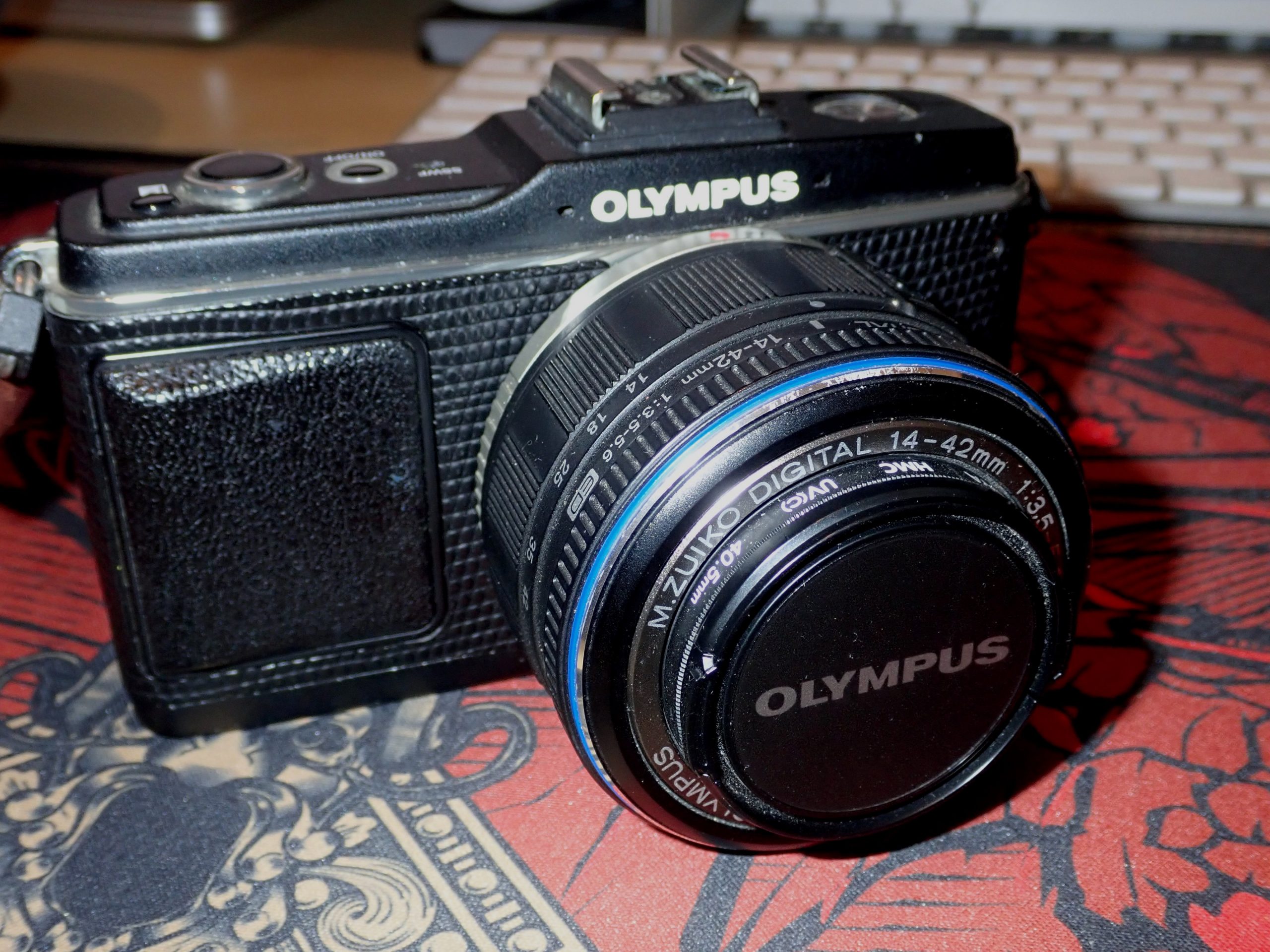
Once again, there’s been more fun and games on eBay with camera bits, but also on of all places Oxfam’s website! Don’t ask, it was Sunday afternoon and I was bored, but I’ve bought CDs and vinyl from the local one so took a browse. Well what do you know…. seems, I know Olympus cameras better than whoever prices things up in one particular Oxfam store, I also have better eyesight it seems too. Suffice to say they never made an E-P1 in black, just in chrome or white and yes the black paint was peeling off and yes it did say E-P1 on the rather battered box. But if you look on the camera itself, which you couldn’t see in the photos, it does say Olympus Pen E-P2. So now it’s been treated to some TLC, the rapidly peeling black paint has all gone and some nice new leather wraps have arrived from a store in Japan I’ve used before. If ya know ya know.
Bit of a long gap between updates, basically because there’s nothing happening. Image rights for another museum duly paid and I’ve sent them some of the spare shots from my visit to see if they can use them as well.
The biggest annoyance, as with a lot of things, is people simply not getting back to you when you contact them, be it a phone call/message or email. Worse is when a webpage says “we’ll contact you in x days”, you’re still waiting x months later! I can’t nor daren’t go to print without confirmation a museum is happy for me to use their images without charge and just with accreditation, or after paying them a donation. So far I’ve spent just over £250 in donations for image rights, I’ve yet to get any response from half a dozen other places, so I can easily see that doubling. So now more waiting whilst the publisher’s commissioning editor sees if they get more response than I do.
With holiday season approaching, I can see it might be quicker to revisit a couple of nearby museums and sort the image rights problem out directly, as well as get a few better images, hopefully with a bit of sunshine, a few photos currently slated for use were taken when the weather was a bit grim shall we say, just plain foggy would be another description!
The text for Volume 1 has had one trip across the copy editor’s desk and I don’t think I did too badly, though the subject matter is obviously not something they’re familiar with, when one of the comments says “TSR2, what’s that? I’ve yet to get a reply to “The most famous aircraft we never built”. I’m also unsure why “appropriate” wasn’t the correct word to use for the only complete Vickers Valiant bomber to be preserved, when it’s the only V Bomber (thankfully) to have dropped what they were all designed around, an atom bomb, even if it was in a test. You may or may not agree with what they represent, but nearly 80 years of basically peace in Europe, despite or because both sides having the means to turn the continent into a radioactive wasteland either means deterrence worked, or we were lucky and yes, at the present time, it’s looking like the latter!
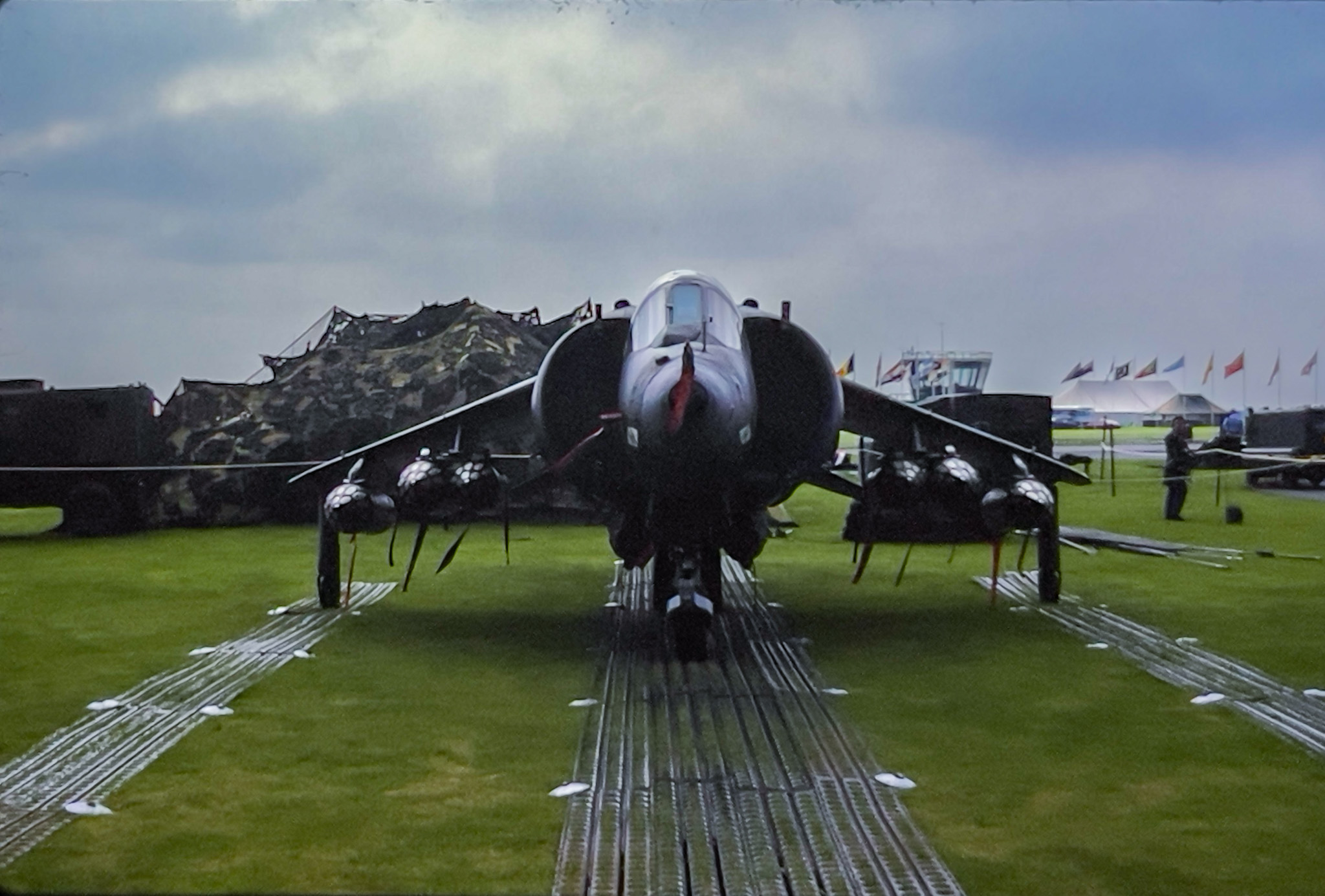
After my acquisition of a couple of 35mm SLRs, the means to get from the analog to digital domains was required. As the Canon flatbed scanner I’d previously used had departed some years ago and the cost of dedicated scanners is ridiculous, the arrival of something cheaper, smaller and a bit of fun in the process will be on no surprise. Lomography released the DigitaLIZA a while back https://shop.lomography.com/uk/digitaliza-max and the results have been pretty good, though seeing yourself on 35 year old slides is a bit of a shock as well. Amongst the boxes of holiday photos were also some whose original owner I’d love to know, as they appeared on my doorstep well before I’d departed from home for the RAF. One of the slides was more prophetic than was realised at the time.
Harrier GR3 at an airshow sometime in the late 1970s or early 80s