Interesting day out this week with my friend to the Midland Air Museum (MAM) near Coventry to add a couple of extra options for my photographs for Volume 2. Quite spookily, the morning after an email from Key Publishing appeared asking how I was doing with the pictures! Hence, I spent the day going through the captions for said pictures; but as it turned out, much as happened last time, the issues were more to do with archive photographs.
About three years ago I spent a day at Key Publishing, sifting through a pile of their archive photos I’d asked them to drag out so I could choose a few for the aircraft in both volumes. In-between times, I’ve found a few I like more, either in either of Key’s magazine I usually buy, or their website. The trouble then is, establishing who owns the images, because they may belong to whoever wrote the articles and were used with permission. In most cases thankfully, I have multiple options to choose from if I can’t use the ones I’ve founf, but in a couple of instances, I’m really limited, because there’s not a lot of photos of the thing in the first place. So I’ll have to wait and see what the response is to my questions when I send my email in reply.
My trip down the M1 also gave me a chance to compare my Nikon Zf with my Fuji X-E5 “in anger”. This was especially significant indoors, as the light capturing ability of the Zf’s full frame sensor, is rather better than the APS-C sized sensor in the X-E5 and massively better than the Micro Four Thirds sensor in my late lamented Olympus I took most of the original batch of photos with that have ended up in print. As it turned out, for one I shouldn’t have been worried and for two, I really need to be a little lighter of touch with the Fuji’s controls and get to grips with which control is set to do what, let alone be more aware of what the display says regarding ISO settings if I’m a bit sausage fingered! Hence the indoor shots were all taken at ISO 1600, as opposed to ISO 400 the Nikon was happy with, yet until you start magnifying them, it’s hard to notice the difference. For me, that rather underlines why I like the physical dials on the Zf, or the more limited options of what you can program the front and rear control dials to do on my old Z5. Time to sit with the Fuji manual again I think and limit the command dial functionality a little…
Much like my previous visit to MAM, where a large proportion of the exhibits are outside, we were treated to a day of overcast grey “clag”, which generally leaves you having to use exposure compensation to stop you getting over bright sky and darkly shadowed aircraft, it also means a bit of editing. Fortunately, the rain held off until after we’d just reached the car to leave.
I’ve used Adobe Lightroom for years, certainly back to when it was something you bought outright, rather than drip feed Adobe every month for the privilege of continued use and updates. You may gather, I’m not a fan of subscription software, what worked well for me one year, most certainly would for 2-3 after, or until they added something worth shelling out again for. So there’s no surprise why Adobe and a host of others have all moved to encouraging you paying by a thousand cuts and you really do have to keep an eye on software subscriptions as they can soon mount up, especially if you add apps for phones and tablets into the mix which won’t share across devices. To make it worse, for me at least, I’ve also succumbed to resubscribing to Office 365, purely to use Word for the next few months and make life easier once I start playing editing tennis with the copywriters; it will again get the chop once we’re done. Apple Pages and LibreOffice work fine and do everything I need for free, whilst Copilot was immediately switched off, there’s no AI words in my books.
However, where AI is concerned, its ability to remove unwanted objects in photographs has improved massively since it was first introduced, which is really useful at times and saves a lot of work with clone tool for a start. Generally my thoughts on AI control of image editing is it’s OK-ish, but you see some images and wonder just how much of them are actually the original image, they look so false. It is undoubtedly a changing world, sometimes not always for the better.
This leads nicely on to the series of photographs below, honest. Yes, they’re all the same aircraft, but bear with me. For the uninitiated, the subject is a Gloster Meteor NF.14. This was the last production version to see service and the rather out of proportion nose houses the best radar scanner we could squeeze in. It was 1953, so we’re talking a big moving radar dish and valves don’t forget, while the NF bit denotes this model as a night fighter. Note there’s no missiles either, just a pair of external fuel tanks so it could stooge around waiting for customers! No “I have a tone” here (you need to watch Top Gun again), the pilot had to creep up on his target and shoot the thing with a battery of four 20mm cannon. But it filled a gap for a couple of years until the missile armed Javelin arrived.
Now why four similar images you may ask? It’s all about what they were taken with and how they’ve been “developed”.
From the top, this photo we’ll use as the “reference image”. It’s the unmodified shot taken with the Nikon Zf, and simply dragged into Apple Photos and exported as a JPEG to reduce the file size and because WordPress hasn’t a clue what to do with a 31Mb .NEF Nikon RAW file. Still, the Fuji kicks out 87Mb RAW files and a couple of higher capacity SD memory cards were on my shopping list at the photography show the other week as a result!
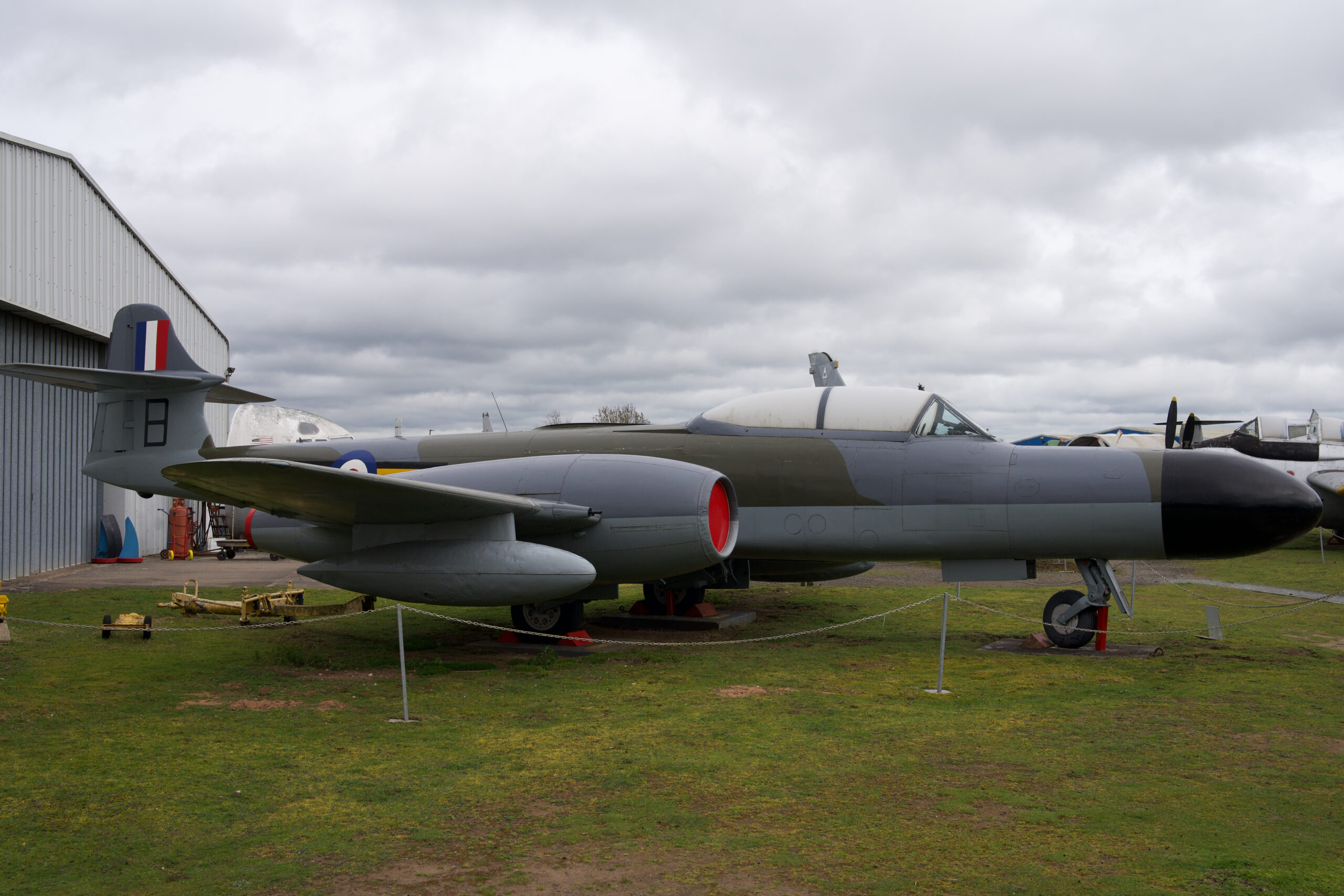
Next, same image, with a bit of mild adjustment in Lightroom to give the sky a little more depth and the white balance tweaked, so the grass isn’t quite so green (it wasn’t!)
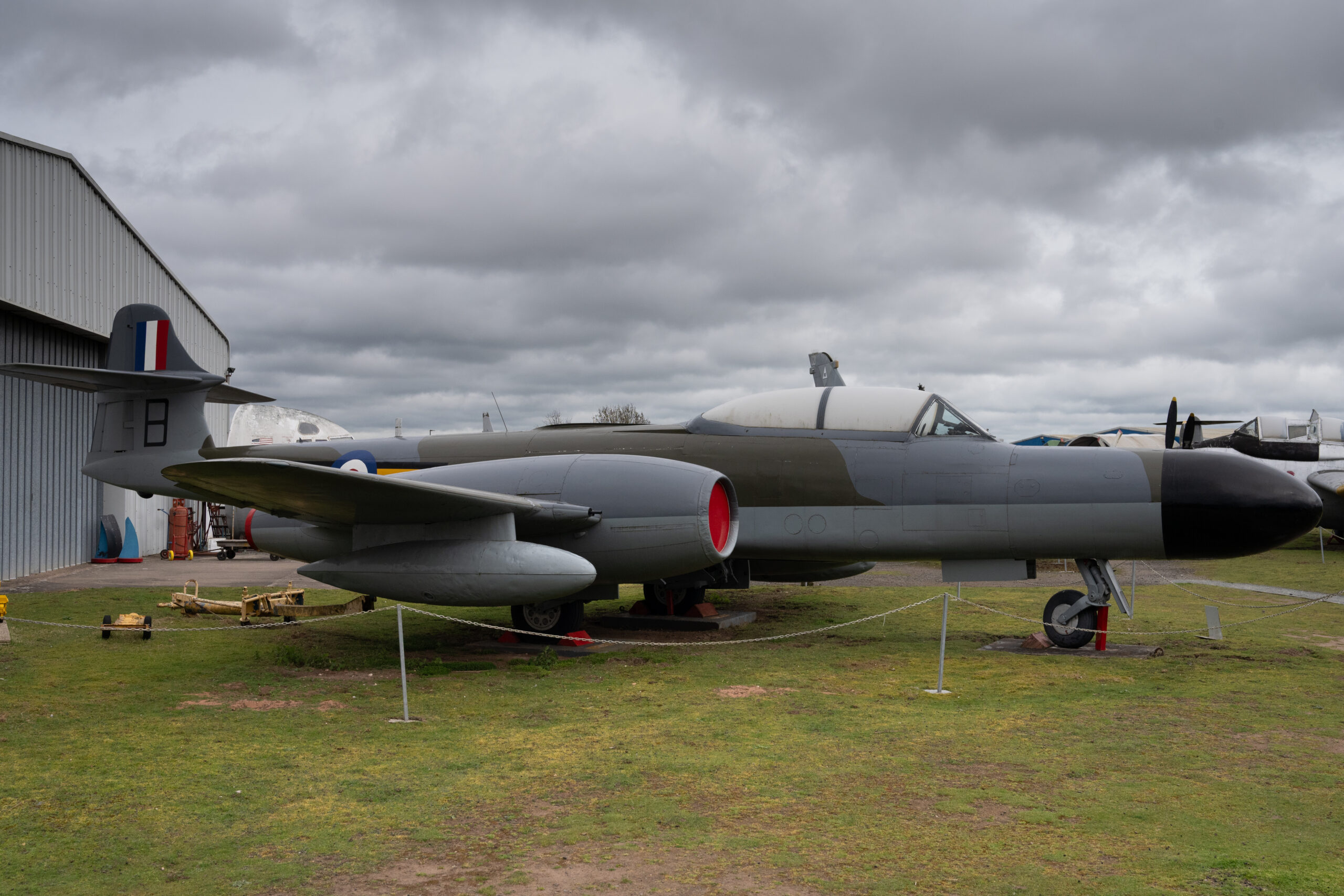
Remember the bit about AI? Spot the difference! Edited in Lumiar Neo, I simply let the AI substitute blue sky for grey and a quick flick of the erase tool, so we’re also missing the top of the GR4 Tornado’s fin that’s sat behind the Meteor and looks like it’s stuck on the top of the Meteor’s canopy in the other two images..
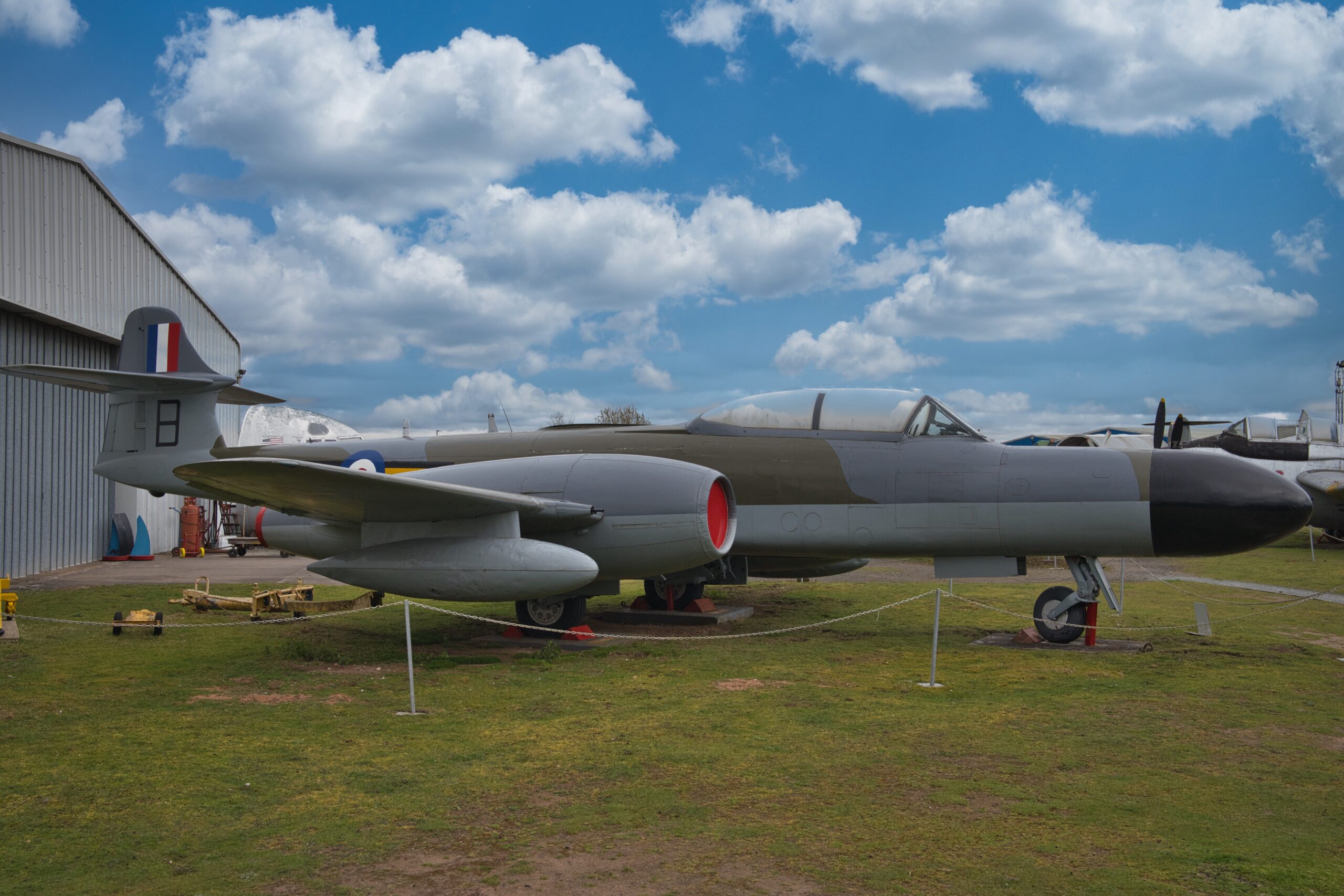
Now it gets more complicated.
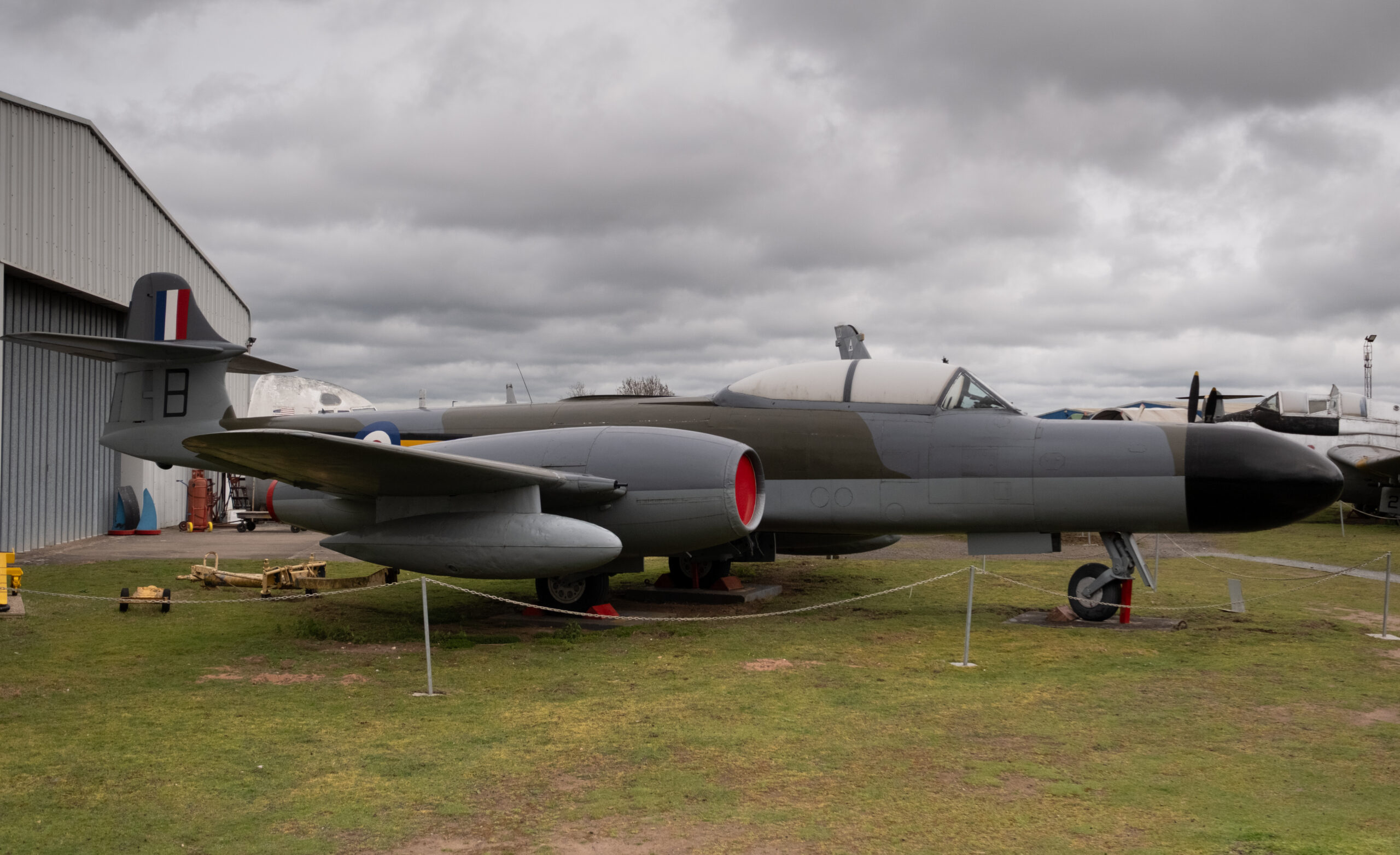
Correct, we’ve gone from a 24MP Full frame sensor to 40MP APS-C sensor, with a similar amount of adjustment in Lightroom to that in the second picture above, as well as a crop as the Fuji was using a 10-16 wide-angle lens. Dropping both images to similar size and quality JPG file reduces the usual advantages of the larger sensor.
Regardless of which you think looks the best, these images raise another question: Is the expense of full-frame worth it, especially the cost of the lenses to go with it, if you’re only going to convert the output to JPEG anyway to drop on the web, or in my case shrink to relatively small photos for printing and you’ve also software that can use AI to de-noise if needed?
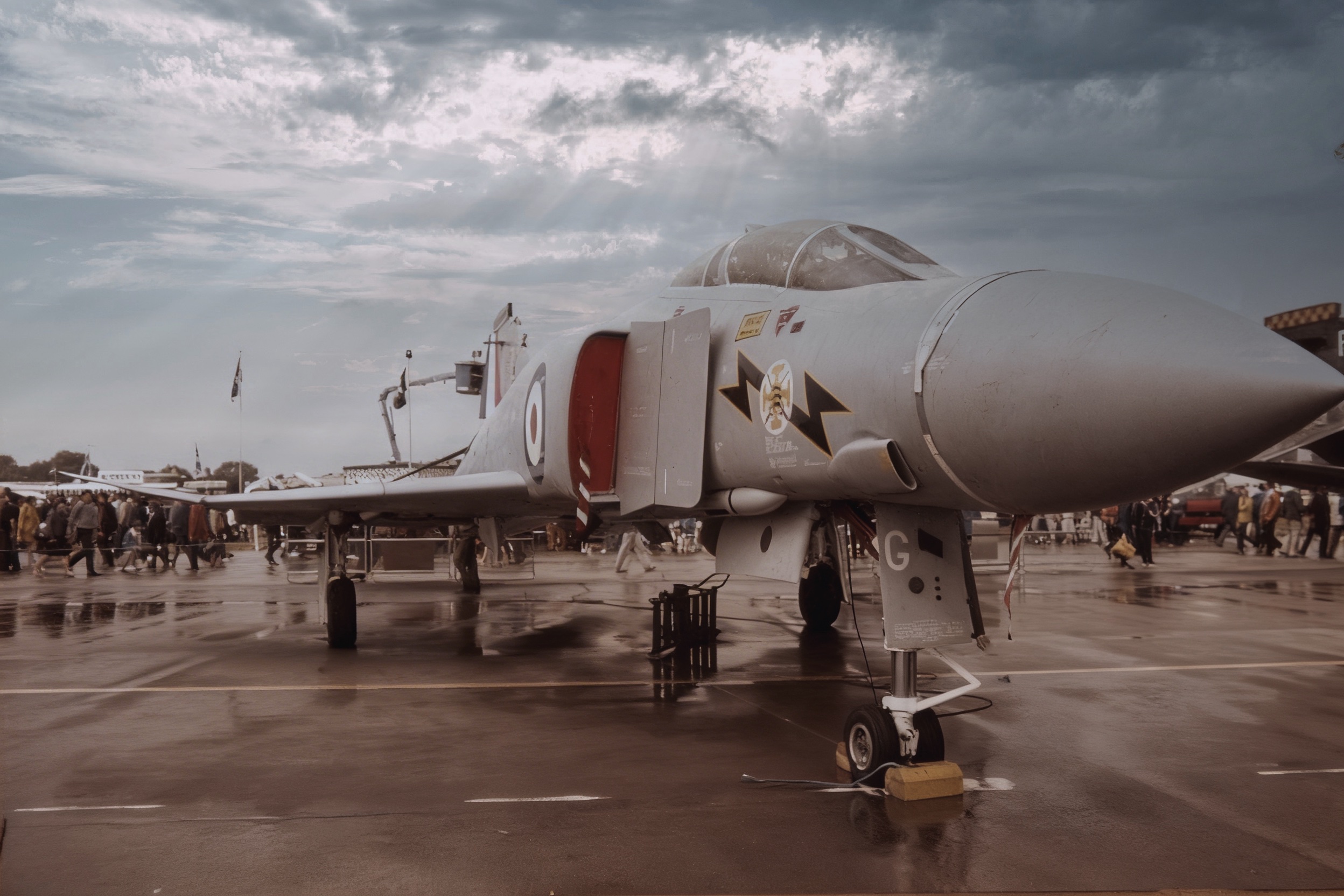
As for what AI can do when importing scans taken from 40 odd year old slides that have been gathering dust in the loft for decades…. and before you ask, no, the sky wasn’t quite that benevolent, hence the puddles! But at least it looks like the rain might have stopped.