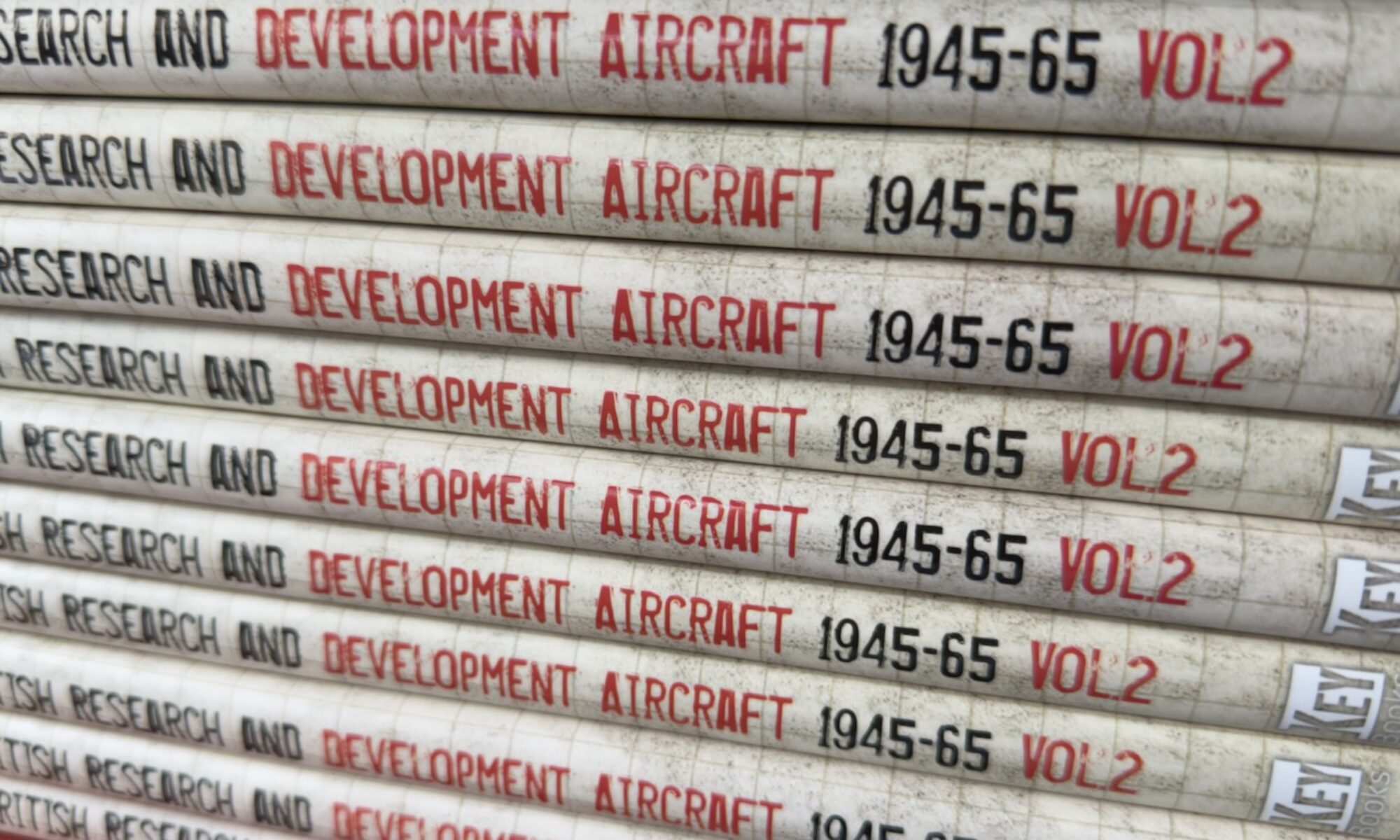
My photos have finally been sent to the publishers, along with their captions and after yet another read through and, for now, a final edit, the text to Volume 2 has also been despatched….and breath. Next steps; email tennis with the copy editor and probably a couple of adjustments to the captions text once the archive images are sorted. If it’s to be a repeat of last time, the final copy plus all the images will be sent off to India and Vol 2 will get printed there, then return for publication in July, accompanied by a heft thud on my front doorstep as my 10 free authors copies arrive.
Yes, it has felt like a bit of a drawn out process, but it is what it is. Though after a close to two years of honing, even I think it reads a lot better than Vol 1.
Interestingly (to me at least), I took a look on Key Publishing’s website yesterday and it’s showing Volume 1 is out of stock! To say the odds of them selling about 500 copies in the last few months since I last looked are slim. So they’ve either pulped them, had a warehouse fire, or maybe, just maybe, they’re saving what’s left just in case there’s a demand for Vol 1, once Vol 2 arrives. The term “Scooby Doo ending” springs to mind.
In the meantime, if the copy editor wants me to do anything for the next week or so, tough. We’re off next week on a photography trip holiday to San Francisco and the MacBook isn’t invited.
As for taking photographs, first trip out the other week to test the X-T5 “in anger” and even the weather behaved. the Yorkshire Air Museum at Elvington looks much better with blue skies and sunshine than it did last time I visited, when it was grey, wet and miserable. Had a great chat with a couple of the people that manage the museum after depositing the 1930’s aero engineering books I’d been given with them. It was even better to learn that they’d seen a copy of the books at another museum and there’s a section in them that will help restore another exhibit they’re bringing up to Yorkshire: Result!
It’s safe to say I’m delighted with the output from the X-T5 and very much back in a happy place using it, much like the late lamented Olympus. It’s not quite as small and light as the E-M5, but drastically better than either Nikon full-frame I’ve had in between and from what I’ve seen, I’ve lost very little in the way of image quality. What I’ve also gained is easy access to “film recipes”. This is essentially a method of customising the output from the camera sensor to give your images a specific look, be that simply B&W with a coloured filter to tweak the impact reds or blues have, or give them contrasty and pure blacks, so it looks like you’ve used ISO 50 Ilford Pan-F.
There’s a whole cottage industry dedicated to creating Fuji recipes or their counterparts for other systems which support similar techniques. All of them include a few particular favourites from the heyday of 35mm film, especially emulation of Kodak’s slide emulsions, Kodachrome and Ektachrome, assortments of Kodak and Ilford’s monochrome negative films, like T-400 and the aforementioned Pan-F, as well as more non-specific themes to create moods associated with or for places. This includes adding grain for moody street photography, hazy effects for sunnier climes and a host of slightly more off-beat effects.
Naturally enough, Fuji have a head start over most camera manufacturers as their range of 35mm films were easily on a par with Kodak’s finest. Velvia 50 slide film was my particular favourite, producing lush vivid greens for landscape shots, while Neopan Arcos 100 was superb fine grain B&W . My
X-E5 which is already packed in my cabin luggage, has a dedicated wheel to select the built in film recipes, along with 3 empty custom setting you can program to suit. As the X-E5 and X-T5 share the same sensor and processor, the recipes I’ve acquired are good for both cameras, and after my day at Elvington, I can see much of San Francisco being shot using Kodachrome 64. As I always shoot with the camera set to save images as both JPG and RAW, I automatically get an “as is” image (RAW) and a JPG image that’s been subject to whatever recipe is set. Thing is, so good is the JPG output from the Fuji, if I get the exposure right in camera, there’s very little to do later in post on Lightroom or whatever if I don’t fancy editing the RAW files.
For the uninitiated, the aircraft below is a Blackburn Buccaneer S2, the second mark of Buccaneer built for the Royal Navy (once they’d finally put decent engines in it!) and eventually thrust onto the RAF, in S2B and S2D versions once they’d axed all the Navy’s proper carriers and after they’d cancelled TSR.2 ….Volume 2 is out in July for the whole sorry tale 🙂
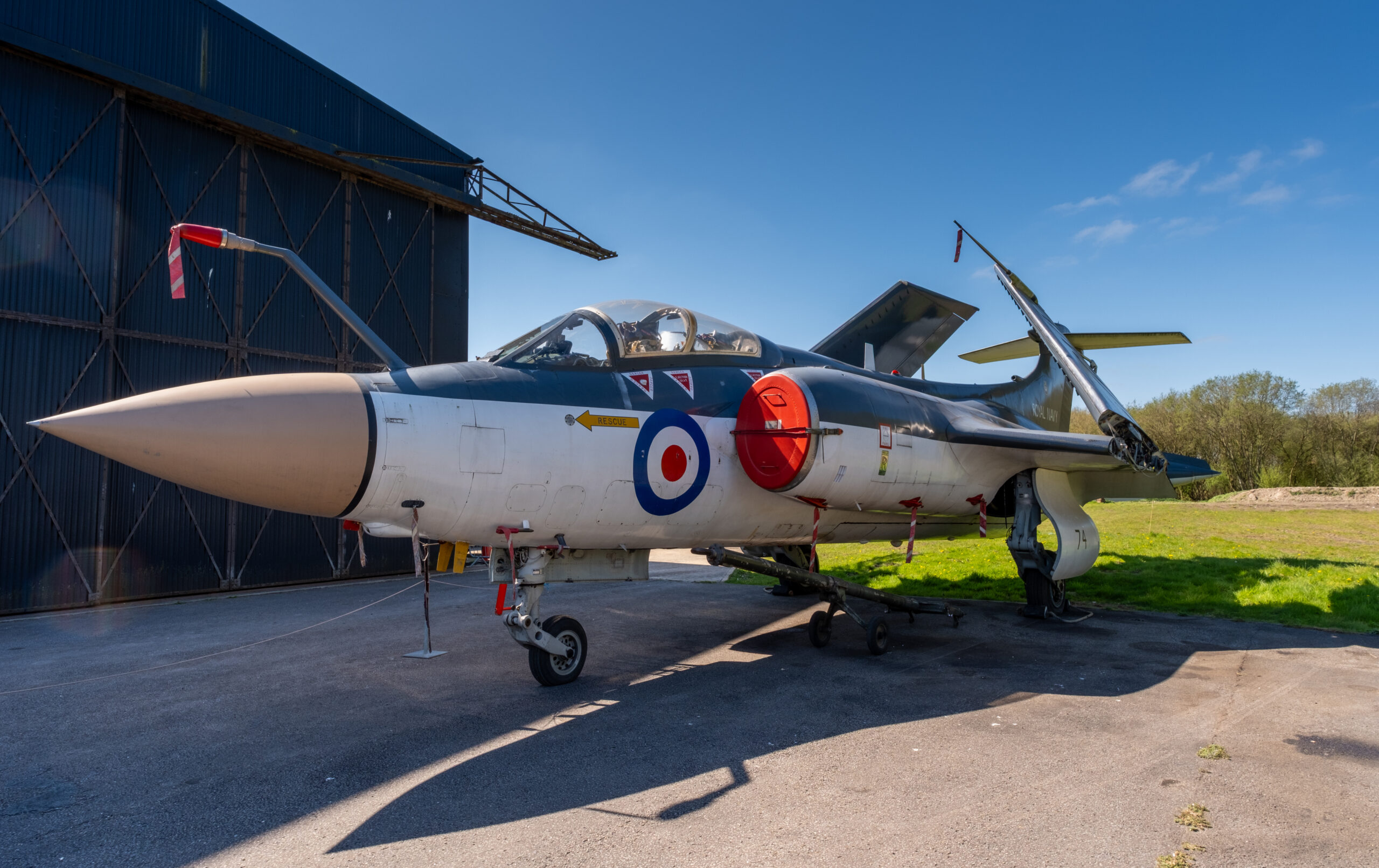
Spot the difference!
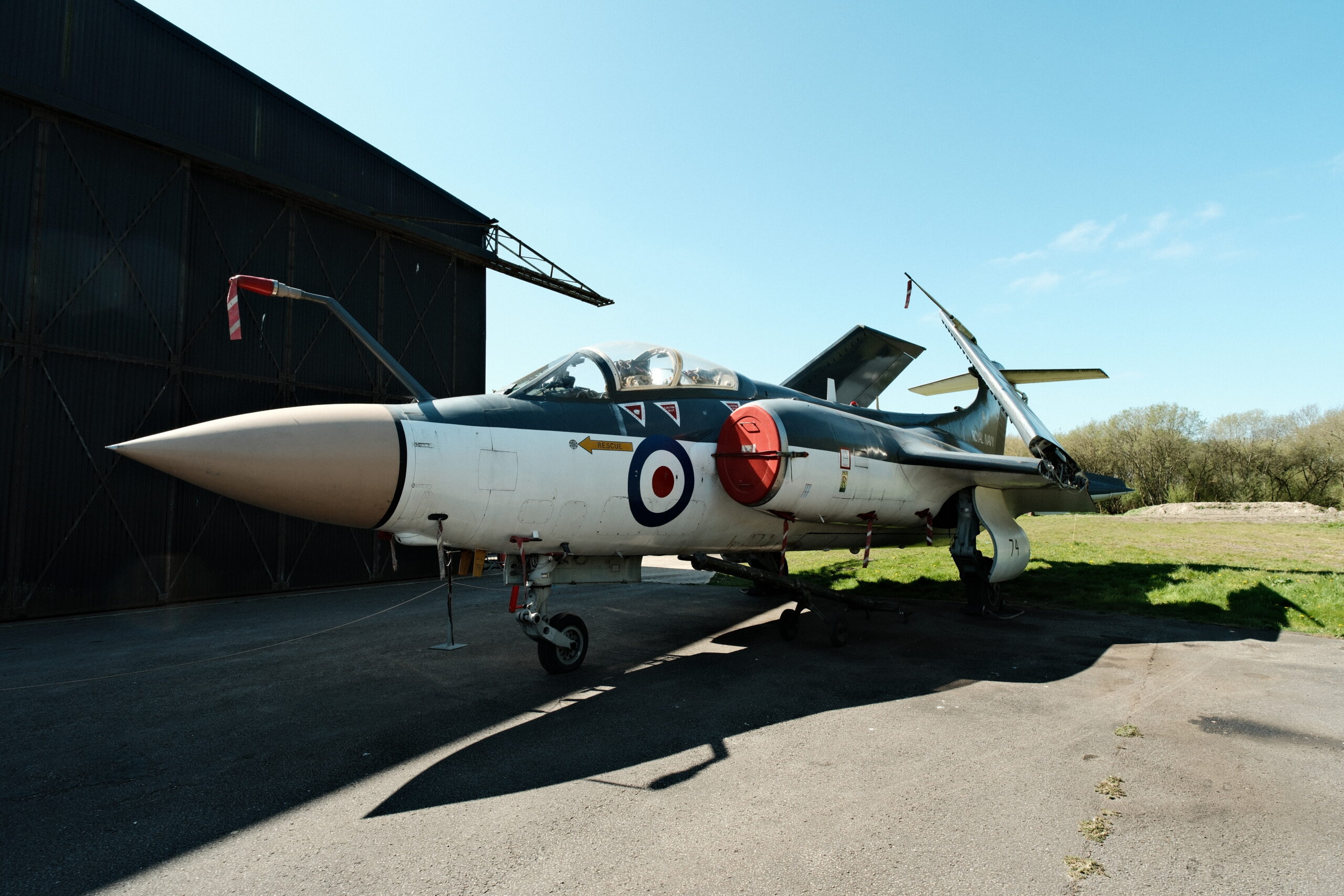
Those who remember Kodachrome 64 will understand, but I sat there staring at this for a good few minutes just thinking, WOW.
For those who don’t have a clue what I’m on about, lets just say I’m more than impressed that at the flick of a button in effect, I can make my camera produce images that look like I’ve taken the taken using 1970s slide film, without having to send it away in the pre-paid envelope (you didn’t drop this stuff into Boots, do your shopping and come back to collect your snaps!), wait a week or more for it to return, set my slide projector up and then discover there’s only half a dozen decent photos on the whole 36 shot roll.
Next time, probably lots of photos of coffee and croissants….(SF appears to be the croissant capital of America) as well as a certain bridge.